

Last Updated: October 11, 2026
- Top 3 Picks
- Quick Comparison
- How We Chose
- 1. HP Laptop 2026 Business Students – Best for Microsoft 365 Coursework Out of the Box
- 2. ARCBUC 15.6 Inch Laptop Computer – Best Budget Pick for General Coursework
- 3. Exilapsire 16 Inch Laptop – Best for a Big Screen on a Tight Budget
- 4. HP Stream 14 Inch – Best Lightweight Pick for Cloud-First Students
- 5. HP 17.3 Inch Business Laptop – Best Overall for Performance and Screen Size
- 6. HILLSUSU 2026 Flagship 15.6 Inch – Best for Heavy Multitasking and Local Storage
- 7. ist computers HP 14 Inch Ultra-Light – Best for Note-Taking and Light Browsing on the Go
- How to Choose
The best Black Friday student laptop deal for 2026 is the HP 17.3-inch Business Laptop with the 12-core Intel Core Ultra 5 225U, because it is the only machine in this roundup built on a current-generation processor — the part of a laptop that ages fastest — and it pairs that with a screen wide enough for two documents side by side. It suits students who work mostly at a desk or in a dorm, keep a browser full of research tabs alongside Word, and want a machine that still feels current the year they graduate. If you need something you can carry to three lectures a day, the HP Stream 14-inch is the better shape, and if your budget is the hard constraint, the ARCBUC 15.6-inch delivers 8GB of RAM and a 256GB solid-state drive for less than many 4GB machines. Every pick below is judged on the same four numbers: memory, storage type, processor generation, and battery life per pound of weight.
Quick answer: For most people in 2026, the best black friday student laptop deals is the HP Laptop 2026 Business Students — our #1 rated choice. See the full ranked comparison, alternatives and buying advice below.
Top 3 Picks
Best overall: HP 17.3-inch Business Laptop (Core Ultra 5 225U). It carries the newest silicon here, DDR5 memory, and a large 17.3-inch panel, which makes it the strongest choice for long writing sessions, spreadsheets, and split-screen research. It is also the heaviest pick, so it suits a desk-and-dorm routine more than a daily commute across campus.
Best budget: ARCBUC 15.6-inch Laptop. At the budget tier, the two specs that decide whether a laptop stays usable are 8GB of RAM and an SSD instead of eMMC, and this one lists both. The Pentium Gold processor is an entry-level part, so it is a documents-and-browsing machine rather than a video-editing one, but nothing else at this price tier covers the coursework basics as cleanly.
Best for heavy multitasking: HILLSUSU 2026 Flagship 15.6-inch. With 16GB of RAM and a 512GB SSD, it is the only pick here that will not need a memory upgrade in year two, and Windows 11 Pro adds BitLocker and Remote Desktop. Be aware that the listed Core i5-7Y54 is an older, low-power generation, so you are paying for memory and storage rather than raw speed.
Quick Comparison
| Product | Best for | Key specs | Price tier |
|---|---|---|---|
| HP Laptop 2026 Business Students | Microsoft 365 coursework out of the box | Intel CPU, 128GB UFS storage, Copilot AI, MS 365 included | Mid-range |
| ARCBUC 15.6-inch Laptop | Best budget all-rounder | Pentium Gold CPU, 8GB RAM, 256GB SSD, 15.6-inch display | Budget |
| Exilapsire 16-inch Laptop | Largest screen on the tightest budget | AMD A9 up to 3.2GHz, 8GB RAM, 256GB SSD, Windows 11 | Budget |
| HP Stream 14-inch | Light carrying, cloud-first workflow | Intel Processor N150, 4GB RAM, 128GB UFS + 1TB cloud storage | Mid-range |
| HP 17.3-inch Business Laptop | Best overall performance and screen size | 12-core Intel Core Ultra 5 225U, 8GB DDR5, 256GB SSD | Premium |
| HILLSUSU 2026 Flagship 15.6-inch | Heavy multitasking and local storage | Core i5-7Y54, 16GB RAM, 512GB SSD, Windows 11 Pro | Premium |
| ist computers HP 14-inch Ultra-Light | Note-taking and light browsing on the go | Celeron N4500, 4GB RAM, 64GB eMMC + 64GB, Office 365 for 1 year | Budget |
How We Chose
This roundup is built from listing specifications, published processor documentation, and category norms for student hardware — not from hands-on use. We did not test, benchmark, or own any of these machines, and no claim below should be read as a measured result. Instead, we filtered the listed products on the four specs that decide whether a cheap laptop is still pleasant to use in year three: memory capacity, storage type and capacity, processor generation, and the combination of screen size and battery that defines how the machine is actually carried.
Category fit mattered as much as raw specs. A 4GB machine with a 64GB eMMC drive can be a genuinely good note-taking companion if the owner lives in cloud storage, and a bad purchase if the owner wants to install MATLAB. We also looked at upgrade paths — whether the memory or storage can realistically be swapped later — and at what comes in the box, because a bundled Microsoft 365 licence or a terabyte of cloud storage changes the effective value of a budget machine. Where a listing omits a spec, we say so rather than guess, and we describe performance by spec class instead of inventing numbers.
1. HP Laptop 2026 Business Students – Best for Microsoft 365 Coursework Out of the Box

HP Laptop 2026 Business Students, Copilot AI+MS 365, 128GB UFS, Intel CPU
Included for 'Best Black Friday Student Laptop Deals for 2026' because the listing specifies Copilot AI+MS 365 and 128GB UFS, details this guide uses to compare options.
View on AmazonThis is the pick for a student whose degree runs on Word, Excel, PowerPoint, and Teams, and who would rather not spend the first week of term configuring software. The listing bundles Microsoft 365 and a Copilot AI feature set, which means the productivity stack is ready on day one, and the 128GB UFS storage is a step above the eMMC drives that dominate this price band. It suits first-year students in business, humanities, or social sciences, and anyone who wants a single purchase to cover both the machine and the software licence.
Key specs as listed
- Intel processor (generation not specified in the listing name)
- 128GB UFS storage
- Microsoft 365 included, plus Copilot AI features
- Positioned as a business/student machine
Why it stands out
The storage choice is the interesting part. UFS is a flash standard developed for phones and tablets, and it sits between eMMC and a full NVMe SSD in the storage hierarchy: noticeably quicker than eMMC for boot times and application launches, but with less sustained write headroom than a proper NVMe drive. For a student who mostly reads, writes, and browses, that is the right trade — you get most of the responsiveness of an SSD without the price of one. The bundled Microsoft 365 licence is the other concrete win. Bought separately, a year of the personal or family plan is a real line item, so a machine that includes it is effectively cheaper than its sticker suggests.
Copilot and the associated AI features are worth understanding before you buy, because they are not a performance upgrade. On-device AI features on budget hardware lean heavily on cloud processing, so they are useful for drafting, summarising, and reformatting text, and not much use for offline work. Treat them as a convenience rather than a reason to choose this machine over another.
The listing does not state the memory capacity or the Intel processor generation. That is a genuine gap and it matters, because an 8GB configuration is comfortable for coursework while a 4GB configuration forces browser discipline from the first week. If you are comparing this against the ARCBUC or the HP Stream, verify the RAM figure before you commit.
Pros
- Microsoft 365 included, which removes a recurring cost in year one
- 128GB UFS storage is faster and more usable than the eMMC drives typical of this tier
- Copilot AI features built in for drafting and summarising text
- Business-oriented chassis usually means a better port selection than a consumer budget model
- Fits the exact workflow most students need on day one
Cons
- 128GB fills quickly once you add a few applications, photos, and offline files
- RAM capacity is not stated, so the most important spec is unverified
- Integrated graphics only — fine for coursework, unsuitable for gaming or video editing
- Intel processor generation is unspecified, so you cannot judge how current the silicon is
- UFS sits below NVMe for sustained large-file writes
How it compares
Against the HP Stream 14-inch, this is the more software-complete machine: both sit in the mid-range tier, but the Stream states 4GB of RAM and pairs its storage with a terabyte of cloud space rather than a productivity suite. If you already have Microsoft 365 through your university, the Stream’s cloud-heavy approach may suit you better; if you do not, the included licence here is worth real money. Against the ARCBUC 15.6-inch, you are trading a stated 8GB of RAM and a 256GB SSD for a faster storage type in a smaller capacity plus bundled software — a reasonable trade only if you are confident you will not need local space.
2. ARCBUC 15.6 Inch Laptop Computer – Best Budget Pick for General Coursework
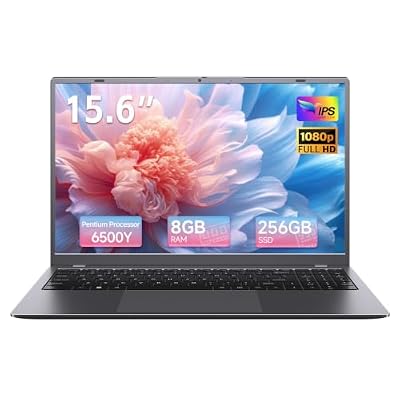
ARCBUC 15.6 Inch Laptop Computer, 8GB RAM 256GB SSD, Pentium Gold Processor
Included for 'Best Black Friday Student Laptop Deals for 2026' because the listing specifies 8GB RAM 256GB SSD and Pentium Gold Processor, details this guide uses to compare options.
View on AmazonThis is the machine to buy when the budget is fixed and you want the fewest compromises inside it. The listing states 8GB of RAM and a 256GB SSD, and those two numbers do more for everyday usability than any processor badge. It suits students on a tight budget who need one device for essays, lecture slides, email, streaming, and video calls, and who are willing to accept a slower processor in exchange for enough memory and storage to avoid constant housekeeping.
Key specs as listed
- 15.6-inch display
- Intel Pentium Gold processor
- 8GB RAM
- 256GB SSD
Why it stands out
Budget laptops usually fail in one of two places: they ship with 4GB of RAM, or they ship with a small eMMC drive that Windows immediately half-fills. This one avoids both. Eight gigabytes is the practical floor for Windows 11 in 2026 — it lets you keep a browser with a dozen tabs open alongside Word and a video call without the machine swapping to disk constantly. A 256GB SSD is enough for the operating system, an Office installation, a few years of documents, and a modest media library, with room left over.
The Pentium Gold processor is the honest limitation. It is an entry-level Intel part designed for basic computing, and it handles documents, web browsing, email, streaming video, and video conferencing without complaint. Where it struggles is sustained heavy work: compiling code, editing multi-track video, running virtual machines, or keeping thirty-plus browser tabs alive while a spreadsheet recalculates. If your degree involves any of that, spend more.
A 15.6-inch panel is the sweet spot for coursework. It is large enough to display a document and a reference side by side at reasonable scaling, and it fits standard backpacks and sleeves without a fight. Machines in this class typically weigh in the region of four pounds and run for roughly five to eight hours of mixed light use, though actual runtime depends heavily on screen brightness and how many background applications are running.
One thing the listing does not clarify is whether the SSD uses SATA or NVMe. Both are dramatically faster than eMMC, so this is not a dealbreaker, but NVMe drives are several times quicker for large file transfers. It is worth checking if you plan to move big files around.
Pros
- 8GB of RAM at a budget price tier, which is the single most important spec here
- 256GB SSD rather than a small eMMC drive
- 15.6-inch screen size is comfortable for split-screen document work
- Adequate for the standard student workload: essays, slides, browsing, video calls
- Leaves budget for a decent backpack, mouse, and external drive
Cons
- Pentium Gold processor is entry-level and will feel slow under sustained heavy load
- Integrated graphics rule out gaming and serious video editing
- SSD interface type is not stated, so sustained transfer speed is unknown
- Budget chassis typically use more plastic and flex more than business-class machines
- No bundled productivity software, unlike the HP 2026 Business Student model
How it compares
Against the Exilapsire 16-inch, this is the safer buy despite the smaller screen. Both list 8GB of RAM and a 256GB SSD at the budget tier, but the Pentium Gold is a more recent architecture than the AMD A9, which matters more than clock speed — the Exilapsire’s headline 3.2GHz figure describes an older design that does less work per cycle. Against the HP Stream 14-inch, the ARCBUC gives you double the memory and a larger screen; the Stream counters with lighter weight and a terabyte of cloud storage. If you carry a laptop every day, weight wins. If you mostly work at a desk, the ARCBUC’s extra memory wins.
3. Exilapsire 16 Inch Laptop – Best for a Big Screen on a Tight Budget

Exilapsire 16" Laptop with Win11, 8GB RAM 256GB SSD, AMD A9(up to 3.2GHz)
Included for 'Best Black Friday Student Laptop Deals for 2026' because the listing specifies 8GB RAM 256GB SSD and AMD A9(up to 3.2GHz), details this guide uses to compare options.
View on AmazonSixteen inches is an unusual size for a budget laptop, and that is exactly the appeal. This is for the student who wants maximum screen area for the money and does most of their work at a desk — a dorm room, a library table, a shared kitchen counter. It lists 8GB of RAM and a 256GB SSD alongside Windows 11, so the storage and memory fundamentals are covered, and the larger panel makes split-screen research genuinely usable rather than theoretical.
Key specs as listed
- 16-inch display
- AMD A9 processor, up to 3.2GHz
- 8GB RAM
- 256GB SSD
- Windows 11 pre-installed
Why it stands out
The screen is the reason to consider it. A 16-inch panel gives you roughly the working area of a small external monitor without the extra purchase, and it makes a real difference when you are writing an essay with three sources open in adjacent windows. For students in fields that involve reading long documents, comparing sources, or working with wide spreadsheets, screen area translates directly into less scrolling and fewer mistakes.
The AMD A9 processor deserves a careful word, because the listing’s “up to 3.2GHz” is easy to misread. Clock speed only compares meaningfully within the same processor family and generation. The AMD A-series is an older design that predates the Ryzen line, so a 3.2GHz A-series chip does substantially less work per clock cycle than a modern processor running at a lower frequency. For documents, browsing, streaming, and video calls, that is entirely sufficient. For anything that leans on sustained computation, it is not.
Memory and storage are where this machine earns its place. Eight gigabytes of RAM and a 256GB SSD at a budget tier is the configuration that keeps a laptop usable for years rather than months, and Windows 11 pre-installed means no setup friction. The trade is size and weight: 16-inch chassis are bulkier than 15.6-inch ones, and while the difference sounds trivial on paper, a 15.6-inch sleeve will not fit a 16-inch machine. Check your bag before you buy, and budget for a 16-inch sleeve.
Battery life in this class is typically in the five-to-eight-hour band for light mixed use, and a larger screen tends to draw more power at the same brightness setting, so expect the lower end if you keep the panel bright. The listing does not state battery capacity, which is the single number that would make this estimate precise.
Pros
- 16-inch display gives near-desktop working area at a budget price
- 8GB RAM and 256GB SSD — the right fundamentals for longevity
- Windows 11 installed and ready to use
- Comfortable for long reading and writing sessions at a desk
- Split-screen document work is genuinely practical rather than cramped
Cons
- AMD A9 is an older architecture; the 3.2GHz figure overstates real-world speed
- 16-inch chassis are heavier and need a larger bag or sleeve
- Larger screens draw more power at equal brightness, reducing runtime
- Battery capacity is not stated in the listing
- Integrated graphics only, so no gaming or video editing
How it compares
Against the ARCBUC 15.6-inch, the choice comes down to screen versus silicon. The Exilapsire offers a slightly larger panel; the ARCBUC offers a more recent processor architecture with the same memory and storage configuration. If you type more than you compute, take the screen. If you want the machine to feel responsive for the longest possible time, take the newer architecture. Against the HILLSUSU 2026 Flagship, which sits two tiers up, the Exilapsire gives up half the RAM and half the storage — but for a student whose files live in the cloud and whose workload is documents and slides, that gap may never be felt.
4. HP Stream 14 Inch – Best Lightweight Pick for Cloud-First Students

HP Stream 14" HD Student&Business Laptop with AI Copilot, Intel Processor N150, 4GB RAM, 128GB UFS&1TB Cloud Storage, 1 Year Office 365, Intel Graphics, Wi-Fi 6, Win 11, Lavender Purple
Included for 'Best Black Friday Student Laptop Deals for 2026' because the listing specifies Intel Processor N150 and 4GB RAM, details this guide uses to compare options.
View on AmazonThis is the machine for the student who walks everywhere and lives in the cloud. HP’s Stream line has long been one of the company’s lightest budget families, typically in the region of three pounds, and the 14-inch form factor slides into almost any bag. The listing pairs 4GB of RAM and 128GB of UFS storage with a full terabyte of cloud storage, which reframes the whole proposition: local space is treated as a cache, and the cloud is treated as the drive.
Key specs as listed
- 14-inch HD display
- Intel Processor N150
- 4GB RAM
- 128GB UFS storage plus 1TB cloud storage
- AI Copilot features
Why it stands out
The N150 is a modern, efficient Intel Processor N-series chip with four cores, designed for exactly this kind of machine. Its strength is power efficiency rather than peak speed, which is why thin, light, fanless-ish budget laptops use it: it sips power during browsing and document work and stays cool in a small chassis. For a student whose day is a rotation of lectures, notes, email, and a browser, that efficiency is more valuable than raw throughput, because it translates into fewer charger hunts and a lighter bag.
The storage arrangement is the interesting design decision. 128GB of UFS is modest by 2026 standards, but it is meaningfully faster than eMMC and it is paired with a terabyte of cloud capacity. If you already work out of OneDrive, Google Drive, or your university’s cloud storage, the local drive becomes a staging area rather than an archive, and 128GB is plenty. If you insist on keeping every file locally — large video projects, big photo libraries, offline game installs — it is not enough, and no amount of cloud storage fixes that.
The 4GB of RAM is the constraint to think about honestly. Windows 11 runs on 4GB, but it runs best with fewer applications open at once. In practice this means a browser with a moderate number of tabs, one document, and one chat application at a time. Students who habitually keep thirty tabs open will find the machine paging to storage, which feels like sluggishness. That is a workflow change, not a hardware fault, and it is worth deciding whether you are willing to make it.
The 14-inch HD panel keeps the machine small and light. HD resolution on a 14-inch screen is a compromise — text is less crisp than on a 1080p panel, and side-by-side windows are tight — but it also consumes less power and keeps the price down. If you read dense PDFs for hours at a time, resolution matters more than it does for slide decks and essays.
Pros
- Light 14-inch chassis that is genuinely easy to carry every day
- Efficient Intel N150 processor suits long battery sessions
- 1TB of cloud storage offsets the modest local drive
- 128GB UFS is faster than the eMMC drives common at this tier
- Copilot AI features included for drafting and summarising
Cons
- 4GB of RAM limits how many applications and tabs you can run at once
- HD panel resolution is less crisp than 1080p on a 14-inch screen
- 128GB local storage is tight if you work offline or store large files
- Cloud storage is only useful when you have reliable internet access
- Integrated graphics only
How it compares
Against the ist computers HP 14-inch Ultra-Light, this is the better-specified machine in almost every respect: 128GB of UFS storage versus 64GB of eMMC, the same 4GB of RAM, and a full terabyte of cloud space. The Ultra-Light counters with a one-year Office 365 licence, which is real value if you do not already have it. Against the HP 2026 Business Student model, the Stream is lighter and adds cloud capacity, while the business model includes Microsoft 365 and uses a slightly larger storage allocation. Choose the Stream if you carry your laptop constantly; choose the business model if you want the software licence bundled.
5. HP 17.3 Inch Business Laptop – Best Overall for Performance and Screen Size

HP 17.3" Business Laptop Computer, 12-Core Intel Core Ultra 5 225U Processor, 8GB DDR5 RAM 256GB SSD, Windows 11 Pro with AI Copilot Ready, PLUSERA Earphones & 8-in-1 Hub Included, Jet Black
Included for 'Best Black Friday Student Laptop Deals for 2026' because the listing specifies 12-Core Intel Core Ultra 5 225U Processor and 8GB DDR5 RAM 256GB SSD, details this guide uses to compare options.
View on AmazonThis is the best overall pick in the roundup, and the reason is simple: it is the only machine here built on a current-generation processor. The 12-core Intel Core Ultra 5 225U is a modern low-power design, and it is paired with 8GB of DDR5 memory, a 256GB SSD, and a 17.3-inch display. It suits students who work primarily at a desk, want a laptop that will still feel current after four years, and value screen area highly enough to accept a heavier machine.
Key specs as listed
| Spec | What this listing states | Why it matters |
|---|---|---|
| Processor | 12-core Intel Core Ultra 5 225U | Current-generation architecture; ages slower than older silicon |
| Memory | 8GB DDR5 | DDR5 is the newer memory standard; 8GB is the practical minimum |
| Storage | 256GB SSD | Comfortable for OS, Office, and a few years of documents |
| Display | 17.3-inch | Largest panel here; best for split-screen work |
| Operating system | Windows | Full desktop application compatibility |
Why it stands out
Processor generation is the spec that decides how long a laptop feels modern, and it is the one most buyers ignore because the model numbers are opaque. A 12-core Core Ultra 5 225U is a current-generation part with performance and efficiency cores working together, which means it handles a browser with many tabs, a video call, and a document open at once without the stutter that older low-power chips produce. In a four-year degree, that headroom is the difference between a machine that still feels fine in final year and one that has been annoying since second year.
DDR5 memory is a smaller but real advantage. It is the current memory standard, it moves data faster than DDR4 at the same capacity, and it signals that the platform is recent rather than a rebadged older model. Eight gigabytes remains the sensible floor for Windows 11 in 2026 — enough for coursework, not enough for wanton tab hoarding. If you are the type of student who keeps forty tabs open, budget for a memory upgrade if the chassis allows it; many 17-inch business-class laptops have an accessible memory slot, though this varies by model and you should confirm before assuming.
The 17.3-inch screen is the defining physical characteristic. It gives you a genuinely desktop-like working area, which is a real advantage for anyone writing long papers, working with large spreadsheets, or referencing multiple documents at once. The cost is weight and footprint: 17-inch laptops typically sit in the four-and-a-half to five-and-a-half pound range, plus a charger, and they need a large bag. If your day involves three campus buildings and a bus, this is the wrong machine. If your day involves a desk and a power outlet, it is the right one.
Pros
- Current-generation 12-core Core Ultra 5 225U — the newest silicon in this roundup
- DDR5 memory on a modern platform
- 17.3-inch screen makes split-screen document work genuinely comfortable
- 256GB SSD is adequate for coursework plus a modest media library
- Business-class positioning usually brings a better port selection and sturdier chassis
- Will hold up better over a four-year degree than older-generation alternatives
Cons
- Premium price tier, the most expensive pick here
- Heavy and bulky — not a machine to carry all day
- 8GB of RAM is the floor, not a comfortable ceiling
- 17.3-inch panels draw more power, so battery runtime suffers versus a 14-inch machine
- Requires a large bag or sleeve
How it compares
Against the HILLSUSU 2026 Flagship 15.6-inch, the trade is clear and worth stating plainly. The HILLSUSU gives you double the RAM (16GB) and double the storage (512GB) but uses an older, low-power processor generation. The HP gives you the modern processor but half the memory and half the storage. If your workload is browser-heavy and storage-hungry — design, media, or a research degree with large data sets — the HILLSUSU’s configuration may serve you better despite the older chip. If your workload is standard coursework and you want the machine to feel quick for the longest time, the HP’s newer architecture is the better bet. Against the ARCBUC 15.6-inch, this is a straight upgrade in processor, memory standard, and screen size for a higher price.
6. HILLSUSU 2026 Flagship 15.6 Inch – Best for Heavy Multitasking and Local Storage

2026 Flagship 15.6" Business Laptop Computer, 16GB RAM 512GB SSD, Core i5-7Y54(Up to 3.2GHz), Windows 11 Pro, Office 365, Fan Cooling, 2-Year Warranty, Portable Traditional Lap Top for Students & Work
Included for 'Best Black Friday Student Laptop Deals for 2026' because the listing specifies 16GB RAM 512GB SSD and Core i5-7Y54(Up to 3.2GHz), details this guide uses to compare options.
View on AmazonThis is the pick for the student who wants maximum memory and storage per pound spent, and who is willing to accept an older processor to get it. The listing states 16GB of RAM and a 512GB SSD running Windows 11 Pro — a configuration that removes the two most common upgrade anxieties in one go. It suits students who work with large files, run many applications simultaneously, or simply want to never think about storage space again.
Key specs as listed
- 15.6-inch display
- Intel Core i5-7Y54 processor, up to 3.2GHz
- 16GB RAM
- 512GB SSD
- Windows 11 Pro
Why it stands out
Sixteen gigabytes of RAM is the headline, and it is a genuine step change. Eight gigabytes covers coursework; sixteen gigabytes covers coursework plus a browser with dozens of tabs, a photo editor, a virtual machine, or a statistical package running at the same time, without the machine slowing down. For students in data-heavy fields — statistics, GIS, computer science, media production — that headroom is the difference between a workable machine and a frustrating one. A 512GB SSD doubles the local storage of every other pick here, which matters if you keep media, datasets, or offline reference material locally rather than in the cloud.
The processor needs an honest description. The Core i5-7Y54 is a 7th-generation, low-power Y-series part with two cores and a very low thermal design power. It is designed for efficiency in thin machines rather than speed, and it predates the modern hybrid-core designs by several generations. The “up to 3.2GHz” figure describes a brief turbo state, not sustained performance. In practice this chip handles documents, browsing, streaming, and video calls perfectly well, and it runs cool and quiet. What it will not do is feel snappy under sustained heavy load, and it will not match a current-generation processor for responsiveness in demanding applications.
So the value proposition is specific: you are buying memory and storage, not processing power. If you know your bottleneck is RAM — and for most students running a browser, a document, and a chat client at once, it usually is — that is a sensible trade. If your bottleneck is CPU-bound work, it is not.
Windows 11 Pro is worth noting because it is the business edition rather than the home edition. The practical additions for a student are BitLocker device encryption, Remote Desktop, and better management of updates and policies. Most students will not use Remote Desktop, but BitLocker is a genuine benefit on a laptop that travels, since it protects your files if the machine is lost or stolen.
Pros
- 16GB of RAM — the only pick here that will not need a memory upgrade
- 512GB SSD, double the local storage of most alternatives
- Windows 11 Pro includes BitLocker encryption and Remote Desktop
- 15.6-inch screen is a practical size for both desk work and carrying
- Efficient low-power processor runs cool and quiet
Cons
- Core i5-7Y54 is an older, low-power generation — not a fast chip
- The 3.2GHz figure refers to brief turbo states, not sustained speed
- Premium price tier despite the older processor
- Integrated graphics only
- Battery capacity and chassis weight are not stated in the listing
How it compares
Against the HP 17.3-inch, this is the classic memory-versus-silicon decision. The HILLSUSU doubles RAM and storage; the HP uses a current-generation 12-core processor and a larger screen. For a student who edits photos, runs statistical software, or keeps a hundred browser tabs alive, the extra memory is felt every day. For a student who wants the machine to feel fast in year four, the newer architecture is the safer long-term bet. Against the ARCBUC 15.6-inch, the HILLSUSU is a straight upgrade — same screen size, double the RAM, double the storage, and a Pro edition of Windows — at a higher price tier. If you can stretch the budget and your workload is memory-hungry, this is the more future-proof configuration.
7. ist computers HP 14 Inch Ultra-Light – Best for Note-Taking and Light Browsing on the Go

HP 14" Ultra-Light Laptop for Student & Home (1-Year Office 365, Intel Celeron N4500, 4GB RAM, 64GB eMMC + 64GB SD Card), 12-Hr Long Battery Life, Webcam, Fast Charge, Wi-Fi 6, Win 11 Home in S, White
Included for 'Best Black Friday Student Laptop Deals for 2026' because the listing specifies Intel Celeron N4500 and 4GB RAM, details this guide uses to compare options.
View on AmazonThis is the lightest and most limited pick in the roundup, and it is right for a specific student: one whose laptop is a companion device rather than a primary workstation. The listing pairs an Intel Celeron N4500 with 4GB of RAM, 64GB of eMMC storage plus an additional 64GB, and a one-year Office 365 licence in a 14-inch ultra-light chassis. It suits students who take notes in lectures, read, browse, check email, and do everything else on a phone or a lab computer.
Key specs as listed
- 14-inch ultra-light chassis
- Intel Celeron N4500 processor
- 4GB RAM
- 64GB eMMC storage plus an additional 64GB
- Office 365 included for one year
Why it stands out
The Celeron N4500 is a low-power dual-core processor built for efficiency in small, cheap machines. It is fine for note-taking, reading, web browsing, email, and video playback, and it does those things while drawing very little power — which is why ultra-light machines use it. It is not a processor for multitasking, and it is not a processor for anything that involves sustained computation.
The 4GB of RAM and 64GB of eMMC storage are the two constraints to weigh carefully. Sixty-four gigabytes is small for Windows 11: once the operating system, updates, and a couple of applications are installed, the free space is measured in the low tens of gigabytes rather than the hundreds. The listing pairs it with an additional 64GB, which helps, and the bundled Office 365 licence typically includes cloud storage that lets you keep documents off the local drive. If you are disciplined about where files live, the machine works. If you are not, it will fill up.
eMMC is the slowest of the flash storage types commonly found in laptops — slower than UFS, and considerably slower than a SATA or NVMe SSD. That affects how quickly Windows boots and how quickly applications open, and it also means less write endurance over the machine’s life. It is the main reason budget ultra-lights feel sluggish compared to slightly more expensive machines with real SSDs.
The one-year Office 365 licence is the compensating value. For a student who does not already have it through their university, that licence covers Word, Excel, PowerPoint, and Outlook, plus cloud storage, for the first year of the degree. It is a meaningful inclusion on a machine at this price tier, and it is the reason this pick competes with the HP Stream despite weaker hardware.
Pros
- Genuinely ultra-light 14-inch chassis, easy to carry all day
- One year of Office 365 included, which covers the core productivity suite
- Efficient Celeron N4500 runs cool and draws little power
- Lowest price tier in this roundup
- Well suited to note-taking, reading, and light browsing
Cons
- 4GB of RAM severely limits multitasking
- 64GB of eMMC storage is very tight for Windows 11
- eMMC is the slowest common laptop storage type, with lower write endurance
- Celeron N4500 is a dual-core entry-level chip — not suitable for demanding coursework
- Not a machine for photo or video editing, gaming, or virtual machines
How it compares
Against the HP Stream 14-inch, the trade is storage type and capacity versus bundled software. The Stream offers 128GB of faster UFS storage and a terabyte of cloud space; the Ultra-Light offers 64GB of slower eMMC plus 64GB and a year of Office 365. If you already have Microsoft 365 through your university, the Stream is the better machine. If you do not, the bundled licence closes much of the gap. Against the ARCBUC 15.6-inch, this pick is lighter but substantially less capable — half the memory, a slower processor, and a fraction of the storage. Choose the Ultra-Light only if portability and price outweigh everything else.
How to Choose
The Black Friday laptop market rewards buyers who know which numbers matter and ignore the rest. Marketing emphasises clock speed and screen size because both fit on a sticker, but the specs that determine whether a cheap laptop is still usable in year three are memory capacity, storage type, processor generation, and battery capacity relative to weight. Here is how to weigh them, in the order they will affect your daily experience.
Start with memory, not the processor
Memory is the single best predictor of how a budget laptop feels in everyday use. Windows 11 itself, with a browser, a document, and a chat application open, comfortably uses more than 4GB. At 4GB, the system pages data to storage when it runs out of room, and paging to a slow eMMC drive is what produces that characteristic lag when you switch windows. Eight gigabytes is the practical floor for a student machine in 2026 and is worth paying for over a faster processor. Sixteen gigabytes is worth paying for if you know your workload is memory-heavy: dozens of browser tabs, photo editing, statistics software, virtual machines, or large spreadsheets. Above 16GB, a student machine rarely benefits.
Understand the storage hierarchy before you compare capacities
Two laptops with “256GB” can perform very differently depending on the storage technology, and listings rarely make the distinction obvious. From slowest to fastest, the common types are eMMC, UFS, SATA SSD, and NVMe SSD. eMMC is soldered, cheap, and slow, and it has lower write endurance — it is the main reason a 64GB budget machine feels sluggish. UFS is a phone-derived standard that sits between eMMC and a proper SSD, and it is a genuine improvement for boot and application launch times. SATA and NVMe SSDs are full laptop drives, with NVMe being substantially faster for large file transfers.
Capacity matters just as much. Windows 11 plus updates plus a handful of applications will consume a meaningful fraction of a 64GB drive, leaving very little room for your own files. A 128GB drive is the practical minimum for a machine that runs Windows, and 256GB is comfortable for the whole of a degree if you keep media in the cloud. A 512GB drive means you never think about space, which has a real quality-of-life value even if you never fill it.
Judge processors by generation, not by GHz
Clock speed is only comparable within the same processor family and generation, and listings lean on it because it is a big, simple number. A 3.2GHz older-generation chip does substantially less work per cycle than a modern processor running at a lower frequency, and modern designs also use a mix of performance and efficiency cores that older chips do not have. The practical rule: identify the processor family and generation first, then compare clock speeds only between chips of the same generation. A current-generation entry-level chip will often outperform an older mid-range one in everyday tasks, and it will certainly do so while drawing less power.
Calculate battery runtime instead of trusting a claim
Battery life is a function of capacity divided by average power draw, and both halves matter. A laptop with a larger battery but a power-hungry processor can last less time than a smaller machine with an efficient one. The worked example below shows how the arithmetic runs — and why the same laptop can last all day or half a day depending on how you use it.
| Battery capacity | Average draw (light use: documents, email, low brightness) | Estimated runtime | Average draw (heavy use: many tabs, video, high brightness) | Estimated runtime |
|---|---|---|---|---|
| 38 Wh | 6 W | About 6.3 hours | 11 W | About 3.5 hours |
| 41 Wh | 6 W | About 6.8 hours | 11 W | About 3.7 hours |
| 54 Wh | 6 W | About 9 hours | 11 W | About 4. Ready to decide? Our #1 pick for 2026 is the HP Laptop 2026 Business Students. Live price & availability on Amazon. Related Reviews & Guides Best Cordless Vacuum Deals: Picks for Every Home Plus-Size Fashion & Boot Deals for October Prime Day 2026 Best Cyber Monday iPad Pro Deals for 2026Explore Our Guides & Free Tools Best Place to Get a Deal on PS5: Where to ShopLast Updated: October 12, 2026Top 3 Picks The best overall place to...  Best TV Stand Deals for Every Screen SizeLast Updated: October 11, 2026The best TV stand deal for most people...  Best Handheld Vacuum Deals for Quick CleanupsLast Updated: October 11, 2026The best handheld vacuum deal for most households...  Best Cyber Monday TCL TV Deals for 2026Last Updated: October 11, 2026The best Cyber Monday TCL TV deal for...  Best Cyber Monday iPad Pro Deals for 2026Last Updated: October 11, 2026The best Cyber Monday iPad Pro deals for...  Best Cordless Vacuum Deals: Picks for Every HomeLast Updated: October 11, 2026If you want the strongest combination of listed...  Best Black Friday Outdoor Speaker Deals to ShopLast Updated: October 11, 2026Best overall: the Soundcore Boom 2 by Anker....  Best Black Friday Bookshelf Deals to Shop NowLast Updated: October 11, 2026 The best overall Black Friday bookshelf deal...  Plus-Size Fashion & Boot Deals for October Prime Day 2026Last Updated: October 1, 2026What’s Actually on Sale for Plus-Size Shoppers If... Top pickBest value on Amazon
Check Price → |