
Last Updated: October 8, 2026
- Best Outdoor Putting Greens for Backyard Practice
- Quick comparison of the leading choices
- Best choice by backyard situation
- How much space do you really need?
- Turf roll speed: what the number does not tell you
- Drainage and base preparation matter more than the turf roll
- Assembly effort and a sensible setup sequence
- Ownership realities: what wears first
- Final recommendation
Quick answer: For most people in 2026, the best outdoor putting greens for backyard practice is the Tour Links modular green — our #1 rated choice. See the full ranked comparison, alternatives and buying advice below.
Best Outdoor Putting Greens for Backyard Practice
The best outdoor putting greens for most backyards are modular systems with a weather-resistant turf surface, a firm permeable base, and a size of roughly 4 by 10 feet; choose a custom synthetic installation only when you have enough space and want a permanent, more realistic practice area.
Quick comparison of the leading choices
| Option | Typical size | Surface and speed | Drainage and base | Assembly effort | Typical price range |
|---|---|---|---|---|---|
| Tour Links modular green | About 4 × 10 ft per common kit; expandable | Polypropylene putting turf; medium-to-fast depending on base and moisture | Modular panels sit over a prepared, level surface; drainage depends heavily on the ground beneath | Low to moderate; connect panels, add cups, and level the area | $700–$2,000+ |
| BirdieBall outdoor putting green | Custom sizes from compact practice mats to large layouts | Short synthetic turf over an underlay; speed can be specified or adjusted by construction | Outdoor versions need a compacted, draining base; custom installations can include engineered drainage | Moderate for a kit; high for a built-in installation | $500–$5,000+ |
| Big Moss portable putting green | Common portable formats around 4 × 12 ft, with larger options | Rollable synthetic turf; generally moderate speed and forgiving for beginners | Usually relies on the patio, deck, or compacted surface below; not a substitute for a drainage base | Low; unroll, smooth, and position cups | $300–$1,500+ |
| Permanent synthetic turf installation, such as SYNLawn golf turf | Designed to fit the available yard | Can be built for slower recreational or faster tournament-style practice | Best drainage potential: excavated aggregate base, grading, and perforated drainage where required | High if professionally installed; low day-to-day once complete | $4,000–$15,000+ |
These figures are useful for comparing scale rather than treating them as universal specifications. Turf speed changes with pile height, infill, underlay, temperature, moisture, and how level the installation is. A green that feels fast indoors may roll noticeably slower after rain or on a rough outdoor base.
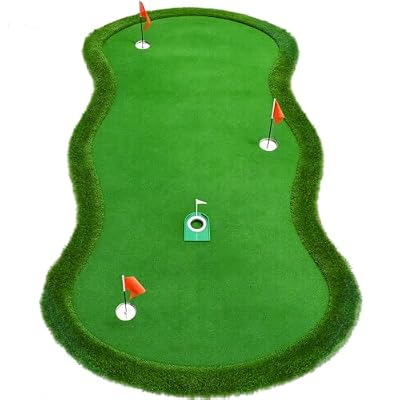
Bearwill Golf Putting Green,5 x 10ft Golf Practice Putting Mat
Included for 'Best Outdoor Putting Greens for Backyard Practice' because the listing specifies 5 x 10ft Golf Practice Putting Mat, details this guide uses to compare options.
View on Amazon
PUTT-A-BOUT Grassroots Par Three Putting Green (9-feet x 3-feet)
Included for 'Best Outdoor Putting Greens for Backyard Practice' as a relevant option in this category; details come from the product listing.
View on Amazon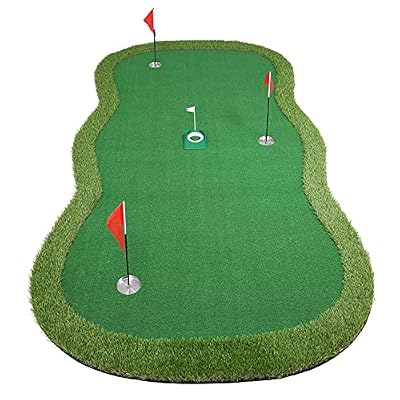
Chriiena Golf Putting Green,Large Practice Putting Mat for Indoor Outdoor
Included for 'Best Outdoor Putting Greens for Backyard Practice' because the listing specifies Large Practice Putting Mat for Indoor Outdoor, details this guide uses to compare options.
View on Amazon
Golf Putting Green Indoor Outdoor Large Practice Putting Mat 5x10ft/5x12ft
Included for 'Best Outdoor Putting Greens for Backyard Practice' as a relevant option in this category; details come from the product listing.
View on AmazonBest choice by backyard situation
| Your situation | Best fit | Why | Compromise |
|---|---|---|---|
| Apartment patio, balcony, or small paved yard | Rollable portable green | Fits tight spaces and stores vertically | Limited drainage and less realistic break |
| Beginner practicing several times a week | Medium-speed modular green | Easy to reset and forgiving enough to show distance-control errors | Panel seams may slightly affect long putts |
| Uneven lawn or soil | Modular green on a prepared aggregate pad | More stable than laying turf directly on grass | Requires ground preparation before assembly |
| Frequent practice by several players | Large custom green or permanent installation | More holes, longer putts, and better traffic tolerance | Higher cost and less portability |
| Wet climate or poorly draining yard | Professionally constructed synthetic green | Proper grading and aggregate reduce standing water | Installation cost can exceed the turf cost |
How much space do you really need?
A 4-by-10-foot green occupies 40 square feet, but the usable footprint is larger. Allow at least 3 feet behind the cup for a comfortable backswing and 6 to 8 feet in front for a full-length putt. A practical clear area is therefore approximately 10 by 16 feet, or 160 square feet.
For a narrow side yard, a 3-by-9-foot model can still provide useful work on setup, alignment, and short putts. If you have a 12-by-20-foot area, a 4-by-12-foot green leaves room for a practice stance and several approach angles. Measure the clear space, not the whole yard: fences, furniture, downspouts, and tree roots can make a nominally large area unusable.
Turf roll speed: what the number does not tell you
Manufacturers may describe speed using a Stimpmeter-style rating, but portable backyard greens are not always measured under identical conditions. A faster surface is not automatically better. Beginners often learn distance control more comfortably on a medium-speed green, while experienced players may prefer a fast surface that exposes poor contact and face control.
- Short, dense fibers: usually produce a quicker, smoother roll but show surface imperfections more clearly.
- Longer or softer fibers: tend to slow the ball and feel more forgiving, though they can develop nap direction.
- Firm underlay: improves consistency and makes breaks easier to read.
- Moisture: generally slows synthetic turf and can make the same putt behave differently from a dry-day practice session.
Look for a product that states its intended speed or playing character, then ask whether the speed can be changed with the underlay or base. Avoid choosing solely from a marketing phrase such as “tour quality.”
Drainage and base preparation matter more than the turf roll
Laying outdoor turf directly over soil or lawn is the most common mistake. The ground settles unevenly, roots grow through the surface, and rain creates soft spots that change the roll. For a more reliable modular setup, remove organic topsoil, install a compacted layer of crushed aggregate, and create a slight fall away from buildings. A permeable shock pad or leveling layer can then sit beneath the turf if the system allows it.
Portable greens placed on concrete or a deck need a different solution. Confirm that rain can escape around the edges, protect the surface from sharp debris, and avoid blocking drains. A balcony or roof terrace may have load restrictions; a compact green is lighter than a gravel foundation, but the total assembled weight can still be substantial.
Assembly effort and a sensible setup sequence
- Measure the playing and storage areas. Include room to walk around the green and store it dry.
- Check the substrate. Remove stones, roots, and soft soil. A long level or straight board will reveal dips that a small spirit level misses.
- Build drainage first. Direct water away from walls and low points before positioning turf.
- Compact the base in layers. A single thick layer may look level but settle later under repeated foot traffic.
- Unroll or connect the turf. Let rollable material relax according to the manufacturer’s instructions before judging its speed.
- Secure edges without creating ridges. Raised borders can deflect a ball and become a trip hazard.
- Place cups only after leveling. Moving a cup to hide a slope makes practice less useful; correct the slope instead.
A portable mat may take less than 15 minutes to deploy. A modular green on a prepared pad can take a weekend for two people. A permanent installation may require excavation, aggregate, edging, drainage, and professional turf work over several days.
Ownership realities: what wears first
Edges and high-traffic stance areas usually show wear before the center of the green. Repeatedly standing in one place compresses the underlay and can create a subtle low spot. Rotate a portable green when its design permits, vary your stance position, and use a brush designed for synthetic turf to restore the pile direction.
- Remove leaves with a soft blower or plastic rake rather than a metal rake.
- Rinse pollen and dust with clean water, then allow the surface to drain fully.
- Do not use household bleach, solvents, or abrasive cleaners unless the turf maker specifically approves them.
- Keep grit, mulch, and pet waste away from the putting line; small particles can change roll and clog drainage.
- Store rollable greens dry and loosely rolled, not folded into sharp creases.
- Inspect seams, anchors, cups, and edge trim at the start of each season.
Consumables are modest for portable systems: replacement cups, seam tape, edge fasteners, and occasional underlay sections. Permanent greens may eventually need infill top-ups, brushing, weed control around the perimeter, or localized repairs. Those maintenance costs should be included when comparing a cheap turf roll with a professionally built green.
Final recommendation
Choose a portable Big Moss-style green when storage and simple setup matter most. Choose a Tour Links modular system when you want a more structured, expandable practice area. Choose a BirdieBall custom design when you need a particular footprint or surface specification. For wet ground, frequent use, and realistic breaks, invest in a properly drained permanent synthetic green rather than placing premium turf over an unstable lawn.
The best outdoor putting greens are not necessarily the fastest or largest. The right choice is the one whose dimensions fit your clear space, whose base keeps the surface level after rain, and whose assembly and maintenance requirements match how often you will actually practice.
Ready to decide? Our #1 pick for 2026 is the Tour Links modular green.
Live price & availability on Amazon.
Related Reviews & Guides

Best OLED 65 Inch TVs for Bright & Dark Rooms

Best Ereader 2026 in 2026: Buying Guide