
Last Updated: September 18, 2026
The Short Answer
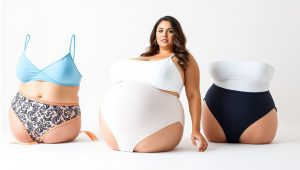
For plus size swimwear, the most reliable fit comes from comparing your current bust, waist, and hip measurements with the size chart for the exact swimsuit—not relying on your usual dress or denim size. Swimsuit fabrics stretch, but they should feel secure rather than strained, digging in, or becoming sheer when wet.
As a practical starting point, measure your fullest bust, natural waist, and fullest hip while wearing lightweight underwear or a non-padded bra. If your measurements fall across two sizes, choose based on the suit style: size up for one-pieces, tankinis, and fitted swim dresses; prioritize the bust measurement for bikini tops; and prioritize hips for bikini bottoms and high-waisted briefs.
As an Amazon Associate we earn from qualifying purchases at no extra cost to you.


For 2026, many plus size swim collections use 0X through 6X sizing alongside 14W through 30W. However, a 2X in one brand can fit like a 16W or an 18W in another. The plus size swimsuit measurements bust waist hips chart below is a useful general guide, but the retailer’s garment-specific chart should always make the final call.
Standard Sizes
These are common U.S. women’s plus size body measurements, not finished garment measurements. A swimsuit’s actual fabric dimensions will be smaller because stretch fabric is designed to fit close to the body.
| U.S. Plus Size | Alpha Size | Bust | Waist | Hips |
|---|---|---|---|---|
| 14W–16W | 1X | 42–44 in / 107–112 cm | 36–38 in / 91–97 cm | 44–46 in / 112–117 cm |
| 18W–20W | 2X | 46–48 in / 117–122 cm | 40–42 in / 102–107 cm | 48–50 in / 122–127 cm |
| 22W–24W | 3X | 50–52 in / 127–132 cm | 44–46 in / 112–117 cm | 52–54 in / 132–137 cm |
| 26W–28W | 4X | 54–56 in / 137–142 cm | 48–50 in / 122–127 cm | 56–58 in / 142–147 cm |
| 30W–32W | 5X | 58–60 in / 147–152 cm | 52–54 in / 132–137 cm | 60–62 in / 152–157 cm |
| 34W–36W | 6X | 62–64 in / 157–163 cm | 56–58 in / 142–147 cm | 64–66 in / 163–168 cm |
If you are between sizes, remember that bust fit and torso length can matter more than the label. For example, someone with a 48-inch bust, 40-inch waist, and 52-inch hips may need a 2X bikini top and a 3X bottom. Separates make this easy; one-pieces may require trying two sizes or choosing a style with adjustable straps, a lace-up back, or a longer torso cut.
How to Measure Your Space
Think of “space” as the room your swimsuit needs to comfortably cover and support. Use a flexible tape measure in inches, keep it level with the floor, and do not pull it tight enough to compress the skin.
- Measure your bust. Stand naturally and measure around the fullest part of the bust. Keep the tape straight across your back. For swim tops with built-in cups or underwire, also note your everyday bra size, but use the bust measurement first when a brand provides both options.
- Measure your waist. Find your natural waist, usually the narrowest point between the rib cage and navel. This is especially important for high-waisted bikini bottoms, ruched briefs, and swim skirts.
- Measure your hips. Stand with feet together and measure around the fullest part of your hips and seat. This is often about 7 to 9 inches below the natural waist.
- Measure your torso for one-pieces. Start at one shoulder, run the tape down the front through the legs, and back up to the same shoulder. If you have a long torso, look for adjustable straps, shelf-bra tankinis, or two-piece options rather than forcing a short one-piece to fit.
- Compare every number. Do not choose a size based on only one measurement. If the chart places you in different sizes, select the size that accommodates the largest measurement unless the suit is sold as separate pieces.
- Do a movement check at home. Before removing tags, bend, sit, reach overhead, and walk. The neckline should stay in place, leg openings should not pinch, and the seat should remain fully covered.
By Room or Use Case
Pool Laps and Water Fitness
For swimming laps, water aerobics, or regular pool use, prioritize a secure neckline, broad straps, and a firm underband. A sports-bra-style bikini top with a scoop neck can be a strong choice for a fuller bust, particularly when it has adjustable straps or removable cups. Expect simple supportive tops to fall around $25 to $35, including styles similar to a plus size scoop-neck swim crop top priced near $26.99.
Choose bottoms with a stay-put waistband and moderate leg opening. High-waisted briefs provide reliable coverage for kicking and bending, while a 5- to 7-inch inseam swim short can reduce thigh chafing for some wearers. If your waist is smaller than your hips, avoid relying on a loose elastic waist alone; a drawstring or structured wide waistband is more secure.
Beach Days and Sun Lounging
For beach wear, comfort, adjustability, and easy coverage often matter more than maximum compression. Tankinis are helpful when your bust, waist, and hips span different sizes because the top gives more torso flexibility than a one-piece. A printed two-piece tankini with ruffle details can typically cost about $30 to $40; an example price for a polka-dot ruffle tankini set is $31.99.
Look for wider shoulder straps if you have a fuller bust, as narrow straps can feel uncomfortable after several hours. A longer tankini hem should cover the point you want covered without clinging tightly at the hips. If the hem rides up when you raise your arms, try the next size up or choose a style with side ties.
Tummy Control and High-Waisted Coverage
High-waisted swim bottoms work best when the waistband reaches above the fullest part of the lower stomach without rolling. Measure both your natural waist and the area where the top edge of the bottom will sit. A bottom labeled 18W may be a good match for a 40- to 42-inch waist and 48- to 50-inch hips in many size ranges, but check the individual chart.
Ruched panels can provide a flexible, flattering fit, but they do not replace correct sizing. If ruching is stretched flat across the front, the bottom is likely too small. A retro ruched high-waist brief can be an affordable separate at roughly $18 to $25, with an example 18W bottom priced at $19.99.
Resort Wear, Swim Skirts, and Three-Piece Sets
A three-piece swimsuit—usually a bikini top, high-waisted bottom, and skirt or cover layer—offers versatile coverage for walking from the pool to lunch. These sets commonly cost about $30 to $45. A tummy-control three-piece suit with a skirt may be priced around $34.99.
For a swim skirt, measure the hip rather than sizing from the waist alone. The built-in brief must fit comfortably across the seat, while the outer skirt should drape without pulling. Check the skirt length as well: a 12- to 16-inch length is common for upper-thigh coverage, while longer options can reach closer to the knee depending on height.
Common Sizing Mistakes
- Buying your regular clothing size without measuring. Swimwear size labels vary widely, especially between straight-size and women’s plus-size ranges.
- Sizing down for “tummy control.” A too-small suit rolls, digs in, strains seams, and may become uncomfortable or transparent when wet. Control panels work only when the garment fits.
- Ignoring torso length in one-pieces. A suit can match your bust, waist, and hip measurements but still pull at the shoulders or cut into the leg openings if the torso is too short.
- Using one size for every bikini piece. Many shoppers need different top and bottom sizes. Buy separates whenever possible for a more precise fit.
- Forgetting that wet fabric changes feel. Swim fabric often relaxes slightly in water. Start with a comfortably snug fit that allows full movement without pain.
- Assuming removable pads equal bust support. Pads provide shape and modesty; wide bands, supportive lining, underwire, and adjustable straps provide more meaningful support.
FAQ
Should I size up in a plus size swimsuit?
Size up if you fall between sizes, have a long torso, prefer more coverage, or find that your hip or bust measurement exceeds the chart for your usual size. Do not automatically size up in every swimsuit, though. A bikini top with adjustable straps may fit true to the bust chart, while a one-piece in the same brand may need a larger size.
What measurement matters most for a one-piece swimsuit?
All three—bust, waist, and hips—matter, but torso length is the common missing measurement. If the suit fits around your body but pulls at the shoulders, flattens the bust, or rides up at the leg openings, the torso is likely too short. Choose a long-torso style, adjustable straps, or a tankini.
How should a high-waisted bikini bottom fit?
It should lie smoothly at the waist without rolling, gaping, or pressing deeply into the skin. The seat should remain covered when you sit or bend. If the waistband rolls down, the bottom may be too small, too short in the rise, or sitting at the wrong point on your waist.
Can I wear different sizes on top and bottom?
Yes. Different top and bottom sizes are often the best solution for plus size swimwear, especially for fuller busts, pear shapes, and hourglass figures. Choose your top from your bust measurement and your bottom from your hip measurement, then use adjustable features to fine-tune the fit.
Ready to decide? Our #1 pick for 2026 is the 14W–16W.
Live price & availability on Amazon.
Related Reviews & Guides

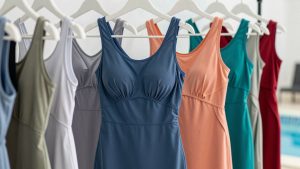
6 Best Most Flattering Jeans For Plus-Size 2026
Plus Size Pants Inseam Measurements By Height Size Guide With Measurements (2026)