
Last Updated: August 30, 2026
- Top Picks at a Glance
- Side-by-Side Comparison: Recumbent vs Upright for Plus-Size Riders
- The Recumbent Bike Case: Why It Wins for Most Plus-Size Riders
- The Upright Bike Case: When It Makes Sense
- Who Should Choose Each Type
- What to Look For in Either Type: Plus-Size Specific Specs
- Frequently Asked Questions
- Related Articles
- Top Pick: pooboo Folding Magnetic X‑Bike, Upright Exercise Bike for Home Gym
- Best Value: BARWING Stationary Exercise Bike for Home,5 IN 1 Foldable Indoor Cycling Bike for Seniors, 350LB Capacity,16-Level Magnetic Resistance, Seat Backrest Adjustments
- Premium Choice: Exercise Bike, 3 IN 1 Stationary Bike, Folding Exercise Bike with 16-Level Resistance, Comfortable Seat Cushion, LCD Monitor, 265 lbs Weight Capacity for Home Gym Workout (Orange)

TL;DR: For plus-size riders, recumbent bikes win on joint comfort, back support, and accessibility — especially at 300+ lb. Upright bikes offer a smaller footprint and more natural riding feel but demand more from knees, wrists, and the lower back. Both types have models rated to 350–400 lb; seat width and adjustability matter more than the bike type itself.
Recumbent vs Upright Bike for Plus Size: Which Is Actually Better?
The recumbent-vs-upright debate gets repeated endlessly in fitness circles — usually by people who’ve never had to think about seat width, frame weight capacity, or whether their back survives 30 minutes of cardio. For plus-size riders, this isn’t an abstract question about calorie burn efficiency. It’s about joint pain, accessibility, sustainable movement, and whether you can actually get on and off the bike without it becoming a stunt.
As an Amazon Associate we earn from qualifying purchases.


This comparison breaks down both types honestly — with real fit data, weight capacity specs, and the actual experience of riding each as a plus-size person.
🛒 Best Price Today on Amazon
Prime members get fast, free shipping on everything above, plus member-only deals. New members get a 30-day free trial — cancel anytime.
Start 30-Day Prime Free Trial →See Today’s Amazon DealsTop Picks at a Glance

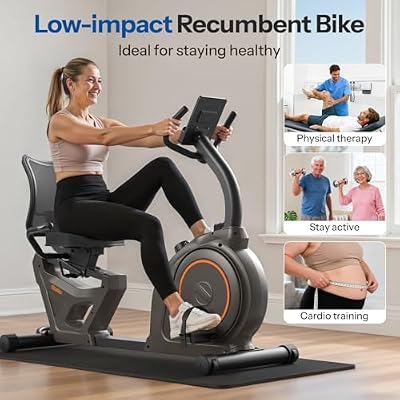


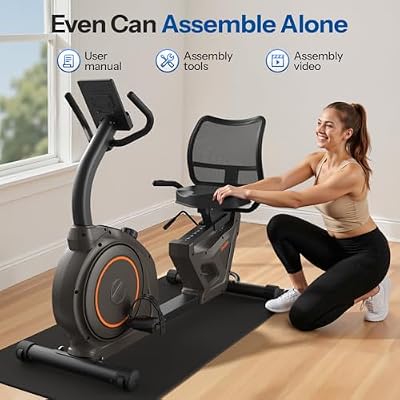
As an Amazon Associate we earn from qualifying purchases. Product prices and availability are accurate as of the date/time indicated.
Type: Recumbent
Weight cap: 380 lb
Best for: Joint issues, beginners, 300+ lb riders

GCI Outdoor Freestyle Rocker XL with Side Table Camping Chair | Portable Folding Rocking Chair with Solid, Durable Armrests, Drink Holder & Comfortable Backrest — Black

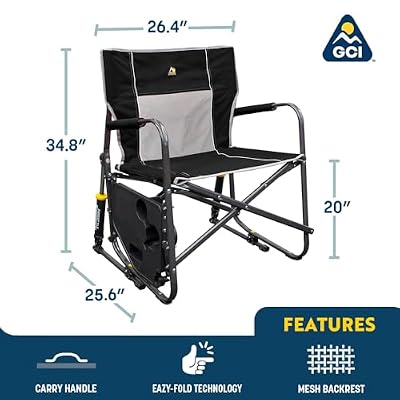


As an Amazon Associate we earn from qualifying purchases. Product prices and availability are accurate as of the date/time indicated.
Type: Camp chair (recovery)
Weight cap: 350 lb
Best for: Post-workout rest

Sherpa Hiking Hydration Backpack – 22L Hiking Backpack with Water Bladder, Phone Compartment, Waterproof Zippers & Trekking Pole Holders


As an Amazon Associate we earn from qualifying purchases. Product prices and availability are accurate as of the date/time indicated.
Type: Hydration gear
Use: Active recovery walks
Fits: Plus-size torso
Side-by-Side Comparison: Recumbent vs Upright for Plus-Size Riders
| Factor | Recumbent Bike | Upright Bike |
|---|---|---|
| Seat size | Wide, chair-like (18–22 in typical) | Narrow saddle (10–14 in typical) |
| Back support | Full backrest standard | No back support |
| Joint impact on knees | Lower — pedals forward reduces knee angle | Higher — vertical pedal stroke stresses knees |
| Wrist/shoulder strain | None — no forward lean | Moderate — leans on handlebars |
| Getting on/off | Easy — low step-through, sit down naturally | Harder — must swing leg over saddle |
| Balance requirement | Minimal — stable reclined position | Moderate — requires core engagement |
| Core engagement | Lower — backrest does stabilizing work | Higher — posture must be maintained |
| Calorie burn (comparable effort) | Roughly equal at same resistance | Slightly higher for same duration |
| Footprint | Larger (longer bike) | Smaller (standard exercise bike size) |
| Weight capacity (typical heavy-duty) | 350–400 lb | 300–350 lb (fewer heavy-duty options) |
| Price range (quality plus-size) | $300–$600 | $250–$500 |
The Recumbent Bike Case: Why It Wins for Most Plus-Size Riders
Joint-Friendly by Design
The recumbent position places your legs in front of you rather than below you. This changes the knee’s loading angle significantly — less stress on the patella and meniscus during the pedal stroke. For plus-size riders who often carry extra weight that already loads joints, this isn’t a minor perk. It’s the difference between sustainable cardio and knee pain after week two.
Lower back benefits are equally real. The Niceday Recumbent Exercise Bike’s backrest supports the lumbar curve throughout the pedal stroke — no hunching, no forward-lean fatigue, no post-workout lower back ache that makes you skip the next session.
Niceday Recumbent Bike: Fit Data for Plus-Size Riders
As an Amazon Associate we earn from qualifying purchases. Product prices and availability are accurate as of the date/time indicated.
| Spec | Detail |
|---|---|
| Weight capacity | 380 lb |
| Seat width | Wide contoured seat with back support |
| Seat adjustment | 8-position sliding seat rail |
| Height range | 5’1″ – 6’4″ (inseam 27″–36″) |
| Resistance levels | 16 magnetic levels |
| Display | LCD — time, distance, calories, pulse |
| Pulse monitor | Grip sensors on handles |
| Flywheel | Silent magnetic drive |
| Dimensions | 57L × 25W × 37H in |
The 380 lb capacity is notably higher than most recumbent bikes in this price range (many cap at 300 lb). The seat slide has 8 positions — enough range for shorter and taller riders to find a true 90-degree knee angle at the bottom of the pedal stroke.
Accessibility: Getting On and Off
For riders with mobility limitations, hip pain, or balance concerns, the step-through design of a recumbent is a practical advantage that rarely gets enough credit. You sit down into the seat, position your feet on the pedals, and start. No swinging a leg over a saddle, no balancing act while getting settled. Getting off is equally simple — stop pedaling, slide the seat back, stand up forward.
The Upright Bike Case: When It Makes Sense
Smaller Footprint
A recumbent bike is typically 55–60 inches long. An upright is 40–45 inches. In a small apartment or bedroom home gym, that 15-inch difference matters. If space is the limiting factor and you don’t have joint issues, an upright still works — just requires a wider seat (often sold as an aftermarket upgrade for $20–$40).
More Calorie Burn at High Intensity
Upright bikes allow standing climbs and aggressive high-intensity intervals that recumbents don’t. If your goal is maximum cardio output and you’re comfortable with the saddle position, upright bikes provide more training variety. Spin-style uprights (Schwinn IC4, Sunny SF-B1805) have 330–350 lb capacity and adjustable saddles that can accommodate plus-size riders with the right saddle swap.
More Natural Feel for Former Cyclists
If you’re a road cyclist or casual bike commuter, the upright position mimics outdoor cycling. The muscle activation pattern is familiar, and the feedback feels more like “real” cycling. For fitness newcomers, this doesn’t matter. For experienced riders, it might.
Who Should Choose Each Type
| Your Situation | Recommended Type |
|---|---|
| Knee, hip, or lower back pain | Recumbent |
| 300+ lb starting weight | Recumbent (more high-cap options) |
| Mobility limitations, balance concerns | Recumbent |
| Small apartment, tight space | Upright |
| Experienced cyclist, wants natural feel | Upright |
| High-intensity interval training focus | Upright (or air bike) |
| Fitness beginner, intimidated by equipment | Recumbent |
| Post-surgery rehabilitation | Recumbent (consult physio) |
What to Look For in Either Type: Plus-Size Specific Specs
- Weight capacity: Minimum 300 lb; target 350–400 lb for a safety margin (don’t ride at a bike’s exact rated limit)
- Seat width and padding: For recumbent, 18 in minimum seat width; for upright, a wide comfort saddle or aftermarket replacement
- Seat adjustment range: Must accommodate your inseam fully — full leg extension at bottom of pedal stroke (slight bend in knee, not locked)
- Frame stability: Steel frame preferred; aluminum can flex under higher loads
- Step-through clearance: Upright bikes with lower frames are easier for riders with limited hip mobility
- Handlebar grip position: Wide grips reduce wrist strain; some uprights offer multiple grip positions
For a full deep-dive on recumbent options, see our this recumbent exercise bike plus size article with capacity specs for all major models. And when you’re ready to take your fitness outdoors, check out the our plus size hiking backpack review — a well-fitted pack makes trail walking genuinely enjoyable, not a shoulder-strain ordeal.
Frequently Asked Questions
Is a recumbent or upright bike better for plus-size people?
Recumbent wins for most plus-size riders — wider seat, back support, lower joint impact, and easier mount/dismount. The only scenarios where upright makes more sense are limited space, experienced cycling background, or a preference for high-intensity standing intervals.
What is the weight limit on most recumbent bikes?
Standard recumbent bikes cap at 250–300 lb. Heavy-duty models like the Niceday Recumbent (380 lb) and Schwinn 270 (300 lb) are specifically engineered for higher weight ranges. Always check the spec sheet — “heavy duty” in marketing doesn’t always mean higher weight capacity in reality.
Can plus-size people use upright exercise bikes?
Yes — with the right model. Look for uprights with 300+ lb weight capacity, a wide adjustable seat (or aftermarket upgrade), and a step-through or low-mount design. The Schwinn IC4 (330 lb) and Sunny SF-B1805 (350 lb) work well for plus-size riders who want an upright experience.
Will a recumbent bike help with weight loss for plus-size people?
Yes — sustained low-impact cardio is effective for fat loss, especially for people who can’t sustain high-impact activities due to joint pain. The key is consistency: a recumbent bike you actually use 4x/week burns more fat than an upright bike that hurts your back after 10 minutes and sits unused. Comfort and sustainability trump theoretical calorie numbers.
How do I know if a recumbent bike seat will fit me?
Measure your hip width (widest point at the hip) in a sitting position. The seat should be at least equal to that measurement — ideally 2 inches wider on each side for comfort. Most recumbent bike seats are 16–22 inches wide; plus-size specific models hit 20–22 in. Check the manufacturer spec sheet, not just the product photos.
Ready to decide? Our #1 pick for 2026 is the Seat size.
Live price & availability on Amazon.
Related Reviews & Guides


6 Best Sports Bras For Plus Size Women 2026

6 Best Evening Dresses For Plus Size Women 2026