
Last Updated: November 23, 2026
For a heavier adult, an aerobic step is a load-bearing purchase before it is a cardio purchase. Many compact platforms publish no weight rating at all, and a deck that flexes or a riser that skates sideways mid-routine is a fall risk, not a workout tool. The real decision is matching a published capacity to your body weight plus anything you hold, then checking that the deck is long and wide enough for your stance and stride.
This roundup is for plus size beginners starting low-impact step work, returning exercisers who need a stable deck, and heavier adults adding strength moves on the step. Every platform below was chosen from its Amazon product page, and each one publishes a weight capacity of at least 300 pounds in its own listing, alongside the deck dimensions and riser details quoted in its specs.
Quick Picks
As an Amazon Associate we earn from qualifying purchases.
| Product | Best for | Key spec from title |
|---|---|---|
| The Step Original Aerobic Platform, Health Club Size | Class-style routines on a full-size deck | 43-inch health club size platform |
| BalanceFrom Aerobic Step Platform Trainer | Mid-size rooms that still need three heights | 400 pound weight capacity |
| Yes4All Adjustable Workout Aerobic Step Platform, Health Club Size | Wide-deck training on a tighter budget of space | 42.5-inch anti-slip step surface |
| Amazon Basics Aerobic Exercise Step Platform, 27 Inch | Small spaces and simple two-height setups | 27-inch adjustable workout stepper |
| GYMMAGE Aerobic Exercise Stepper, 26.5 Inch | Light, compact decks that move room to room | 26.5-inch step deck with 4, 6 and 8 inch risers |
How to Choose
Start with the published capacity, not the marketing
A step platform takes your full body weight on one foot, repeatedly, with downward force on every landing. Look for a structured weight limit or weight capacity field on the listing itself, and treat a missing number as a failed check rather than a detail to overlook. Leave margin above your scale weight: dumbbells, a weighted vest or a hard landing all add load beyond what you weigh standing still. Every platform in this roundup publishes at least 300 pounds on its Amazon page, and the capacity line in each spec list below is copied from that listing.
Match deck length and width to your feet and stance
Deck size decides whether your whole foot lands on the platform during lateral moves, knee lifts and straddle steps. Club-size decks around 42 to 43 inches long and 16 inches wide let you travel sideways and turn without hunting for the edge. Compact decks near 27 inches long and 11 inches wide suit straight up-and-down stepping in a small room, but larger feet can overhang the narrow width on side steps. Measure your usual stance, compare it with the deck dimensions in each spec list, and favor width if you plan any side-to-side choreography.
Check the height range and how the risers attach
Most adjustable steps offer 4, 6 and 8 inch heights, changed by adding riser blocks under each end. Beginners and anyone protecting knees or ankles should start at 4 inches, where form is easier and impact stays low. Confirm how many risers are included, because some sets need extra pairs bought separately to reach the tallest setting. Also look at how risers seat: designs that lock or nest firmly shift less than blocks that simply rest under the deck. A two-height platform is simpler and stores flatter, but it caps how far you can progress.
Judge grip and floor behavior before speed
A textured or cushioned top keeps shoes planted when you sweat, and rubber feet or pads stop the deck migrating across hard floors. Read the listing for a nonslip surface description and non-marking pads, then plan your floor: carpet grips a step well, while smooth tile and hardwood let light platforms travel. Weight matters here too. A heavier platform around 20 pounds tends to stay put during fast routines, while a 5 to 7 pound deck is easier to carry and store but needs a grippy surface underneath to feel secure.
The 5 Best Options
The Step Original Aerobic Platform, Health Club Size

This is the platform step classes were built around, and its 43 by 16 inch deck is the roomiest here for travel steps, turns and straddle moves. The listing rates it at 350 pounds in its structured capacity field, and the set includes four risers for 4, 6 and 8 inch heights. A cushioned nonslip top softens landings for step-ups, dips and push-up work, and the high-density polyethylene build is made in the United States. At roughly 22 pounds it stays planted during fast routines, though that same weight makes it the least portable pick in this group.
Specs
- Deck size: 43 x 16 inches
- Height settings: 4, 6 and 8 inches
- Risers included: 4
- Weight capacity: 350 pounds
- Material: High-density polyethylene
- Item weight: 9.93 kilograms
- Surface: Nonslip cushion top
- Model: F1005, part number F1016W
Best for: Heavier adults who want the full club-size deck for choreography and strength work.
Watch out for: The listing copy mentions a higher figure with risers, but the structured capacity field reads 350 pounds, so plan around 350.
ASIN: B0007OWSW2
BalanceFrom Aerobic Step Platform Trainer

BalanceFrom splits the difference between compact and club size: a 31 by 11.5 inch deck with three height levels and a 400 pound capacity printed right in the listing title. The AeroStep-BLK adjusts through 4, 6 and 8 inches, so it covers beginner sessions and harder intervals without a second purchase. Its structured capacity field confirms the 400 pound figure, and a two-year manufacturer warranty is listed, which is uncommon at this size. The deck is long enough for traveling steps in a spare room, yet short enough to slide against a wall when the workout ends.
Specs
- Deck size: 31 x 11.5 inches
- Height settings: 4, 6 and 8 inches (3 levels)
- Weight capacity: 400 pounds
- Material: Plastic
- Color: Black
- Warranty: 2-year manufacturer warranty
- Model: AeroStep-BLK
- Item weight: not stated
Best for: Mid-size rooms where a club deck will not fit but three heights are still wanted.
Watch out for: The 11.5 inch width is narrower than club decks, so check your footing on lateral moves, and confirm the black AeroStep-BLK variant at checkout.
ASIN: B0C67GRMS4
Yes4All Adjustable Workout Aerobic Step Platform, Health Club Size
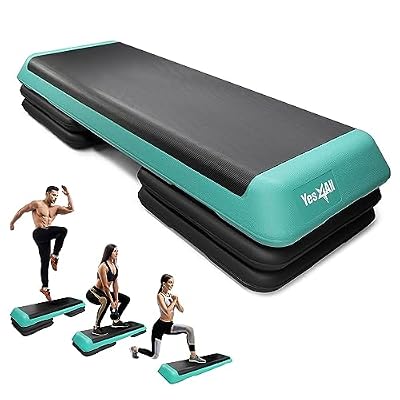
Yes4All’s health club model matches the wide-deck format at 42.5 by 16 inches, with four included risers sized 16 by 16 by 2 inches that set the platform at 4, 6 or 8 inches. Its listing publishes a 300 pound weight limit in the structured fields, the lowest rating in this roundup, so it suits heavier beginners best when used for bodyweight stepping rather than loaded jumps. The anti-slip surface and high-density polyethylene construction mirror the club format, and at 20.4 pounds the set is heavy enough to feel settled on the floor during steady routines.
Specs
- Deck size: 42.5 x 16 inches
- Height settings: 4, 6 and 8 inches
- Risers included: 4, each 16 x 16 x 2 inches
- Weight capacity: 300 pounds
- Material: High-density polyethylene (HDPE)
- Item weight: 20.4 pounds
- Part number: LC772
Best for: Beginners who want a wide, stable deck and plan to progress by height, not by added load.
Watch out for: The 300 pound limit leaves no margin for dumbbells at higher body weights, and the health club size (part LC772) differs from Yes4All’s smaller circuit and high-step models, so check the part number.
ASIN: B0CD715M8G
Amazon Basics Aerobic Exercise Step Platform, 27 Inch
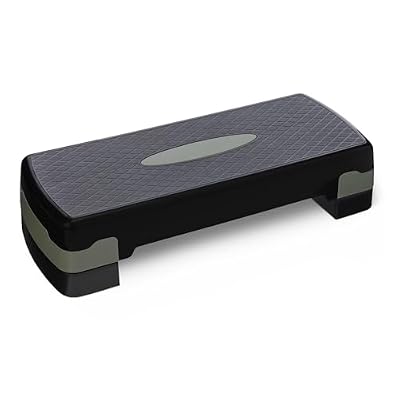
Amazon Basics keeps things simple with a 27 inch deck, two height settings and a structured weight limit of 400 pounds, the joint-highest rating here despite the small footprint. The polypropylene deck adjusts between 4 and 6 inches, and the risers store underneath the platform, which makes it easy to keep in a closet or under a bed. At just over 2 kilograms it is the lightest full step in this group by a wide margin. That compact size favors straight stepping, step-ups and calf work in tight rooms over wide traveling choreography.
Specs
- Deck size: 27 inches (68 x 28 cm)
- Height settings: 4 and 6 inches (2 levels)
- Weight capacity: 400 pounds
- Material: Polypropylene
- Item weight: 2.06 kilograms
- Part number: JRTA1001
- Storage: Risers store under the platform
Best for: Small apartments and anyone who wants a high published capacity in the smallest deck.
Watch out for: There is no 8 inch setting, so progression stops at 6 inches, and the 11 inch width is tight for lateral moves in larger shoes.
ASIN: B0DPPMRCFC
GYMMAGE Aerobic Exercise Stepper, 26.5 Inch

The GYMMAGE deck is a compact 26.5 by 10.5 inches yet still offers three heights and a 400 pound weight limit on its listing, which makes it a strong pick for heavier users short on floor space. The ABS deck uses a circular-groove textured top for grip, with four non-slip rubber feet listed to protect floors and hold position. It weighs about 3.24 kilograms, light enough to carry between rooms or take outside. The cited listing is the turquoise variant; other colors in the same listing family share the format, so confirm the size and height range on the variant you select.
Specs
- Deck size: 26.5 x 10.5 inches
- Height settings: 4, 6 and 8 inches (3 levels)
- Weight capacity: 400 pounds
- Material: ABS
- Item weight: 3.24 kilograms
- Color: Turquoise
- Surface: Circular-groove textured top
Best for: Heavier adults in small spaces who still want the full 4 to 8 inch height range.
Watch out for: At 10.5 inches this is the narrowest deck here, so larger feet may overhang on side steps; confirm the 26.5 inch variant at checkout.
ASIN: B093BMCHXQ
Which One Fits Your Situation
You are starting step workouts after a long break
Begin at 4 inches on a deck that will not move under you. The Step Original and the Yes4All health club platform give you the widest landing area and enough weight to stay settled while you rebuild rhythm and confidence. Both publish their capacities, 350 and 300 pounds, and both let you raise the height later without replacing the equipment.
Your workout corner is genuinely small
Choose between the two compact 400 pound decks. The Amazon Basics 27 inch stores its risers underneath and suits straight stepping at 4 or 6 inches, while the GYMMAGE adds an 8 inch setting for later progression. Either fits a closet or slides under furniture, and neither asks you to accept an unpublished capacity to save space.
You want to add dumbbells and strength moves on the step
Load changes the math, because the platform carries you plus whatever you hold. The BalanceFrom AeroStep-BLK and the two compact 400 pound decks publish the highest limits here, and the BalanceFrom adds a mid-size 31 inch deck with three heights for step-ups, dips and elevated push-ups. Keep the combined total under the printed rating and start at the lowest height.
You follow fast, choreographed step classes
Traveling steps, turns and straddles need deck length more than anything. The 43 inch Step Original and the 42.5 inch Yes4All are the two club-format decks in this roundup, with 16 inch widths that forgive imperfect foot placement at speed. The Step Original carries the higher published capacity of the pair, which matters once routines get jumpy.
Common Mistakes
- Buying a step with no published weight capacity and assuming the plastic will cope.
- Adding your body weight and heavy dumbbells together past the platform’s printed limit.
- Starting at 8 inches before your knees, ankles and balance are ready for it.
- Placing a light deck on smooth tile or hardwood with nothing grippy underneath.
- Ordering extra risers for the wrong model line, since riser sizes differ between brands.
Frequently Asked Questions
How much weight capacity should a heavier adult look for?
Start with a listing that publishes at least 300 pounds, then add the weight of anything you hold during the workout. A platform rated 350 or 400 pounds gives a safer margin for step-ups with dumbbells. If a listing shows no capacity field at all, treat that as a reason to choose a different model rather than a detail to ignore.
Is a wider deck really safer for plus size steppers?
Width buys forgiveness. A 16 inch deck lets your whole foot land flat during lateral moves and turns, while an 11 inch deck demands precise placement on every side step. Length matters too: club decks around 43 inches suit traveling choreography, while compact decks are better kept to straight stepping patterns where your feet stay centered.
Can I use an aerobic step as a weight bench?
Only within the published capacity, and only for controlled moves. These decks are designed for stepping loads spread through the risers, so dips, elevated push-ups and step-ups are reasonable uses. Lying presses with a barbell concentrate weight differently and exceed what most step listings describe. Check the combined load of body plus weights against the printed limit before trying bench-style work.
What height should a beginner start with?
Four inches is the sensible starting point for almost everyone, and it is the base height of every platform in this roundup. It keeps impact low while you learn foot placement and timing. Move to 6 inches once routines feel easy and your joints stay comfortable, and treat 8 inches as an advanced setting rather than a default.
Related Reviews & Guides


6 Best Swimwears For Women Plus Size 2026
Best Long Garment Bags for Plus Size Dresses and Gowns