
Last Updated: September 9, 2026
- Top Pick: Juki DDL8700 LockStitch Industrial Sewing Machine,Table,Servo Motor,Lamp. Not Assembled
- Best Value: Juki 2010q Sewing and Quilting High Speed Semi-Industrial Machine
- Premium Choice: Juki DNU-1541S Industrial Sewing w/Safety Mechanism DNU 1541 Walking Foot Needle Feed,servo Motor,Table,lamp. DIY.
Industrial sewing machines occupy a strange middle ground in the sewing world. They cost more than a domestic machine, demand workspace you might not have, and require a level of maintenance that casual hobbyists often underestimate. Yet for anyone producing garments in volume, repairing upholstery, or stitching through layers of denim and canvas, the speed and consistency of an industrial lockstitch remains unmatched by any consumer alternative.
Juki has long been a reference point in this category, and the models currently available span from bare machine heads to full walking-foot workhorses with servo motors and tables. What separates a smart purchase from a regrettable one comes down to matching the machine’s feed mechanism and stitch capability to the actual materials you handle most, then factoring in assembly expectations and long-term parts availability. The eight machines below represent the range of options a serious buyer should consider in 2026, and the differences between them are more consequential than a casual comparison might suggest.
As an Amazon Associate we earn from qualifying purchases at no extra cost to you.



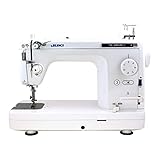
Quick Picks
| Product | Best for | Price |
|---|---|---|
| Juki DDL8700 Complete Setup | General-purpose garment production | $1189 |
| Juki 2010Q Semi-Industrial | Quilting and mixed domestic-industrial work | $1199 |
| Juki DNU-1541S Walking Foot | Upholstery, leather, and thick material | $2399.95 |
| Juki DDL8700H Head Only | Experienced users upgrading a head into an existing setup | $629 |
| Juki Heavy Material Straight Stitch | Denim and heavy woven fabrics on a budget | $1088.97 |
| Juki DDL-8700 DIY Assembly | Hands-on buyers who want a complete setup at a lower price | $1149 |
| Juki TL-2010Q Thread Trimmer | Quilting and apparel finishing without trimming tools | $1199 |
| Juki TL-2010Q Bonus Pack | Quilters who want bundled accessories out of the box | $1199 |
How We Picked
We narrowed this list using four criteria. First, stitch type and feed mechanism: whether the machine handles the materials you actually sew, because a walking foot is essential for stacked layers and useless for lightweight apparel. Second, value per component: some listings bundle a table, servo motor, and lamp while others sell only a head, so raw price alone misleads. Third, assembly burden: machines arriving unassembled demand tools, time, and mechanical confidence that not every buyer has. Fourth, published owner feedback on stitch consistency and noise, which separates machines that hold spec from those that drift under sustained use.
The 8 Best Juki Industrial Sewing Machine in 2026
Juki DDL8700 Complete Setup
The DDL8700 is Juki’s bread-and-butter lockstitch, and this listing bundles the full operating package: machine head, table, servo motor, and integrated LED lamp. It suits anyone producing shirts, dresses, or lined jackets where clean, consistent stitch lines matter at speed. Pros include servo motor quiet operation and the convenience of a matched table that reduces vibration. The notable con is that the machine arrives completely unassembled, so budget an hour or more for setup. Skip this one if you lack the tools or patience for mechanical assembly and want a machine that runs the same day it arrives.
Juki 2010Q Semi-Industrial
This machine targets quilters and sewists who need more power than a domestic unit but do not want a full industrial setup that dominates a room. The 2010Q sits at a crossroads, offering high-speed lockstitch capability with a footprint that fits a standard sewing table. Pros are its speed range, which accommodates both deliberate piecing and rapid topstitching, and its reputation for handling layered quilt sandwiches. The main limitation is thread capacity relative to true industrial heads; frequent spool changes interrupt long production runs. Skip it if your primary work involves leather or stacked upholstery material rather than woven fabrics and batting.
Juki DNU-1541S Walking Foot
The DNU-1541S is the specialist here, designed for anyone sewing through layers that a standard drop-feed machine cannot advance evenly. Walking-foot needle feed handles leather, canvas, and upholstery fabric without shifting or puckering. Pros include the integrated safety mechanism, which reduces pinch hazards during heavy work, and the complete package with servo motor, table, and lamp. The price reflects its professional positioning, and the DIY assembly note means you still need mechanical confidence to get it running. Skip this machine if you sew lightweight or medium-weight apparel exclusively, as a lockstitch will serve you faster and cheaper.
Juki DDL8700H Head Only
At the lowest entry price on this list, the DDL8700H is strictly for buyers who already own a compatible table and motor and need a replacement or upgrade head. The 8700H variant is built specifically for heavy material, making it a targeted upgrade for denim, twill, or multi-layer garment construction. Pros include the head-only price advantage and the high-speed capability rated for dense fabrics. The obvious limitation is that this is a component, not a machine; without an existing setup, the $629 figure is misleading. Skip it unless you already have a working industrial stand, motor, and the knowledge to match them correctly.
Juki Heavy Material Straight Stitch
This listing offers a complete lockstitch package positioned at a modest discount relative to comparable full setups, aimed at sewists who regularly push through heavyweight woven fabrics without needing a walking foot. Pros include the straight-stitch simplicity, which means fewer adjustments and easier troubleshooting, and the bundled table and servo motor. Assembly is required, and owner feedback notes the table setup takes longer than expected for beginners. Skip this one if you need zigzag capability or work primarily with stretch knits, since a straight-stitch-only machine limits garment construction options.
Juki DDL-8700 DIY Assembly
Essentially the same machine as the DDL8700 Complete Setup but sold at a lower price because the buyer accepts more assembly responsibility. This includes table, servo motor, and LED lamp in the box. Pros are the lower entry cost for a full lockstitch system and the LED lamp, which improves visibility during detailed work. The con is assembly time; owners describe fitting the motor and aligning the head as requiring a second pair of hands and patience. Skip it if your workshop time is limited and paying more for convenience would save you a frustrating evening.
Juki TL-2010Q Thread Trimmer
The TL-2010Q distinguishes itself with an automatic thread trimmer, a feature that eliminates the need for snips during repetitive sewing sessions. For quilters and apparel makers who start and stop frequently, this small convenience compounds into meaningful time savings. Pros include the trimmer function and its portable form factor, which makes it easier to store or move than a table-mounted industrial. The limitation is that portability trades off against the stability and vibration damping of a full table setup. Skip it if your workflow involves long uninterrupted runs where the trimmer adds no value and a fixed table would perform better.
Juki TL-2010Q Bonus Pack
This is the same TL-2010Q platform sold with a bundled accessory pack, appealing to quilters who want a ready-to-sew kit without sourcing feet, needles, and bobbins separately. Pros include the convenience of curated accessories matched to the machine and the identical price to the standalone listing, effectively bundling value. The con is that bonus pack contents vary by retailer and may overlap with items you already own. Skip it if you already have a full accessory drawer and prefer to choose exactly which feet and needles come into your studio rather than accepting a pre-selected set.
Buying Guide
Lockstitch vs. Walking Foot: Choosing the Right Feed
A standard lockstitch uses a drop feed, advancing fabric from below with feed dogs. This works perfectly for single layers and moderate stacks up to three or four layers of woven fabric. A walking foot adds upper-ply feed rollers that grip the top layer and advance it in sync with the bottom. If you sew leather, upholstery, quilt sandwiches with batting, or stacked denim, the walking foot is non-negotiable; a drop-feed machine will shift, pucker, or stall regardless of how skilled the operator is.
Servo Motor vs. Clutch Motor
Servo motors run only when the foot pedal is pressed, stop precisely at your desired needle position, and operate at significantly lower noise levels than traditional clutch motors that spin continuously. For home workshops or shared spaces, the noise difference matters. Servo motors also offer adjustable speed ranges, letting you dial down for detail work without sacrificing top speed for production runs. Clutch motors remain cheaper but are increasingly rare in new Juki listings, and the power efficiency gap means long-running servo setups cost less to operate.
Assembly Reality: What Head-Only vs. Full Package Means in Practice
Price comparisons across these listings only become meaningful once you normalize for what is included. A head-only unit at $629 is not cheaper than a complete setup at $1189; it is an incomplete purchase. Assess assembly honestly: mounting a head to a table requires alignment, motor belt tensioning, and pedal wiring. If you have never assembled a machine before, add the value of your time and any rental costs for proper tools to the sticker price before comparing options.
Our Verdict
The Juki DDL8700 Complete Setup is our top pick for most buyers seeking a true industrial lockstitch with a matched table, servo motor, and lamp in one transaction, and the price reflects that completeness without the premium of specialty feed mechanisms. For quilters who need thread-trimming convenience without committing to a fixed table installation, the TL-2010Q is the practical budget-adjacent choice. The DNU-1541S wins decisively over everything else on this list if your materials are leather or upholstery, because no lockstitch machine can substitute for a true walking foot on stacked heavy goods.
FAQ
Can I use an industrial sewing machine at home?
Yes, provided you have a dedicated table space, a grounded 110V or 220V outlet depending on the motor, and tolerance for mechanical noise even with servo units. Most home sewists who switch to industrial find the learning curve manageable within a week of regular use.
What is the difference between the DDL8700 and the DDL8700H?
The 8700H is the heavy-material variant, built with a stronger hook and needle bar assembly rated for denser fabrics and thicker thread weights. The standard DDL8700 handles light-to-medium woven fabrics more comfortably at higher speed, while the H model trades some top-end speed for grip on stacked or rigid material.
Do I need a walking foot for quilting?
Not for standard piecing or lightweight quilt sandwiches with a single batting layer. You will want one if you quilt thick battings, work with leather or vinyl accents, or stack more than four layers, because a drop feed cannot maintain consistent advance on those configurations.
How long do Juki industrial machines last?
With routine cleaning, oiling, and timely belt replacement, Juki industrial heads routinely exceed twenty years of service. The servo motor electronics are typically the first component to require replacement, and Juki maintains long parts availability, making these machines more repairable than most domestic alternatives.
Related Reviews & Guides


Buy Ears on Amazon: 6 Picks Worth Ordering (2026)

Lacinato Kale Recipes: 7 Easy Ways to Use It