
Last Updated: September 18, 2026
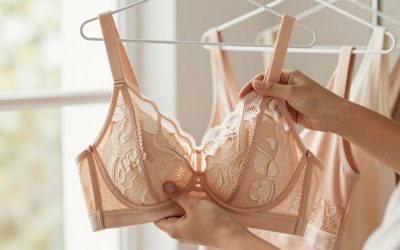
- Top Pick: LetsJoli Jelly Bras for Women No Underwire Plus Size Push Up Supportive
- Best Value: LetsJoli Jelly Bras for Women No Underwire Plus Size Push Up Supportive
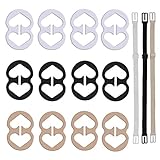
- Premium Choice: W-Plus Bra Strap Clips, Bra Clips to Make Racerback, Bra Strap Holders for Slip, Bra Strap Holder – Conceal Hide Straps – Cleavage Control
The Short Answer
For plus-size bra shopping, the most useful dimensions are your band measurement around the rib cage and your bust measurement around the fullest part of the breasts. The band number is based on your underbust measurement, while the cup letter comes from the difference between your bust and band measurements.
As a starting point, measure snugly under your breasts and round to the nearest whole inch. If your underbust measures 38 to 40 inches (96.5 to 101.5 cm), try a 40 band. Then measure around the fullest part of your bust. A 40-inch bust on a 40 band is approximately a 40A; a 46-inch bust is approximately a 40H in many US size charts. Exact fit varies by brand, fabric, support construction, and whether the bra is wireless or underwire.
As an Amazon Associate we earn from qualifying purchases at no extra cost to you.

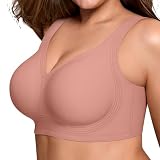

In 2026, many plus-size shoppers will find more options in band sizes 36 through 56 and cup sizes D through O and beyond. Do not select a size from the cup letter alone. A 40D and a 46D do not have the same cup volume, and a 40D is not equivalent to every brand’s 40D.
Standard Sizes
The table below uses common US sizing logic. Underbust and bust ranges are practical starting dimensions, not universal manufacturing specifications. Measurements are shown in inches and centimeters.
| US Size | Approx. Underbust | Approx. Bust | Band-to-Bust Difference |
|---|---|---|---|
| 36C | 35–37 in (89–94 cm) | 39 in (99 cm) | 3 in (7.5 cm) |
| 38D | 37–39 in (94–99 cm) | 42 in (107 cm) | 4 in (10 cm) |
| 40DD | 39–41 in (99–104 cm) | 45 in (114 cm) | 5 in (12.5 cm) |
| 42DDD/F | 41–43 in (104–109 cm) | 48 in (122 cm) | 6 in (15 cm) |
| 44G | 43–45 in (109–114 cm) | 51 in (130 cm) | 7 in (17.5 cm) |
| 46H | 45–47 in (114–119 cm) | 54 in (137 cm) | 8 in (20 cm) |
| 48I | 47–49 in (119–124 cm) | 57 in (145 cm) | 9 in (23 cm) |
| 50J | 49–51 in (124–130 cm) | 60 in (152 cm) | 10 in (25.5 cm) |
| 52K | 51–53 in (130–135 cm) | 63 in (160 cm) | 11 in (28 cm) |
| 54L | 53–55 in (135–140 cm) | 66 in (168 cm) | 12 in (30.5 cm) |
| 56M | 55–57 in (140–145 cm) | 69 in (175 cm) | 13 in (33 cm) |
For a quick cup estimate, subtract your band number from your bust measurement. In the commonly used US system, about 1 inch is A, 2 inches is B, 3 inches is C, 4 inches is D, 5 inches is DD or E, 6 inches is DDD or F, 7 inches is G, 8 inches is H, 9 inches is I, 10 inches is J, 11 inches is K, and 12 inches is L. Letter naming differs considerably after DDD, so compare the retailer’s chart before ordering.
How to Measure Your Space
Here, “space” means the body space a bra must fit: your rib cage and bust. Use a flexible tape measure, stand naturally, and measure without pulling the tape tight enough to compress tissue.
- Measure the band area. Place the tape directly under your breasts, parallel to the floor. Keep your arms relaxed. Record the snug measurement in inches and centimeters.
- Measure the bust. Wrap the tape around the fullest part of your breasts, usually across the nipples. Keep it level and lightly touching the body. Do not wear a padded bra for this measurement.
- Repeat the measurements. Take each measurement twice. If your bust is uneven, use the larger side or measure while wearing a thin, unpadded bra.
- Calculate the cup difference. Subtract the band number from the bust measurement. For example, a 42-inch band and a 48-inch bust produce a 6-inch difference, suggesting approximately 42DDD or 42F.
- Check the brand chart. Some companies use a direct underbust range, while others add inches to the underbust to determine the band. Follow the chart for the specific bra.
- Assess the fit after trying it on. Put the bra on the loosest hook, scoop breast tissue into the cups, and adjust the straps. The band should stay level and the center front should sit as designed.
By Room or Use Case
Everyday Support
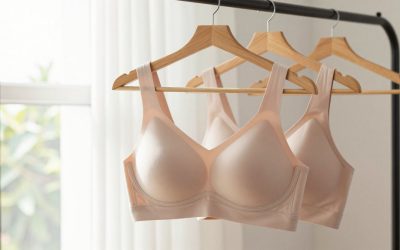
For all-day wear, prioritize a firm but comfortable band, wide adjustable straps, and cups that fully contain the breast tissue. A band that rides up is too loose, even if the cups look correct. Wireless plus-size styles, including soft jelly or molded designs, may be comfortable for casual use, but their support depends heavily on fabric stretch and side coverage. Budget options in this category commonly range from about $20 to $24.
Work and Smooth Clothing
Under fitted shirts, look for molded cups, moderate compression, and seams that do not show through fabric. A full-coverage cup can reduce spilling at the top and sides. If the cups wrinkle, the cup may be too large or the shape may not match your breast. If tissue bulges over the neckline, try a larger cup before loosening the band.
Low-Back, Racerback, and Strap-Concealing Outfits
Convertible straps and racerback designs can change the placement of support without changing the bra’s core dimensions. Strap clips, which often cost approximately $6, can pull straps inward and help conceal them. They do not increase band support or correct an incorrectly sized cup, so fit the bra first and use the clip only for styling.
Sleep and Light Lounge Wear
For sleeping, many shoppers prefer a wireless bra with broad straps and flexible fabric. Choose a size that holds the breasts comfortably without deep pressure under the rib cage. A lounge bra should not leave numbness, painful marks, or restricted breathing. Because soft styles stretch over time, check whether the manufacturer lists a separate bust and underbust range rather than relying only on S, M, L, or 1X labels.
Exercise and High-Movement Activities
Sports bras need more containment than everyday bras. Look for a firm lower band, full-coverage cups, moisture-managing fabric, and straps that remain stable during movement. High-impact support is not guaranteed by a larger size label. If the band rolls, the bust moves significantly, or the neckline cuts in, try a different construction or a cup size change.
Common Sizing Mistakes
- Measuring over a padded bra: Padding can add inches to the bust measurement and lead to an oversized cup.
- Pulling the tape too tightly: This can produce an artificially small band and uncomfortable fit.
- Choosing a larger band to fix cup overflow: Move up in the cup first. A larger band may ride up and still leave the cups too small.
- Ignoring sister sizes: Sister sizes keep similar cup volume while changing the band. For example, 42H is close in cup volume to 44G and 40I, although the fit and proportions will differ.
- Wearing a new bra on the tightest hook: Start on the loosest hook so the band can tighten as the elastic ages.
- Assuming all “D” or “plus” sizes match: Letter progression, band grading, and size labels vary by manufacturer.
- Skipping the scoop-and-swoop: Bring breast tissue forward and into the cup before judging the fit.
FAQ
What is the most important plus size bra dimension?
The underbust measurement determines the starting band size, and the bust-to-band difference estimates cup size. Both dimensions matter. A correct cup on an incorrect band will usually shift, ride up, or feel unsupportive.
How do I know whether the band or cup is too small?
A too-small band often feels restrictive, leaves deep marks, or cannot fasten comfortably on the loosest hook. A too-small cup may cause top or side spillage, a floating center panel, or underwire sitting on breast tissue. If the band is stable but the cups spill, try a larger cup.
Can I use my clothing size to choose a bra?
Usually not. Clothing sizes such as 1X, 2X, or 3X are not standardized and do not describe rib-cage or cup dimensions. Use your underbust and bust measurements, then compare them with the bra maker’s chart.
Why does the same bra size fit differently in another style?
Unlined, molded, push-up, wireless, and sports bras use different shapes and materials. A wireless bra may stretch across a wider range, while an underwire style may require more precise cup depth and width. Try the listed size first, then adjust the band or cup based on the actual fit rather than the label.
Ready to decide? Our #1 pick for 2026 is the 36C.
Live price & availability on Amazon.
Related Reviews & Guides


How to Remove Deodorant From Plus Size Dresses (2026): Step-by-Step

4 Best Plus Size Waist Trainer Postpartums