
Last Updated: September 18, 2026
Choosing between plus size compression shorts vs anti chafing shorts is less about which garment is universally better and more about what you need it to do at home. One is designed to provide a closer, more supportive fit during movement; the other is primarily a lightweight barrier between skin and clothing. That difference matters when you are exercising in a living room, getting dressed in a small bedroom, managing laundry for a family, or trying to keep summer outfits comfortable.
The decision also involves storage, replacement cost, and how often you will wear the shorts. Compression styles may earn their drawer space if you walk, cycle, or want a more secure feel. Anti chafing shorts can be the more practical choice if you mainly wear dresses, skirts, nightshirts, or loose clothing around the house. Here is how the two categories compare for everyday use in 2026.
As an Amazon Associate we earn from qualifying purchases at no extra cost to you.



Quick Verdict
Choose plus size compression shorts if you want a supportive, close-fitting layer for workouts, walking, cycling, stretching, or active chores. They are generally more structured, less likely to ride up during movement, and better suited to situations where you want muscle-supportive coverage or pockets for small essentials.
Choose anti chafing shorts if your priority is reducing thigh friction under dresses and skirts. They are usually lighter, softer, less expensive, and easier to wear for long periods indoors. They can also work as modesty shorts beneath shorter or more flowing clothing, but they typically provide less support and may shift more during vigorous activity.
Side by Side
| Factor | Plus Size Compression Shorts | Anti Chafing Shorts |
|---|---|---|
| Comfort | Supportive and secure, but a firm waistband or tight leg opening may feel restrictive. | Soft and lightweight; usually more relaxed, though seams and rolling can bother some wearers. |
| Durability | Often made with thicker stretch fabric; roughly 1–3 years with regular rotation and careful washing. | Lightweight fabric may last about 6–24 months, depending on friction, washing, and construction. |
| Price range | About $12–$45 per pair; specialized or highly supportive styles may cost more. | About $5–$20 per pair, with multipacks commonly costing $14–$30. |
| Maintenance | Usually machine washable; cold water, a mesh bag, and air-drying help protect stretch fibers. | Usually easy to wash, but thin fabrics benefit from cold cycles and low heat or air-drying. |
| Space needed | Folded, most pairs occupy approximately 10 by 8 by 1.5 inches, depending on fabric and size. | Folded, most pairs occupy approximately 9 by 7 by 1 inch and compress easily in a drawer. |
| Look | Athletic and opaque; some styles resemble biker shorts and can be worn visibly. | Usually discreet under dresses and skirts; finishes range from matte to smooth or silky. |
| Resale | Limited resale value because of intimate wear and fit-specific sizing. | Very limited resale value for the same hygiene and sizing reasons. |
| Best for | Exercise, walking, cycling, stretching, active housework, and outfits needing secure coverage. | Dresses, skirts, warm-weather outfits, lounging, and everyday thigh-friction prevention. |
| Typical features | Higher waistbands, compression panels, pockets, and longer inseams are common. | Flat seams, smooth fabric, breathable gussets, and short or mid-thigh inseams are common. |
Where Plus Size Compression Shorts Wins
Compression shorts have the advantage when movement is the main concern. A close fit limits excess fabric and can feel more stable while you squat, bend, pedal, stretch, or walk. For home workouts, the difference is noticeable: compression shorts are less likely to bunch beneath a shirt or catch on furniture than loose athletic layers.
They also tend to offer more coverage. Many plus size designs use opaque fabric and a longer inseam, which can make them useful under tunics or oversized sweaters. A high-rise style may provide a smoother transition between a top and the waistband, although compression should not be confused with medical compression garments or guaranteed body shaping.
Pockets are another practical benefit. The MEJING Plus Size Biker Shorts Pockets Curvy Women Athletic Workout Black, listed at $13.98, is an example of the athletic-style category with a pocket-oriented design. A pocket can hold a phone, key, or card while you move around the house, although a loaded phone may still feel bulky during floor exercises.
Compression shorts can also be the better choice for a limited wardrobe. One opaque, athletic-looking pair may work for exercise, dog walking, errands, and cleaning. The tradeoff is that thicker fabrics can feel warmer, and sizing is more sensitive. If the waistband digs in, the legs roll, or the fabric becomes transparent when stretched, the garment is not serving its purpose. Measure your waist and hips against the brand’s chart rather than choosing only by your usual clothing size.
Where Anti Chafing Shorts Wins
Anti chafing shorts are the easier choice when you want a barely noticeable underlayer. Their central job is to create a smooth barrier between the thighs, reducing skin-on-skin friction beneath dresses and skirts. They can also add modesty when a hem lifts while sitting, climbing stairs, or playing with children.
Because they are usually lighter and less structured, anti chafing shorts are often more comfortable for lounging and sleeping. They take up less drawer space, dry faster, and are less visually athletic. That makes them useful in homes where clothing needs to transition from daytime tasks to relaxing without a full change.
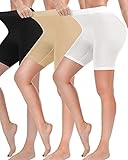
Multipacks can lower the cost per wear. The Reamphy 3 Pack Slip Shorts for Under Dresses Women Anti Chafing Shorts is listed at $14.50, while the Yeblues 4 Pack Slip Shorts for Under Dresses Smooth Anti Chafing Underwear is listed at $14.99. These price points illustrate why shoppers who need frequent changes may prefer several lightweight pairs instead of two or three higher-priced performance garments.
The limitation is support. Anti chafing shorts are not usually intended for high-impact workouts, and a very smooth fabric may slide beneath some dresses. Check the inseam and waistband before buying: a short inseam may be cooler but offer less thigh coverage, while a longer inseam may prevent friction more effectively but show beneath a shorter hem.
Cost Over 5 Years
A realistic five-year budget depends on use, laundry habits, and whether you need one pair or a weekly rotation. For compression shorts, assume three pairs at an average of $25 each, plus one replacement pair in years three or four. That is approximately $100 over five years, before tax and shipping. A lower-cost setup using three $14 pairs and no replacement could be about $42, while a larger rotation of five $35 pairs could reach $175 or more.
For anti chafing shorts, assume six pairs at an average of $7.50 each, with one additional replacement set during the period. The approximate five-year total is $52.50. Buying multipacks near $15 can reduce the initial cost, but thinner garments may need replacement sooner if they are washed frequently or rubbed against rough seams.
Care can influence the total. Washing in cold water, avoiding fabric softener, and air-drying elastic garments can extend useful life. The cheapest option is not economical if it becomes uncomfortable after a few wears. Cost per comfortable wear is more useful than sticker price alone.
Which One for Your Home
Small apartment
Anti chafing shorts usually win when drawer and closet space are limited. A four-pair rotation can fit in roughly a 10-by-8-by-4-inch drawer section, although actual folded volume varies by size and fabric. They are especially useful if the same room serves as bedroom, office, and workout space. Choose compression shorts instead if you exercise regularly and want one garment that can handle movement and errands.
Family with kids or pets
Compression shorts are often more practical for chasing children, cleaning floors, walking a dog, or getting up and down frequently. Their secure fit can reduce readjusting during active chores. Keep at least three pairs in rotation so one can be in the wash. Anti chafing shorts still make sense for dress days, but lightweight fabrics may snag more easily on rough surfaces or pet claws.
Rental
In a rental, clothing that serves several purposes helps avoid buying extra furniture or storage organizers. A high-waisted compression style can cover workouts without needing a dedicated exercise wardrobe, while anti chafing shorts can make dresses more wearable without alterations. If your rental has limited laundry access, prioritize quick-drying anti chafing multipacks or a small rotation of durable compression pairs.
Long-term home
With more storage, owning both categories may be the most efficient solution. Keep two or three compression pairs for exercise and active work, plus four to six anti chafing pairs for dresses, warm weather, and lounging. If shaping is also a goal, the SHAPERMINT High Waisted Shapewear Shorts, Tummy Control Under Dress S-4XL, listed at $28.99, belongs closer to the shapewear category than to basic anti chafing underwear. Treat it as a separate function rather than assuming every slip short provides tummy control.
FAQ
Can plus size compression shorts prevent chafing?
They can, especially when the inseam covers the area where your thighs rub. However, a tight leg opening or rough seam may create a different irritation point. Look for smooth seams, adequate stretch, and a length that stays in place without cutting into the thigh.
Are anti chafing shorts suitable for exercise?
They can work for low-intensity movement, walking, or casual stretching, but they are not usually the best choice for cycling, vigorous workouts, or activities requiring firm support. Their fabric and waistband are generally designed for under-dress comfort rather than performance.
How many pairs should I own?
Two compression pairs may be enough for occasional workouts, while three to five are more practical for weekly activity. For anti chafing shorts, four to seven pairs provide a useful rotation if you regularly wear dresses or skirts, especially when laundry is done once a week.
What should I buy first?
Buy compression shorts first if your primary need is exercise, active chores, pockets, or secure coverage. Buy anti chafing shorts first if you mainly want comfortable dress-and-skirt underlayers. When both needs are equally important, start with two compression pairs and a three- or four-pair anti chafing multipack, then replace whichever category receives more wear.
Ready to decide? Our #1 pick for 2026 is the Comfort.
Live price & availability on Amazon.
Related Reviews & Guides

Plus Size Massage Chair Pad and Cushion
Plus Size Jeans Buying Guide Rise and Stretch in 2026: What Actually Matters