

Last Updated: September 16, 2026
Board game arena games occupy a specific niche: titles built around competitive play within a bounded space, whether that’s a physical arena mat, a modular tile board, or a digital interface that simulates head-to-head combat. Buyers shopping this category in 2026 are solving a real problem—finding a game that delivers satisfying tactical depth without requiring a full afternoon, a dedicated gaming table, or a group that reads forty pages of rules before the first round. The best options balance accessible entry with enough mechanical variety to reward repeated play.
What separates a good arena game from a mediocre one comes down to three things: component quality that survives frequent handling, a rules structure where player choices genuinely diverge from match to match, and a setup-to-play ratio that respects everyone’s time. Owner feedback consistently penalizes games that feel like they need a companion app or expansion to function, and rewards those where the base game already delivers a complete loop. Price alone is a poor indicator; a fifteen-dollar title can outperform a fifty-dollar box if the design is tight.
As an Amazon Associate we earn from qualifying purchases at no extra cost to you.




Quick Picks
| Product | Best for | Price |
|---|---|---|
| Light Speed Arena | Quick real-time races | $25.32 |
| Robot Quest Arena | Deckbuilder enthusiasts | $55.95 |
| Mister Torgue’s Borderlands | Creative arena builders | $39.95 |
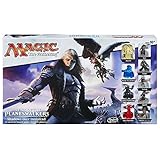
| Arena of the Planeswalkers | MTG collectors and duellists | $34.99 |
| Magnetic Chess Game | Travel and casual families | $14.99 |
| Crossfire Game | Active kids and teens | $19.97 |
| Disney Sorcerer’s Arena | Character-driven strategy | $33.19 |
| Pathfinder Arena | Cooperative boss battles | $15.89 |
How We Picked
We narrowed this list using four criteria: published component counts and quality notes from manufacturer specs, average match duration (arena games that drag past forty-five minutes lose their appeal for the format), the number of players the base game supports without expansions, and recurring themes in verified owner reviews regarding replayability and setup friction. We excluded titles whose rules require a companion app for basic play and those where the arena component is purely decorative rather than mechanically integral.
The 8 Best Board Game Arena Games in 2026
Light Speed Arena Tabletop Game
Light Speed Arena is a real-time racing game that rewards reflexes and route planning over deep strategy. Owner reviews highlight the near-instant setup as its primary strength, making it a reliable opener or filler at gatherings. Two pros: the rules fit on a single card, and the compact footprint means it plays on a coffee table or kitchen counter. One con: the real-time format can frustrate players who prefer deliberate, turn-based decision-making.
- Pros: minimal setup time, works on small surfaces
- Cons: real-time pressure may alienate methodical players
Skip this if your group values tactical depth over speed; it rewards quick thinking more than careful planning.
Wise Wizard Games: Robot Quest Arena Deckbuilding Board Game
Robot Quest Arena layers a customizable robot-building system onto traditional deckconstruction. Players forge unique loadouts each match, which keeps the strategic landscape shifting even after many sessions. Two pros: the deckbuilding engine produces meaningful turn-by-turn decisions, and the modular arena tiles change sightlines and movement options. One con: the retail price is the highest on this list, and the learning curve is steeper than lighter alternatives.
- Pros: deep customization, varied arena layouts
- Cons: premium price, steeper initial rules read
Skip this if you want a game that teaches in under ten minutes; the component count and rules density demand patience.
Mister Torgue’s Borderlands: Arena of Badassery
This title asks players to design their own arena layouts before fighting in them, blending area control with creative construction. Owner feedback consistently praises the asymmetry it produces across matches. Two pros: every game feels different because the board is built on the fly, and the Borderlands license adds flavor text and art that fans appreciate. One con: setup time scales with player count, and new players may feel lost during the arena-building phase.
- Pros: emergent variety from player-built boards, strong thematic flavor
- Cons: longer setup, learning curve on arena design rules
Skip this if your group dislikes open-ended setup phases or prefers games that start quickly.
Hasbro Gaming Magic The Gathering: Arena of the Planeswalkers
Designed for two to four players representing iconic Planeswalkers, this game translates the MTG dueling experience into a standalone board format without requiring a constructed deck collection. Two pros: the enclosed system means everything you need is in the box, and the character asymmetry gives each Planeswalker a distinct tactical identity. One con: the Shadow over Innistrad skin may feel like a rebrand of an earlier edition, and long-time MTG fans might find the simplified card pool limiting.
- Pros: fully enclosed, distinct character playstyles
- Cons: possible edition fatigue, simplified mechanics for veteran players
Skip this if you already own a prior Arena of the Planeswalkers box and want substantial mechanical novelty.
Magnetic Chess Game with String, Spinner & 40 Magnetic Stones
While not an arena game in the tactical-combat sense, this magnetic strategy title earns its place for its portability and four-player support—a rarity in the arena category. Two pros: the magnetic stones eliminate spill risk during travel, and the string-and-spinner twist adds a party-game layer atop standard chess logic. One con: players seeking meaningful mechanical depth will find the strategic range narrow after repeated play.
- Pros: travel-safe, supports four players
- Cons: limited strategic depth for experienced players
Skip this if you want a true arena combat experience; it functions more as a portable family game with a strategy angle.
Hasbro Gaming Crossfire Game
Crossfire is an active, physical arena game where two players aim and fire marble blasters at each other through a transparent barrier. Owner reviews position it as a reliable gateway for reluctant gamers and younger players. Two pros: the ten-minute average match length and the physical dexterity element create immediate engagement without rule explanations. One con: it offers zero strategic depth beyond aim, making it a novelty that loses its spark for adults after a handful of plays.
- Pros: instant comprehension, physical fun factor
- Cons: negligible strategy, limited longevity for adults
Skip this if your table includes players who expect tactical decision-making; it is best treated as a children’s active game.
Disney Sorcerer’s Arena: Epic Alliances Core Set
This second wave of the Sorcerer’s Arena system brings four-player play and alliance mechanics that weren’t present in earlier sets. Owner feedback notes the improved solo mode as a meaningful addition. Two pros: the officially licensed Disney and Pixar character roster provides strong emotional hooks, and the four-player format fills a gap the original game left open. One con: players unfamiliar with the base game may feel that Epic Alliances assumes too much prior knowledge of the system’s token economy.
- Pros: four-player support, rich character roster
- Cons: assumes base-game familiarity for full enjoyment
Skip this as a standalone entry point if your group has never played the original Sorcerer’s Arena core game.
Pathfinder Arena: Epic Challenge Board Game Expansion
Pathfinder Arena is a cooperative boss-battler where players pool abilities to defeat escalating encounter waves. At this price point, the expansion delivers significant additional content relative to its cost. Two pros: the cooperative format suits groups who prefer collaborative problem-solving over direct conflict, and the boss variety keeps late-game sessions fresh. One con: it requires the Pathfinder Arena base game, so the true entry cost exceeds the listed expansion price.
- Pros: strong co-op design, good content-to-price ratio
- Cons: expansion only—base game required
Skip this entirely if you don’t already own the Pathfinder Arena core box; it cannot function independently.
Buying Guide
Arena Component vs. Decorative Theme
The term “arena” should describe a mechanical function—bounded space, line-of-sight rules, or zone control—not just artwork on a box. Before purchasing, check whether the arena component affects movement, targeting, or scoring in the published rules summary. Titles like Robot Quest Arena and Mister Torgue’s Borderlands make the arena itself a strategic variable. Others use the word loosely, which may disappoint buyers expecting spatial tactics.
Match Duration and Session Fit
Arena games succeed or fail on pacing. If your typical game night has two to three hours of play, a single forty-minute arena bout works well. If you want one game as the main event, look for titles with thirty to forty-five minute average matches and a tournament or campaign mode that justifies multiple plays. Real-time options like Light Speed Arena finish faster but can exhaust attention; slower deckbuilders like Robot Quest Arena reward patience.
Base Game Completeness and Expansion Lock-in
Some arena systems—Pathfinder Arena foremost—require a base game purchase before any expansion adds value. Check the product title and description for the word “expansion” or “core set.” A fair comparison between two products at similar prices shifts dramatically when one is a complete game and the other needs a sixty-dollar foundation first. For a single purchase to feel worthwhile, confirm the box delivers a full play loop on its own.
Our Verdict
Our top pick is Robot Quest Arena for players who want the deepest strategic experience the category currently offers. Its deckbuilding engine, modular arena tiles, and meaningful customization justify the premium price for anyone committed to repeated play. Our budget pick is Magnetic Chess Game at $14.99, which delivers surprising versatility through its four-player mode and travel-friendly construction. That said, if your group already owns the Pathfinder Arena base game, Pathfinder Arena: Epic Challenge wins as the single best value-per-dollar expansion on this list, adding hours of cooperative content for under sixteen dollars.
FAQ
What makes a game an “arena game” versus a standard board game?
Arena games typically feature a bounded play area where positioning, line of sight, or zone control are core mechanics rather than incidental flavor. The arena itself—whether physical tiles, a printed mat, or a modular board—directly constrains what moves and attacks are legal each turn.
Do I need a companion app for any of these board game arena games?
None of the eight products on this list requires a companion app for basic play. Each functions as a complete tabletop experience using only the physical components included in the box.
Which of these works best for two players?
Crossfire Game, Arena of the Planeswalkers, and Robot Quest Arena are all designed with two-player dueling as a primary mode. Light Speed Arena also scales down cleanly to two players despite supporting larger groups.
Are these games suitable for children?
Crossfire Game (ages 7+), Magnetic Chess Game, and Light Speed Arena are accessible to younger players. Robot Quest Arena, Mister Torgue’s Borderlands, and Disney Sorcerer’s Arena target ages 13 and up due to rules complexity and strategic demands.
Related Reviews & Guides





Quick Picks: Best Extra Large Bath Towels and Wraps for…

6 Best Flared Jeans For Plus Size 2026