
Last Updated: September 18, 2026
- Decide These 3 Things First
- Size: Start With the Inseam, Rise, and Garment Measurements
- Material: Stretch Changes Fit, but It Does Not Replace Length
- Construction: Rise, Hem Width, and Seams Matter
- Comfort and Performance: Test the Fit While Moving
- Price Tiers: Compare Alteration Costs, Not Just the Tag
- Warranty and Returns: The Fit Protection You Actually Need
- Delivery and Alteration Planning
- Spec Checklist
- Red Flags
- FAQ
Choosing the right trouser length is harder than reading a size chart. Plus-size trousers can fit well through the waist and hips yet still look awkward because the inseam is too short, too long, or designed for a different rise and shoe height. Common mistakes include measuring from the crotch to the floor without shoes, comparing a straight-leg inseam with a wide-leg inseam, and assuming every 2X has the same proportions. Shoppers also overlook fabric stretch, hem width, and whether a pull-on waistband changes where the garment sits.
This guide explains how to choose plus size trousers inseam length with practical measurements, fit checks, and price expectations. The goal is not simply to find a number on a product page; it is to match the inseam to your body, the trouser cut, and the way you plan to wear the pants.
As an Amazon Associate we earn from qualifying purchases at no extra cost to you.



Decide These 3 Things First
- Where will the waistband sit? High-rise trousers usually add 1 to 3 inches of fabric above the natural waist compared with mid-rise styles. A higher rise can make the same labeled inseam appear longer on the leg.
- What shoes will you wear? Flats, sneakers, boots, and heels can require different lengths. Decide whether the hem should stop at the ankle, skim the top of a shoe, or cover most of the footwear.
- What leg shape are you buying? A tapered or slim trouser often looks intentional at the ankle. A wide-leg style generally needs a longer hem so the fabric falls vertically instead of stopping at an awkward point.
Before ordering, measure a pair of trousers you already like. Lay them flat, measure from the crotch seam to the bottom of the inside leg, and compare that number with the retailer’s inseam chart. This is often more reliable than measuring your body alone.
Size: Start With the Inseam, Rise, and Garment Measurements
Plus-size labels are not standardized. A 1X may correspond to approximately a 14/16 at one retailer and a 16/18 at another, while 5X sizing can vary even more. Always check the waist, hip, rise, and inseam measurements separately.
Measure your natural waist at the narrowest point or wherever you want the waistband to rest. Measure your hips at the fullest point, keeping the tape level. For the inseam, stand straight with your feet about 6 inches apart and measure from the crotch to the point where you want the hem to finish. Repeat while wearing the shoes you expect to use.
- Ankle or cropped fit: usually 24 to 27 inches, depending on height and rise.
- Standard full length: commonly 28 to 32 inches.
- Tall full length: often 33 to 36 inches.
- Extra-tall options: approximately 37 to 40 inches, though availability is limited.
These are starting ranges, not rules. A person with a longer torso may need a shorter inseam than someone of the same height, and a high-rise trouser can change the visual balance. For a 5-foot-4 shopper, a 29-inch inseam may reach the ankle or shoe top; for a 5-foot-10 shopper, it may look cropped.
Material: Stretch Changes Fit, but It Does Not Replace Length
Fabric content affects how trousers sit after several hours of wear. A blend containing about 2% to 5% elastane or spandex can provide useful stretch through the waist, seat, and thighs. Fabrics with 0% stretch may need more ease at the hip, while very stretchy pull-on pants can relax slightly during the day.
Look for the fabric weight and care instructions when available. Lightweight polyester or rayon trousers may drape well but show cling or wrinkling. Ponte, stretch twill, and heavier suiting fabrics generally offer more structure. A fabric weighing roughly 8 to 12 ounces per square yard is common for year-round work trousers, although many listings do not provide this specification.
Do not size down simply because a fabric stretches. A tight hip can pull the inseam toward the front, making the trousers appear shorter. Choose the size that accommodates your largest measurement, then assess whether the waistband or hem needs alteration.
Construction: Rise, Hem Width, and Seams Matter
Two trousers with a 30-inch inseam can look completely different because of their construction. Check the rise, which is the distance from the crotch seam to the top of the waistband. A front rise around 11 to 13 inches is common in plus-size mid- to high-rise trousers, while some high-waist styles measure 14 inches or more.
Wide-leg pants deserve particular attention. A leg opening of approximately 20 to 28 inches in circumference can create a long, fluid line, but the hem may look too short if it stops several inches above the shoe. For a polished work outfit, a wide-leg hem often looks best when it sits about ¼ to ½ inch above the floor while you are wearing your intended shoes.
Tapered and ankle trousers are more forgiving. A hem that ends 1 to 3 inches above the ankle bone can look deliberate, especially with loafers or low-profile sneakers. Check the side seams for twisting and the crotch seam for excess fabric. Uneven seams can make an otherwise correct inseam appear crooked.
Comfort and Performance: Test the Fit While Moving
A correct inseam should work when you stand, sit, walk, and climb stairs. When standing, the hem should not drag under the heel or pool heavily over the shoe. When sitting, it will rise; an extra ½ to 1 inch of length can help prevent the ankle from becoming exposed, especially in a slim trouser.
Try these checks at home if returns are allowed:
- Sit in a chair for 5 minutes. The waistband should not roll, pinch, or slide more than about 1 inch.
- Walk 20 to 30 steps. The hem should remain even rather than rotating around the leg.
- Bend and climb one flight of stairs. The seat should not pull tightly across the hips.
- Raise your knee. If the trouser exposes several inches of ankle, consider a longer inseam or a more generous leg cut.
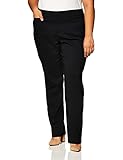
Pull-on styles, such as the Briggs New York Super Stretch Millennium Welt Pocket Pull on Pant, can be convenient for office dressing because there is no button or zipper to press into the stomach. However, the elastic waistband may sit higher than expected. Wide-leg examples such as Eytino’s plus-size work pants may need a longer inseam to preserve the intended drape.
Price Tiers: Compare Alteration Costs, Not Just the Tag
Budget plus-size work trousers commonly cost about $25 to $40. Examples in this range include wide-leg pull-on styles priced around $25.99, $29.99, and $33.99. These can be practical purchases when the fabric, measurements, and return policy are clear.
Mid-range trousers generally cost $40 to $80. They may offer denser fabric, better pocket construction, more consistent sizing, or a wider range of inseams. Premium work trousers often start around $80 and can exceed $150, particularly when they include petite, regular, and tall proportions or more substantial suiting fabric.
Budget for alterations. A basic hem may cost approximately $12 to $25, while hemming lined or wide-leg trousers can cost $20 to $45 or more. If the trousers are more than 3 inches too long, tapering or reshaping the hem may add cost. A $30 pair that needs $40 in work may be less economical than an $60 pair available in your exact inseam.
Warranty and Returns: The Fit Protection You Actually Need
Clothing warranties are less common than return policies, so inspect the terms before buying. Look for at least 30 days for returns, with a longer window of 60 to 90 days offering more flexibility. Confirm whether the item must be unworn, unwashed, and returned with tags attached.
Check who pays return shipping and whether exchanges are available. A free exchange is valuable when choosing between 29- and 31-inch inseams. Also look for exclusions on sale items, final-sale colors, and trousers altered by a tailor. Never hem the pants until you have worn them indoors with the correct shoes.
For quality protection, keep the receipt and photograph any defect before washing. Loose belt loops, skipped stitching, broken zippers, and uneven hems are construction problems; normal fabric wear is usually not covered.
Delivery and Alteration Planning
Delivery does not change the inseam, but it affects how safely you can test the fit. Standard shipping commonly takes 3 to 7 business days, while expedited delivery may take 1 to 3 business days at an additional cost of roughly $10 to $30. Allow enough time for a replacement size or a tailor appointment.
Order at least two inseams when the retailer permits free returns, especially for a new brand or a wide-leg cut. Try both pairs with the exact footwear you plan to wear. If tailoring is needed, ask for the original hem when possible; preserving the factory finish can make the alteration look cleaner. There is no assembly requirement for trousers, but steaming or pressing may be necessary to reveal the true hemline after shipping.
Spec Checklist
| Spec | Budget | Mid | Premium |
|---|---|---|---|
| Typical price | $25–$40 | $40–$80 | $80–$150+ |
| Inseam choices | Often 28–32 in. | Usually 27–34 in. | Often petite, regular, and tall |
| Stretch | About 2%–5% elastane when listed | About 2%–6% elastane | Engineered stretch or premium suiting blends |
| Rise | Approximately 11–14 in. | Approximately 12–15 in. | Detailed rise measurements by size |
| Hem adjustment budget | $12–$35 | $15–$45 | $20–$60+ |
| Return target | At least 30 days | 30–60 days | 60–90 days preferred |
Red Flags
- The listing gives a general size chart but no inseam, rise, or garment measurements.
- Photos show a model wearing heels, but the description does not identify the shoe height.
- The same inseam is used for every size without explaining proportion changes.
- Reviews repeatedly mention that the pants run short, shrink, or stretch out at the knees.
- The fabric content is missing, especially when the product is marketed as stretchy.
- The return policy excludes sale items or charges a large restocking fee.
- A wide-leg hem stops at mid-calf without being described as cropped or gaucho length.
FAQ
How do I measure my inseam for plus-size trousers?
Measure from the crotch seam to the point where you want the hem to end while wearing your intended shoes. For greater accuracy, measure a well-fitting pair of trousers laid flat and compare the crotch-to-hem distance with the product chart.
Should plus-size wide-leg trousers be longer?
Usually, yes. A wide-leg trouser commonly looks best when the hem falls close to the shoe, around ¼ to ½ inch above the floor. The exact length depends on the rise, leg opening, and footwear. Do not use extra length if it causes the hem to drag.
What inseam is best for someone 5 feet 4 inches tall?
Many shoppers around 5 feet 4 inches start with a 26- to 29-inch inseam for ankle trousers and a 28- to 31-inch inseam for full-length styles. Body proportions and rise matter more than height alone, so use a personal measurement whenever possible.
Can a tailor fix trousers that are too short?
A tailor can usually shorten trousers, but adding length is difficult unless the hem contains extra fabric or a deep cuff. If you are between sizes or inseams, choose the longer option and have it hemmed. Alterations are generally safer than trying to stretch a garment that is already too short.
Ready to decide? Our #1 pick for 2026 is the Typical price.
Live price & availability on Amazon.
Related Reviews & Guides


4 Best Plus Size Garden Tools: Ergonomic Picks for Every Body

6 Best Plus Size Maternity Dress Clothes 2026