
Last Updated: September 18, 2026
- Top Pick: elescat Plus Size Summer Dresses Tshirt Casual Sundress, Black, 5XL
- Best Value: Plus Size Dress for Women Sunflower Summer Spring Sundresses Boho Swing T Shirt Short Sleeves Pocket (Bohemian Blue,4XL)
- Premium Choice: TAOHUADAO Women's Plus Size Maxi Dresses for Curvy Women Summer 3/4 Sleeve Casual Long Dress with Pockets 3X-Large, Green Flowers
The Short Answer
The most reliable way to choose a plus-size dress online is to compare your body measurements with the seller’s size chart, not with the size printed on a dress you already own. Measure your full bust, natural waist, and fullest hip in inches, then check whether the chart lists body measurements or finished garment measurements. Those are not the same thing.
For many U.S. plus-size charts, 0X begins around a 38- to 41-inch bust, while 6X may measure approximately 58 to 62 inches at the bust. However, sizing can change substantially between brands, fabrics, and dress styles. A relaxed T-shirt dress, for example, may fit comfortably with several inches of extra room, while a fitted bodice requires a closer match.
As an Amazon Associate we earn from qualifying purchases at no extra cost to you.

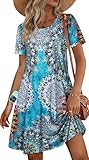


When comparing affordable online options, prices commonly fall in the $13.99-$18.99 range for casual plus-size dresses. The examples in this guide include short-sleeve sundresses, maxi dresses, A-line styles, and dresses with pockets. Use their listed size chart and garment details as the final authority before ordering. This approach remains useful for building a wardrobe or shopping during 2026, when online inventory and size labels can change quickly.
Standard Sizes
The chart below is a general U.S. reference, not a universal brand chart. Measurements represent approximate body dimensions. Some retailers use 0X, 1X, and 2X, while others use numerical sizes such as 14W, 16W, or 18W.
| U.S. size | Common label | Bust | Waist | Hip |
|---|---|---|---|---|
| 14-16 | 0X | 38-41 in (96.5-104 cm) | 32-35 in (81-89 cm) | 40-43 in (102-109 cm) |
| 18-20 | 1X | 41-44 in (104-112 cm) | 35-38 in (89-97 cm) | 43-46 in (109-117 cm) |
| 22-24 | 2X | 44-48 in (112-122 cm) | 38-42 in (97-107 cm) | 46-50 in (117-127 cm) |
| 26-28 | 3X | 48-52 in (122-132 cm) | 42-46 in (107-117 cm) | 50-54 in (127-137 cm) |
| 30-32 | 4X | 52-56 in (132-142 cm) | 46-50 in (117-127 cm) | 54-58 in (137-147 cm) |
| 34-36 | 5X | 56-60 in (142-152 cm) | 50-54 in (127-137 cm) | 58-62 in (147-157 cm) |
| 38-40 | 6X | 60-64 in (152-163 cm) | 54-58 in (137-147 cm) | 62-66 in (157-168 cm) |
If your measurements fall between sizes, start with the measurement that matters most for the dress design. For a wrap or fitted bust, use your bust measurement. For a straight, non-stretch sheath, compare all three measurements and usually choose the largest required size. For a loose swing, shift, or A-line dress, the bust is often the most important point because the skirt widens below it.
Also check the dress length. A typical knee-length dress may measure about 38 to 42 inches from shoulder to hem. A midi dress may be approximately 44 to 50 inches, while a maxi dress can measure fifty-two to sixty inches or more. Length depends on height, shoulder placement, neckline, and whether the seller measures from the shoulder or the center back.
How to Measure Your Space
For clothing, “your space” means the room your body needs inside the dress. Use a soft tape measure and wear a thin shirt or undergarments similar to what you will wear beneath the dress. Keep the tape level and comfortably snug; it should touch your body without compressing it.
- Measure your bust. Stand naturally and wrap the tape around the fullest part of your chest, usually across the bust points and beneath the shoulder blades. Keep your arms relaxed. Record the measurement to the nearest half inch or centimeter.
- Find your natural waist. Bend gently to one side. The crease that forms is generally your natural waist. Stand upright and measure around that area without pulling the tape tight. If the dress has an elastic waist, this measurement still helps determine comfort.
- Measure your fullest hip. Place the tape around the fullest part of your hips and seat, often 7 to 9 inches below the natural waist. Check in a mirror to make sure the tape is horizontal rather than dipping in front or back.
- Measure your torso if needed. For a fitted or empire-waist dress, measure from the top of your shoulder, over the fullest part of the bust, to the point where you want the waist seam to sit. This helps identify dresses with short bodices.
- Check dress length. Measure from the top of your shoulder down the front of your body to your preferred hemline. Compare that number with the seller’s shoulder-to-hem measurement. This is especially important for petite shoppers and anyone taller than about 5 feet 8 inches.
- Allow for ease. A woven dress with little or no stretch usually needs about 2 to 4 inches of extra room at the bust and hips for sitting and moving. Stretch jersey may need less, but a body-skimming style should not rely on extreme fabric tension.
By Room or Use Case
Everyday errands and warm-weather wear
T-shirt dresses and casual sundresses are usually the easiest styles to fit because their silhouettes are relaxed. Look for soft jersey, cotton blends, or fabrics with elastane. A 5XL casual black T-shirt dress priced around $14.99 may be a practical choice if its bust measurement matches yours and the fabric has comfortable stretch. Check whether the pockets add bulk at the hip and whether the armholes feel restrictive.
Outdoor gatherings and vacation outfits
Boho swing dresses often flare from the bust, making the bust measurement more important than the waist or hip. A short-sleeve sunflower-style dress, for example, may be labeled 4XL and priced near $13.99, but that label should not be treated as equivalent to every other 4XL. Check the actual bust width, fabric stretch, and hem length. For outdoor use, consider whether the neckline, sleeve coverage, and fabric opacity work in bright sunlight.
Work, church, and semi-dressy occasions
A-line and pleated dresses can provide room through the waist and hips while looking more polished than a loose shift. A V-neck black dress with pockets may work for church or an office-casual setting, but verify the neckline depth and whether the material is thin. For a professional appearance, choose a size that allows about 2 to 3 inches of bust ease without pulling across the buttons, seams, or waist panel.
Long dresses and maxi styles
Maxi dresses require a separate length check. A 3X-large floral maxi dress may be listed around $18.99, but “maxi” does not guarantee floor length on every height. Measure from your shoulder to the top of your foot, then compare with the garment length. If you plan to wear flat sandals, allow the hem to sit just above the floor. A dress that drags can catch underfoot and may require hemming.
Common Sizing Mistakes
- Choosing by letter alone: A 3X in one store may fit like a 2X or 4X elsewhere. Always use the numerical chart.
- Measuring a favorite dress incorrectly: A flat garment measurement is only half the circumference. Double the pit-to-pit bust measurement, but remember that this does not account for curved seams or stretch.
- Ignoring fabric content: Rayon, polyester jersey, cotton knit, and woven polyester behave differently. “Stretchy” is not a precise measurement; look for a stated stretch percentage when available.
- Ordering for the hips when the dress is very full: On a swing or A-line design, the bust and upper arm may be the limiting areas.
- Forgetting sleeve and armhole room: A dress can fit at the bust but feel tight when you reach forward. Look for sleeve circumference or review photos for armhole placement.
- Assuming pockets are always useful: Pockets can pull the skirt outward or sit too high. Check their position and opening size if carrying a phone or keys matters.
- Skipping the return policy: Confirm the return window, shipping costs, and whether clearance items are final sale before ordering multiple sizes.
FAQ
Should I size up when buying a plus-size dress online?
Not automatically. Size up when your largest measurement exceeds the chart, the fabric has no stretch, or the style is fitted. For a loose jersey dress, sizing up can create excess length and shoulder room. Compare your measurements first, then use reviews to assess whether the item runs small or large.
What measurement matters most for a dress?
The bust is usually the priority for a fitted bodice, empire waist, or dress with a fixed seam. For a straight or body-skimming dress, compare bust, waist, and hip. For a full A-line or swing dress, bust and upper-arm measurements generally matter more than hip size.
How much extra room should a plus-size dress have?
For a comfortable woven dress, 2 to 4 inches of ease at the bust and hips is a useful starting point. A stretch knit can be closer to the body, while a loose casual style may have 5 inches or more. The ideal amount depends on the silhouette, fabric, and how freely you want to move.
What if my measurements fall across two sizes?
Use the larger size for a fitted, non-stretch garment or a dress that must pass over your hips. Use the smaller size only when the fabric has dependable stretch and the design is intentionally relaxed. Altering a slightly large dress is often easier than correcting a garment that is too tight across the bust or seat.