
Last Updated: September 7, 2026
- Top Picks at a Glance
- Why Plus-Size Hikers Need Poles Specifically Rated for Higher Loads
- Height Adjustment: Getting the Right Length
- Grip Material: Cork vs Foam vs Rubber
- Tip Types and Terrain Matching
- Locking Mechanisms: Twist vs Lever vs Folding
- Full Spec Comparison
- Frequently Asked Questions
- Related Guides
- Related Articles
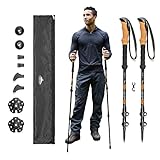
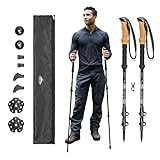
- Top Pick: Trekology Trek-Z Cork Grip Collapsible Lightweight Hiking Trekking Poles
- Best Value: Cascade Mountain Tech Trekking Poles, Shaft Material: Aircraft- grade 6061 Aluminum with Adjustable Locks Expandable to 54" (Set of 2), Cork Grip, Orange, Extended Grip Material: EVA
- Premium Choice: TheFitLife Folding Trekking Poles for Hiking, Lightweight Walking Sticks

TL;DR — Plus Size Trekking Poles
- Weight capacity to look for: 300–350 lbs rated poles for confident support on uneven terrain
- Key feature: Adjustable wrist straps and ergonomic grips designed to fit larger hands
- Best terrain: Rocky trails, inclines, and anywhere knee strain is a concern
- Verdict: Trekking poles are one of the highest-ROI gear investments for plus-size hikers — they redistribute weight, protect joints, and dramatically boost trail confidence
Plus Size Trekking Poles: The Best Hiking Poles for Bigger Bodies on the Trail
The trail doesn’t care about your size. Your knees do. Plus size trekking poles solve the two biggest hiking challenges for curvier bodies: joint protection on descents and stability on uneven ground. A quality pair redistributes up to 25% of your body weight off your knees and onto your upper body — which means longer hikes, less pain the next morning, and a lot more trail confidence.
The problem with generic hiking poles: most are tested and rated for 220–250 lb users. If you’re hiking at 250–400 lbs, you need poles specifically designed for higher load ratings, with sturdier shafts, wider grip circumferences, and wrist straps that actually fit. Here’s what to look for and what actually delivers.
As an Amazon Associate we earn from qualifying purchases at no extra cost to you.



🛒 Best Price Today on Amazon
Prime members get fast, free shipping on everything above, plus member-only deals. New members get a 30-day free trial — cancel anytime.
Start 30-Day Prime Free Trial →See Today’s Amazon DealsTop Picks at a Glance
BEST FOR TRAILS
Heavy-Duty Aluminum Trekking Poles
High-rated shaft strength, adjustable height, anti-shock tips — built for real terrain

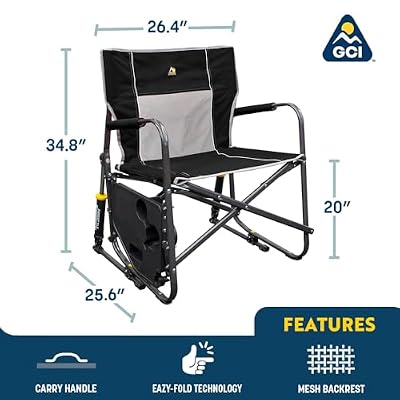
GCI Outdoor Freestyle Rocker XL with Side Table Camping Chair | Portable Folding Rocking Chair with Solid, Durable Armrests, Drink Holder & Comfortable Backrest — Black



As an Amazon Associate we earn from qualifying purchases. Product prices and availability are accurate as of the date/time indicated.
BEST FOR CAMPING TRIPS
Packable Collapsible Poles
Folds small for backpacking, deploys quickly, solid grip-to-tip construction

Sherpa Hiking Hydration Backpack – 22L Hiking Backpack with Water Bladder, Phone Compartment, Waterproof Zippers & Trekking Pole Holders


As an Amazon Associate we earn from qualifying purchases. Product prices and availability are accurate as of the date/time indicated.
BEST VALUE
Budget Trekking Pole Set
Entry-level price with reliable locking mechanisms — great for day hikers



As an Amazon Associate we earn from qualifying purchases. Product prices and availability are accurate as of the date/time indicated.
Why Plus-Size Hikers Need Poles Specifically Rated for Higher Loads
Standard trekking poles are built around the average hiking demographic — typically 150–220 lbs. The shaft diameter, locking collars, and tip materials are all engineered to that load range. When a 300-lb hiker puts full weight on an undersized pole during a stumble or a steep descent, the pole can buckle at the collar or the lower section can slip under pressure.
This isn’t a scare story — it’s physics. Poles rated for 300+ lbs use thicker-wall aluminum or carbon tubes (7075 aluminum vs the cheaper 6061 alloy), tighter locking mechanisms, and wider cork or foam grips that handle a bigger hand without slipping. The difference is meaningful, especially on technical terrain.
If you’re between 200–280 lbs, standard poles often work fine. Over 280 lbs, look for explicitly rated poles or purchase based on construction quality rather than marketing language like “heavy-duty” (which is mostly meaningless without specs).
Height Adjustment: Getting the Right Length
Trekking pole length affects posture, shoulder fatigue, and how effectively the poles protect your knees. The classic formula: stand upright with arms relaxed, then adjust until your elbow forms a 90-degree angle when gripping the pole. For steeper uphill sections, shorten 5–10 cm. For downhill, lengthen 5–10 cm.
| User Height | Recommended Pole Length | Notes |
|---|---|---|
| 5’0″–5’3″ | 100–110 cm | Compact adjustment range important |
| 5’4″–5’7″ | 110–120 cm | Most standard poles cover this |
| 5’8″–6’0″ | 120–130 cm | Look for full extension up to 135 cm |
| 6’1″+ | 130–140 cm | Check maximum extension before buying |
Plus-size hikers who are also tall (over 6′) often find that standard poles don’t extend enough. Always check the maximum length spec — many poles cap at 130 cm, which leaves taller users hunched forward and putting more strain on their lower back.
GCI Outdoor Freestyle Rocker XL with Side Table Camping Chair | Portable Folding Rocking Chair with Solid, Durable Armrests, Drink Holder & Comfortable Backrest — Black
As an Amazon Associate we earn from qualifying purchases. Product prices and availability are accurate as of the date/time indicated.
Grip Material: Cork vs Foam vs Rubber
The three standard grip materials behave very differently in real conditions:
- Cork: Wicks moisture, molds slightly to your hand over time, stays comfortable in both heat and cold. Best for long-distance or multi-day hikes. Slightly more expensive.
- EVA foam: Soft and comfortable, absorbs vibration well, but absorbs sweat too — gets slippery on hot days with extended use. Best for cool-weather hiking or short day hikes.
- Rubber: Most durable, handles cold weather best (warm hands), but causes blisters on long hikes and doesn’t breathe. Primarily found on winter/mountaineering poles.
For plus-size hikers who tend to run warm or sweat more on exertion, cork grips are the clear winner. The moisture management difference is significant on a 3+ hour hike.
Tip Types and Terrain Matching
Pole tips are often overlooked but significantly affect performance. Most poles include interchangeable tips:
- Carbide tungsten tips: Standard for most trails. Durable, grips rock and hard-packed soil well. Replace when worn — a dull tip slides rather than grips.
- Rubber tip covers: Snap over carbide tips for use on pavement, boardwalks, or in crowded areas where metal tips damage surfaces. Essential if you hike mixed terrain.
- Trekking baskets (small): Prevent the pole from sinking too deep into soft soil or leaf litter. Standard on most poles.
- Snow/mud baskets (large): Wider diameter for wet conditions, snow, or swampy ground. Useful for spring hiking or boggy terrain.
Pair your trekking poles with the right footwear — check our plus size hiking boots wide width guide for boot recommendations that complement your pole setup. And if you’re building out a full kit, our plus size hiking backpack review covers load-bearing packs that won’t fight your poles for balance.
Locking Mechanisms: Twist vs Lever vs Folding
How a pole locks at your preferred length matters more than most buyers realize:
- Twist-lock (screw collar): Simple, lightweight, can loosen under sustained heavy use. Check periodically on long hikes. Avoid cheap versions that use plastic threading.
- Lever-lock (external clamp): Most reliable for heavy users. Visual confirmation the lock is engaged. Easy to adjust mid-hike with gloves on. Preferred for plus-size hiking where higher loads are on the pole.
- Folding/Z-pole: No lock needed — connected by internal cord. Extremely packable, but fixed length per section. Best for backpacking where low pack volume matters more than fine-tuned adjustment.
For heavier-duty trail use, lever-lock poles are the most dependable choice. The external clamp gives visible confirmation of engagement and holds under the lateral stress that comes with supporting more body weight.
Full Spec Comparison
| Feature | Budget Aluminum Poles | Mid-Range Poles | Premium Carbon/Alloy Poles |
|---|---|---|---|
| Weight rating (typical) | 220–250 lbs | 275–300 lbs | 300–350 lbs |
| Shaft material | 6061 aluminum | 7075 aluminum | Carbon fiber or 7075 alloy |
| Lock type | Twist-lock | Lever or twist | Lever-lock or folding |
| Grip material | Foam or rubber | Cork or foam | Cork with extended grip zone |
| Packability | 2-section telescoping | 3-section telescoping | 3-section or folding |
| Anti-shock | Often absent | Spring-loaded optional | Integrated spring system |
| Price range | $25–$50/pair | $50–$100/pair | $100–$200+/pair |
For related outdoor gear for bigger bodies, see our plus size rain jacket hiking guide — essential for multi-day or shoulder-season trail use. Our big and tall camping chair guide covers rest-stop and campsite seating for the full outdoor experience.
Sherpa Hiking Hydration Backpack – 22L Hiking Backpack with Water Bladder, Phone Compartment, Waterproof Zippers & Trekking Pole Holders
As an Amazon Associate we earn from qualifying purchases. Product prices and availability are accurate as of the date/time indicated.
Frequently Asked Questions
What weight limit should plus size trekking poles support?
Look for poles explicitly rated at 300 lbs or higher if you hike at 250+ lbs. For hikers under 250 lbs, standard poles rated at 250–275 lbs typically suffice. The key spec is the shaft material and lock-collar construction — 7075 aluminum and lever-lock mechanisms handle higher loads reliably. Avoid poles with no stated weight rating, as these are usually built to the lowest-cost spec.
Do trekking poles actually reduce knee pain on hikes?
Yes — multiple studies confirm that trekking poles reduce compressive knee joint forces by 12–25% on downhill sections. For plus-size hikers carrying more body weight, the absolute load reduction is larger than for lighter hikers. The effect is most pronounced on descents, where knee stress is highest. Proper technique matters: plant poles slightly forward on downhills and keep elbows at roughly 90 degrees.
How do I know if my trekking poles are the right height?
Stand on flat ground, grip the handle, and check your elbow angle — it should be close to 90 degrees. If your shoulders are shrugging up, the poles are too long. If you’re hunching forward, they’re too short. Adjust by 5 cm increments until you find the sweet spot. Re-adjust 5–10 cm shorter for steep uphill, longer for steep downhill.
Are carbon fiber trekking poles better than aluminum for heavier hikers?
Not necessarily. Carbon fiber is lighter but less forgiving of lateral stress — a hard sideways impact can crack carbon tubing. For plus-size hikers who may lean heavily on poles for balance recovery, high-grade aluminum (7075 alloy) is actually safer and more durable. Carbon excels for ultralight backpackers focused on pack weight; aluminum wins on reliability for general-purpose and heavy-use hiking.
Can I use trekking poles if I’ve never hiked with them before?
Absolutely — most hikers adapt within 20–30 minutes on the trail. The basic rhythm is opposite-arm-opposite-leg (like walking normally). Start on flat terrain before tackling steep sections. Wrist straps should be worn loosely — loop your hand up through the strap from below, then grip. This transfers weight through the strap rather than requiring a death grip that tires your forearms quickly.
As an Amazon Associate we earn from qualifying purchases. Product prices and availability are accurate as of the date/time indicated.
Related Guides
- Plus Size Bra Wide Band
- Best Plus Size Tartan Plaid Skirt 2026
- Best Denim Jacket Ladies Plus Size 2026
- Best Black Plus Size Dress For Wedding 2026
- Best Maxi Dress For Plus Size 2026
Related Reviews & Guides

6 Best Plus Size Women’S Skirts 2026
8 Best Shapewears: Top Picks Reviewed and Compared (2026)