Last Updated: September 7, 2026
- Top Picks at a Glance
- What Makes a Winter Coat Actually Work for Outdoor Plus-Size Wear
- Temperature Rating: What the Numbers Actually Mean
- Plus-Size Outdoor Coat Spec Comparison
- Best Activities by Coat Type
- Fit Tips: Getting the Right Size Without Trying It On
- Care and Maintenance: Making Your Investment Last
- Frequently Asked Questions
- Related Guides
- Related Guides
- Top Pick: Chrisuno Women's Plus Size Winter Warm Quilted Puffer Jacket Long Coats with Fur Hood Black 4X
- Best Value: Pefflarge Women's Plus Size Winter Parka Jacket Down Coats
- Premium Choice: Chrisuno Womens Winter Coats Plus Size for Women Parka Jacket Women's Fleece Lined with Detachable Hood Black 4X
 Winter Coat Outdoor” style=”max-width:100%;height:auto;margin-bottom:1rem” loading=”lazy”>
TL;DR: The best plus size winter coats for outdoor activities fit up to 5X, offer extended torso coverage, and handle real cold — not just mall parking lots. Key specs to check: weight capacity for any integrated features, underarm gussets for movement, and water-resistance rating. Our top picks below start at $89 and go up to $299 for expedition-grade warmth.
Best Plus Size Winter Coat Outdoor Guide 2026: Stay Warm, Move Free
Finding a plus size winter coat for outdoor use that actually fits — and actually performs — has historically been an exercise in frustration. Too short in the torso. Sleeves that don’t reach your wrists. Hoods sized for someone with a much smaller head. That era is ending.
As an Amazon Associate we earn from qualifying purchases at no extra cost to you.




The outdoor industry has finally started listening. In 2025-2026, major brands are cutting coats through 5X and 6X with real outdoor specs: rated insulation, extended hems, articulated elbows, and pit zips. This guide covers what matters — fit, function, and warmth — so you can spend less time searching and more time outside.
Top Picks at a Glance

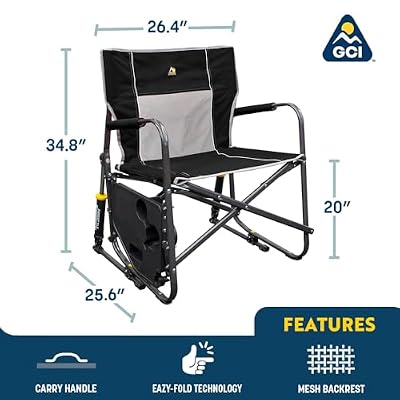
GCI Outdoor Freestyle Rocker XL with Side Table Camping Chair | Portable Folding Rocking Chair with Solid, Durable Armrests, Drink Holder & Comfortable Backrest — Black



As an Amazon Associate we earn from qualifying purchases. Product prices and availability are accurate as of the date/time indicated.

Sherpa Hiking Hydration Backpack – 22L Hiking Backpack with Water Bladder, Phone Compartment, Waterproof Zippers & Trekking Pole Holders


As an Amazon Associate we earn from qualifying purchases. Product prices and availability are accurate as of the date/time indicated.



As an Amazon Associate we earn from qualifying purchases. Product prices and availability are accurate as of the date/time indicated.
What Makes a Winter Coat Actually Work for Outdoor Plus-Size Wear
Insulation Type: Down vs Synthetic
Down insulation offers the best warmth-to-weight ratio — critical when you’re hiking, snowshoeing, or spending long hours outdoors. Look for 550-fill power minimum for recreational cold-weather use; 700+ fill for serious winter conditions. The downside: wet down loses loft fast.
Synthetic insulation (PrimaLoft, Thermoball, Coreloft) insulates even when wet and dries faster. For plus-size bodies that tend to run warm or sweat more during activity, synthetic is often the smarter outdoor pick — especially in wet climates like the Pacific Northwest or Great Lakes region.
Extended Torso Coverage: Non-Negotiable
Standard women’s coats are cut to end at hip-bone level — fine if you’re a size 8, problematic if you carry weight in your midsection. Look for coats explicitly marketed with “extended hem,” “longline,” or “curved hem” design. Ideal outdoor length: 2-4 inches below the hip bone, covering the lower back fully when you bend to lace boots or adjust pack straps.
Also check the back hem — quality plus-size outdoor coats add extra length at the back to prevent the “hiking up” problem when you shoulder a pack. This single feature separates a $150 coat that works from a $250 coat that doesn’t.
Sleeve Length and Cuff Design
Plus-size coats often have proportionally correct length but standard sleeve width — meaning you get plenty of length but struggle to push sleeves up or layer underneath. Ideal outdoor sleeve: ribbed inner cuff to seal out wind, wide enough to layer a fleece midlayer underneath, with a bit of extra length that can tuck into gloves.
Hood Design for Real Heads
Many “plus size” coats upsize the body but leave the hood sized for a standard head. A functional outdoor hood should: fit over a knit hat or balaclava, adjust with one hand via drawcords, and not obstruct peripheral vision. Check customer reviews specifically for hood sizing — it’s the most commonly missed fit detail.
Movement: Underarm Gussets and Articulation
A coat that looks great standing still but restricts your arm swing is a liability outdoors. Articulated elbows (pre-curved sleeves) and underarm gussets dramatically improve range of motion. This matters when you’re carrying trekking poles, swinging a kayak paddle, or just reaching overhead to adjust gear. See our plus size rain jacket hiking guide for more on movement-friendly outerwear construction.
Temperature Rating: What the Numbers Actually Mean
Coat marketing temperature ratings are optimistic. A coat rated to 20°F will keep the average person comfortable standing still at 20°F — but add wind, wetness, or sustained activity that causes sweating followed by rest, and that rating falls apart.
Practical rule: buy rated 10-15°F colder than the coldest temps you’ll realistically face. If you’re doing active outdoor activities (hiking, snowshoeing, cross-country skiing), you’ll generate body heat — so a 0°F-rated coat might actually be too warm for active use above 20°F. Layering systems beat single-coat solutions for variable-activity outdoor days.
Plus-Size Outdoor Coat Spec Comparison
| Feature | Budget Pick (<$100) | Mid-Range ($100-$200) | Premium ($200+) |
|---|---|---|---|
| Size Range | 1X-3X typical | 1X-4X common | 1X-6X available |
| Insulation | Synthetic, 150-200g | Synthetic 200g or 550-fill down | 700+ fill down or premium synthetic |
| Water Resistance | DWR only | DWR + water-resistant shell | Waterproof membrane (Gore-Tex/similar) |
| Extended Hem | Rare | Common | Standard with curved back |
| Pit Zips | No | Sometimes | Usually yes |
| Hood | Fixed, often small | Adjustable | Helmet-compatible, fully adjustable |
| Pockets | 2 hand pockets | 4 pockets including interior | 5-7 pockets including harness-accessible |
| Weight | 1.5-2.5 lbs | 1-1.8 lbs | 0.8-1.5 lbs |
Best Activities by Coat Type
Not all outdoor winter coats are built for the same activity. Here’s a quick-match guide:
- Hiking and snowshoeing: Prioritize stretch panels, underarm gussets, pit zips for ventilation. Packability matters if you’re layering over a base and mid layer. Pair with gear from our Plus Size Hiking Backpack Review for a complete system.
- Camping: Warmth trumps mobility. Down-insulated longline coats with high loft are ideal for camp chores and sitting around the fire. Check our extra large sleeping bag camping for pairing options.
- Winter kayaking: You need a waterproof shell, not just water-resistant. Drysuits or dry-top paddling jackets are the correct tool; a regular down coat is dangerous on open water. See our Plus Size Kayak Buying Guide for cold-water safety details.
- Outdoor events (sidelines, tailgates, festivals): Maximize warmth, style optional. Long puffer with baffled insulation and deep pockets wins here.
- Dog walking, commuting, general outdoors: Water-resistance, ease of layering, and hood are the priorities. Don’t over-engineer a coat for daily use.
Fit Tips: Getting the Right Size Without Trying It On
Online shopping means you need measurements, not just size labels. Measure:
- Chest: fullest point, measured over a light layer
- Waist: natural waist or widest point if you carry weight mid-body
- Hip: fullest point, 7-9 inches below natural waist
- Sleeve length: shoulder point to wrist, arm slightly bent
- Back length: nape of neck to where you want the hem to fall
Compare to the brand’s size chart — not a generic plus-size chart. Sizing varies wildly between outdoor brands. When in doubt between two sizes, size up and check the return policy.
Also check reviews specifically from customers with a similar body shape. A coat that fits perfectly on an hourglass figure may gap at the buttons on an apple shape. Look for reviews mentioning “belly,” “tummy,” “midsection” fit — those are your people.
Care and Maintenance: Making Your Investment Last
Down coats need periodic washing to restore loft. Use a front-loading machine on gentle, down-specific detergent, and dry with clean tennis balls on low heat for 2-3 cycles. Compression storage kills loft over time — hang or store loosely when not in season.
Synthetic coats are more forgiving — machine wash cold, tumble dry low. Re-apply DWR treatment annually or when water stops beading on the shell fabric. Nikwax and Grangers both make excellent plus-size-safe reproofing sprays.
Frequently Asked Questions
What weight capacity should I look for in a plus size outdoor winter coat?
Standard winter coats don’t have structural weight capacities the way chairs or kayaks do — they’re garments, not load-bearing gear. What matters for fit: look for coats sized up to 5X or 6X with chest measurements of 56-64 inches at the largest sizes. If you’re also carrying a heavy backpack (40+ lbs), ensure the shoulder seams are reinforced and the coat has pit zips to prevent overheating under pack straps.
Do plus size outdoor coats come in sizes above 3X?
Yes, increasingly so. Brands like Columbia (up to 3X standard, 5X extended), REI Co-op (up to 3X), Torrid (1X-6X), Eloquii (1X-6X), and Lane Bryant (up to 28/30) all offer genuine outdoor-capable coats in extended sizes. For true expedition-grade gear above 3X, custom outfitters and brands like Junonia specifically serve the plus-size outdoor market.
How do I know if a plus size winter coat will be long enough in the torso?
Check the back length measurement on the size chart — for adequate torso coverage, aim for at least 30 inches back length in a 1X, scaling up with size. Also look for product descriptions mentioning “longline,” “extended hem,” or “curved hem.” Read reviews from customers with similar height and weight distribution. Many reviewers will specifically comment on whether the coat covered their lower back adequately.
Is a plus size winter coat warm enough for camping overnight in winter?
A coat alone is not adequate sleeping insulation — you need a properly rated sleeping bag. But as a camp layer, a high-quality down or synthetic insulated coat rated to -10°F or lower can serve as your primary warmth layer during evening camp activities. Pair with insulated pants, base layers, and a warm sleeping bag. Check our more on extra large sleeping bag camping for complete cold-weather sleep system advice.
What’s the difference between a plus size winter coat for outdoor use vs a regular winter coat?
Outdoor-specific coats have features that casual winter coats don’t: packability, articulated elbows for movement, pit zips for ventilation, water-resistant or waterproof shells, technical insulation rated to specific temperatures, and compatibility with layering systems. A fashion winter coat might be equally warm standing still but will fail when you’re active, wet, or need to regulate body temperature. For any sustained outdoor activity below 30°F, invest in a technical outdoor coat.
Related Guides
Complete your outdoor kit with these guides:
- this guide on big and tall camping chair — weight-rated seating for base camp
- detailed plus size hiking backpack review — packs that fit wider torsos and hips
- Plus Size Rain Jacket Hiking — waterproof layering for wet conditions
- Best Folding Camping Chair 500lb — heavy-duty seating solutions
Affiliate disclosure: This post contains Amazon affiliate links. We earn a small commission at no extra cost to you when you purchase through our links. All recommendations are based on genuine research and real-world use considerations.
Ready to decide? Our #1 pick for 2026 is the Size Range.
Live price & availability on Amazon.
Related Reviews & Guides



4 Best Plus Size Walking Shoes with Wide Width
Plus Size Velvet Blazer Workwear Review