
Last Updated: October 8, 2026
Quick answer: For most people in 2026, the best ice bath tubs for home recovery is the Inflatable or foldable, ice-filled — our #1 rated choice. See the full ranked comparison, alternatives and buying advice below.
Best ice bath tubs for home recovery: the quick picks
The best ice bath tub for home use depends on where you’ll put it and how often you’ll use it: choose a compact insulated inflatable tub for a lower-cost, occasional setup; a rigid insulated tub for frequent use and easier cleaning; or a chiller-ready tub if you want controlled water temperature without repeatedly adding ice. Before buying, check the tub’s interior dimensions, filled weight, drainage route, and whether the product includes a chiller or only supports one.
Compare the main types
Exact dimensions and capacity vary by model, and manufacturers may measure the exterior rather than the usable bathing space. The ranges below are practical category-level estimates, not specifications for a particular product. Check the current product listing for the model you’re considering.

Bubplay Ice Bath Cold Plunge Tub with Cover for Indoor Outdoor for Recovery, Cold Water Therapy, Athletes & Adults -105 Gallons, Black, XL
Included for 'Best Ice Bath Tubs for Home Recovery' because the listing specifies Cold Water Therapy and Athletes & Adults -105 Gallons, details this guide uses to compare options.
View on Amazon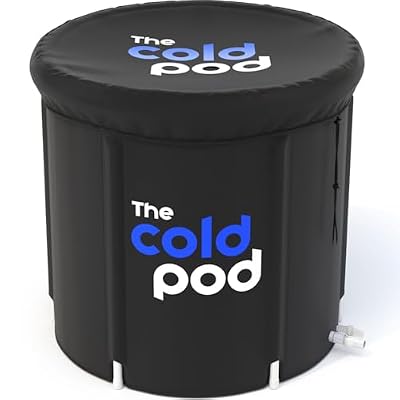
The Cold Pod Ice Bath Tub for Athletes with Cover: 88 Gallons Cold Plunge Tub for Recovery, Multiple Layered Portable Ice Bath Plunge Pool
Included for 'Best Ice Bath Tubs for Home Recovery' because the listing specifies Multiple Layered Portable Ice Bath Plunge Pool, details this guide uses to compare options.
View on Amazon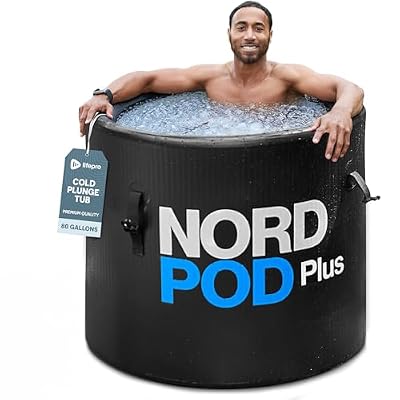
Lifepro NordPod Ice Bath Tub Portable Cold Plunge Water Therapy Pool
Included for 'Best Ice Bath Tubs for Home Recovery' as a relevant option in this category; details come from the product listing.
View on Amazon
XL Oval Ice Bath Tub for Athletes with Cover by Brisk Bear - Extra Large Cold Plunge Tub for Recovery - Ice Tub with Digital Timer, Thermometer & Reusable Ice Molds - Cold Plunge to Soothe Muscles
Included for 'Best Ice Bath Tubs for Home Recovery' because the listing specifies Extra Large Cold Plunge Tub for Recovery and Ice Tub with Digital Timer, details this guide uses to compare options.
View on Amazon| Tub type | Typical usable size | Approx. water capacity | Insulation and temperature control | Setup and drainage | Best fit |
|---|---|---|---|---|---|
| Inflatable or foldable, ice-filled | About 30–36 in. wide and 30–40 in. tall | About 70–110 gal. | Often insulated walls; ice controls cooling | Roughly 10–30 minutes to inflate and fill; drain valve or hose varies | First-time users, tighter budgets, occasional use |
| Rigid insulated tub, ice-filled | About 30–40 in. wide and 30–40 in. tall | About 80–130 gal. | More substantial shell insulation; usually manual ice addition | Usually no inflation; filling and draining depend on access to a hose and outlet | Regular use without a powered chiller |
| Chiller-ready tub and separate chiller | About 30–40 in. wide; check seat and interior length | About 80–130 gal. | Insulated tub; chiller circulates and cools water, depending on model | Assembly and plumbing can take longer; needs power and a drainage plan | Frequent use and more consistent temperature control |
| Purpose-built cold plunge with integrated cooling | Varies widely; confirm internal dimensions | Often about 60–120 gal. | Cooling and filtration are built in on some models | Typically the most involved delivery, setup, and maintenance | Dedicated space and a higher equipment budget |
Capacity affects more than the amount of water you handle: a full tub can weigh hundreds of pounds. One US gallon of water weighs about 8.34 lb, so 90 gallons alone weigh about 751 lb, before adding the tub and user. Confirm that a floor, deck, or balcony can support the total load; ask a qualified building professional if you’re unsure.
Choose by your space and routine
| Your situation | A sensible starting choice | What to prioritize |
|---|---|---|
| Limited budget or new to cold plunging | Inflatable or foldable ice-filled tub | Usable interior dimensions, included cover, secure drain, and an easy place to empty it |
| Frequent use, but no chiller | Rigid insulated tub | Durable liner or shell, insulation, comfortable entry, and manageable ice costs |
| Several plunges a week and a stable target temperature matters | Chiller-ready or integrated system | Chiller compatibility, power requirements, filtration, noise, service access, and ongoing maintenance |
| Small indoor room | Compact tub only if access and drainage are practical | Filled footprint, floor load, splash control, ventilation, and a route for draining water |
| Outdoor patio or yard | Insulated tub with a weather-appropriate cover | UV and weather exposure, level ground, nearby power if needed, and protection against freezing |
What matters more than the headline capacity
Interior dimensions and entry
Compare the inside length and width—not just the outside footprint—with your height and preferred seated position. A wide tub may hold more water but leave less room to stretch out; a narrow tub can be easier to place but feel restrictive. Check the rim height too. Climbing over a tall side can be awkward, especially on a wet floor, so consider a stable step or a lower-entry design.
Insulation, cover, and temperature control
Insulation slows heat transfer; it does not create cold water by itself. An ice-filled tub still needs fresh ice as water warms, particularly in hot weather or direct sun. A well-fitted cover helps limit heat gain and debris, but it doesn’t replace insulation. For a chiller system, confirm the advertised temperature range, whether the chiller is included, what fittings are required, and whether its capacity suits your water volume and local conditions.
Drainage and setup time
“Fast setup” often means fast assembly, not fast filling. A household hose can take a while to fill a tub holding dozens of gallons, and draining can take longer if the valve is small or the hose route rises uphill. Before filling, test the drain connection and place the tub where water can flow safely away from the building. Never assume an indoor floor drain can handle the volume without checking.
Indoor or outdoor: make the location work
Indoors offers more protection from weather and convenient access to power, but brings the greatest concern about leaks, condensation, humidity, and floor loading. Put the tub on a level, water-resistant surface, keep electrical connections dry, and plan how to move water out without flooding the room. A bathroom is not automatically suitable simply because it has a drain.
Outdoors makes draining and splash management easier, but sunlight warms water and can degrade exposed materials. Choose a shaded, level area and use a cover. Follow the manufacturer’s guidance for freezing temperatures: water left in hoses, pumps, or a chiller can damage components. Secure the setup against wind and keep it clear of leaves and debris.
Ownership costs and upkeep to plan for
Ice-filled tubs have fewer mechanical parts, but recurring ice purchases and water changes can add up. For example, if a routine uses 20 lb of ice at an assumed local price of $0.30 per pound, that’s $6 per use. At three uses a week for 12 weeks, the ice alone would cost about $216 (20 × $0.30 × 3 × 12). Your actual usage and local prices may differ; a chiller can reduce ice dependence but adds purchase, electricity, and maintenance costs.
- Follow the manufacturer’s water-treatment and cleaning instructions. Don’t assume that clear water is clean or that a filter replaces sanitation.
- After use, check the drain, seams, valves, and hose fittings for leaks. Inflatable tubs can be vulnerable to punctures; rigid tubs can still develop wear around connections and seals.
- Clean and dry a tub before folding or storing it to reduce odors and material wear. Avoid abrasive cleaners unless the manufacturer says they’re safe.
- For a chiller, check filters and connections on the stated schedule, keep ventilation openings clear, and confirm replacement-part availability before purchase.
Bottom line
For occasional use, an insulated inflatable tub is often the most accessible starting point if its interior fits and you have a workable drain. For frequent ice-only use, a rigid insulated tub is worth considering for its sturdier construction. If you plunge often and want less manual temperature adjustment, compare chiller-ready systems by compatibility, power needs, filtration, and service requirements—not just the tub’s advertised capacity.
Cold-water immersion may not be appropriate for everyone. It can pose risks, particularly for people with cardiovascular conditions or other relevant health concerns. Ask a healthcare professional whether it’s suitable for you, and follow the product’s safety instructions rather than treating a lower temperature or longer session as automatically better.
Ready to decide? Our #1 pick for 2026 is the Inflatable or foldable, ice-filled.
Live price & availability on Amazon.
Related Reviews & Guides


5 Best Plus Size Lingeries for Beginners (2026)

5 Best Plus Size Swimwears for Beginners (2026)