

Last Updated: October 8, 2026
- Best rug pads for hardwood floors by situation
- What makes a rug pad safe for hardwood?
- Head-to-head: felt, rubber, latex, and foam
- How thick should your rug pad be?
- Getting the size right: a simple calculation
- Decision matrix for choosing your pad
- Moisture protection and hardwood-floor care
- Installation steps that prevent slipping and damage
- Durability: what wears out first?
- Bottom line
The best rug pads for hardwood floors are felt-and-rubber pads with a dense 1/4-inch profile: they provide dependable grip, protect the finish, add cushioning, and work beneath most bedroom and living-room rugs without creating a noticeable step.
Best rug pads for hardwood floors by situation
| Situation | Best pad type | Recommended thickness | Why it fits |
|---|---|---|---|
| Bedroom rug beside or beneath a bed | Felt with natural rubber backing | 1/4 inch | Soft underfoot, stable, and substantial enough to prevent bunching |
| Living-room rug beneath a sofa and coffee table | Dense felt and rubber composite | 1/4 to 3/8 inch | Supports furniture weight while improving comfort and sound absorption |
| High-traffic hallway or entry | Low-profile rubber or latex-backed pad | 1/8 to 1/4 inch | Reduces shifting without creating a trip-prone edge |
| Large rug in an open-plan room | Heavy-duty felt with rubber or latex grip | 1/4 inch | Limits creeping and protects a wider area from grit and furniture pressure |
| Budget purchase for a lightly used room | Thin PVC-free rubber mesh | 1/8 inch | Affordable and easy to trim, though less cushioned and less durable |
What makes a rug pad safe for hardwood?
Look for a pad explicitly labeled for finished hardwood floors. The safest choices usually use felt, natural rubber, or a combination of the two. Felt cushions the rug and helps distribute the load from chair legs, beds, and sofas. Rubber or latex supplies friction so the rug does not slide across the floor.

RUGPADUSA - Basics - 8'x10' - 1/4" Thick - 100% Felt - Protective Cushioning Rug Pad - Safe for All Floors and Finishes Including Hardwoods
Included for 'Best Rug Pads for Hardwood Floors' because the listing specifies Basics and 8'x10', details this guide uses to compare options.
View on Amazon
BAGAIL Felt and Natural Rubber Backing Rug Pads 1/4” Thick, 5 x 7 Ft Non Slip Carpet Gripper Keep Rugs in Place, Under Area Rug Protective Cushioned Pads, Carpet Runners, Hardwood Floors Protection
Included for 'Best Rug Pads for Hardwood Floors' because the listing specifies 5 x 7 Ft Non Slip Carpet Gripper Keep Rugs in Place and Under Area Rug Protective Cushioned Pads, details this guide uses to compare options.
View on Amazon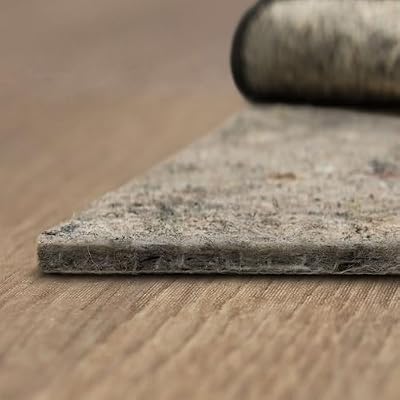
Mohawk Home Non Slip Rug Pad 6' x 9'- 1/4" Thick Felt + Latex Rubber Gripper - Dual Surface Cushion for Hardwood, Carpet, Tile Floors, Made in USA
Included for 'Best Rug Pads for Hardwood Floors' because the listing specifies Dual Surface Cushion for Hardwood and Carpet, details this guide uses to compare options.
View on Amazon
RUGPADUSA - Dual Surface - 8'x10' - 1/4" Thick - Felt + Rubber - Non-Slip Backing Rug Pad - Safe for All Floors
Included for 'Best Rug Pads for Hardwood Floors' because the listing specifies Dual Surface and 8'x10', details this guide uses to compare options.
View on AmazonAvoid generic plastic shelf liner, adhesive carpet tape applied directly to the floor, and pads with an unknown coating. Some low-quality PVC or plasticized materials can trap moisture, transfer color, or react with a floor finish. Even a floor-safe pad can cause problems if the floor is damp or the pad is left in place without occasional cleaning.
“Non-slip” does not mean permanently immovable. A rug can still shift if its pad is too small, the floor is dusty, or a heavy piece of furniture rests only partly on the rug. The pad should be clean, flat, and slightly smaller than the rug on every side.
Head-to-head: felt, rubber, latex, and foam
Felt pads
Felt is the strongest choice for cushioning and floor protection. Dense wool or recycled-fiber felt can soften footsteps, reduce the hard feel of a rug, and prevent furniture from pressing directly against hardwood. On its own, however, felt may slide on a smooth floor. It works best under a rug that is held down by substantial furniture or when paired with a grippy underside.
Natural rubber and latex pads
Rubber and latex provide stronger traction than plain felt and are useful under runners, small rugs, and rugs in busy walkways. Thin versions are easy to conceal under doors and furniture. They generally offer less cushioning than felt, and some rubber products can become brittle or lose grip over time, especially when exposed to heat and sunlight.
Felt-and-rubber composite pads
For most hardwood-floor rooms, this is the best all-around construction. The felt side faces the rug, while the rubber side faces the floor. It balances comfort, grip, sound reduction, and protection. A composite pad is particularly useful for larger rugs that need both cushioning and resistance to lateral movement.
Foam and PVC mesh pads
Foam and mesh pads are often inexpensive and lightweight. They can be suitable for a temporary rug or a low-use guest room, but they tend to compress faster beneath heavy furniture. Some foam products also hold their shape poorly after being folded. Choose one only when the manufacturer clearly identifies it as compatible with hardwood and specifies the material.
How thick should your rug pad be?
Thickness affects comfort, stability, door clearance, and how securely furniture sits. For most rooms, 1/4 inch is the useful middle ground. It is thick enough to protect the floor and make a rug feel more substantial without causing a dramatic height change.
- 1/8 inch: Best where doors, robot vacuums, or low furniture leave little clearance. It offers grip but modest cushioning.
- 1/4 inch: The most versatile thickness for bedrooms, living rooms, and dining areas.
- 3/8 inch: More comfortable beneath a large living-room rug, but check door swing and furniture stability.
- 1/2 inch or thicker: Usually unnecessary on hardwood and more likely to create raised edges, rocking furniture, or door interference.
For a plus-size household, a dense pad can be especially worthwhile beneath a large rug in a seating area because it helps spread repeated loads across the floor rather than concentrating pressure at a few rug fibers. Density matters more than simply choosing the thickest available pad.
Getting the size right: a simple calculation
The pad should normally be 1 to 2 inches smaller than the rug on all four sides. This keeps the pad hidden and reduces the chance of catching an edge with a shoe.
For example, a 9-by-12-foot rug covers 108 square feet. A pad trimmed to 8 feet 10 inches by 11 feet 10 inches covers approximately 105 square feet, leaving a 1-inch border around the rug. If a pad is sold in a 9-by-12-foot size, trim it before placing it under the rug rather than folding the excess underneath. Folding creates a ridge that can telegraph through the rug and cause premature wear.
For a round rug, reduce the pad diameter by 2 inches. For an irregularly shaped rug, trace the rug onto the pad with a washable marker, then cut just inside the traced line.
Decision matrix for choosing your pad
| Your priority | Choose | Accept the trade-off |
|---|---|---|
| Lowest reasonable cost | 1/8-inch rubber mesh or thin latex pad | Less cushioning and a shorter useful life under heavy furniture |
| Maximum comfort | Dense 1/4- to 3/8-inch felt-and-rubber pad | Higher cost and possible clearance issues at doors |
| Strongest grip for a runner | Low-profile rubber or latex pad cut close to size | May provide little insulation or softness |
| Large rug with a sofa or bed on top | Dense felt composite with broad coverage | More effort to move and trim during installation |
| Occasional-use guest room | Thin floor-safe composite or rubber pad | Less need for premium cushioning, but inspect it periodically |
Moisture protection and hardwood-floor care
A rug pad can reduce minor exposure from damp footwear or a small spill, but it is not a waterproof membrane. Moisture trapped between a rug, pad, and hardwood can discolor the finish or encourage odor. This matters most in entrances, dining areas, homes with pets, and rooms where rugs are cleaned in place.
For a moisture-prone location, choose a pad with a closed, nonabsorbent backing, but still remove and dry the rug after a significant spill. Do not put a wet rug back over the pad. On a seasonal schedule, lift the rug and vacuum both surfaces; this removes grit that can act like sandpaper as people walk across it.
Installation steps that prevent slipping and damage
- Vacuum and fully dry the hardwood floor. Dust reduces grip and can scratch the finish under pressure.
- Unroll the pad and let it relax flat. If it arrived folded, reverse-roll it gently rather than sharply creasing it.
- Center the pad under the rug, leaving an even 1- to 2-inch border.
- Check every edge and corner. Trim any portion visible beyond the rug.
- Walk across the rug and push it lightly from several directions. If it moves, first check for dust and incorrect sizing before adding tape.
- Confirm that doors, drawers, chairs, and mobility equipment clear the raised edge.
For a very large rug, place the pad and rug together with another person if possible. Dragging a loaded rug across hardwood can shift the pad, grind grit into the finish, or strain the rug backing.
Durability: what wears out first?
The first failure is often not the felt. It is the backing: rubber may lose elasticity, latex can become powdery, and thin foam may flatten in the walking lanes. A pad that has developed ridges, exposed adhesive, an odor that does not disappear, or areas that slide should be replaced.
Dense pads cost more initially, but they can be better value under frequently used rugs because they resist compression. As a rough ownership comparison, a $60 pad used for five years costs about $1 per month, while a $25 pad replaced annually costs just over $2 per month. The cheaper option may still make sense for a temporary or lightly used rug, but price alone does not determine value.
Brands such as RugPadUSA and Mohawk Home offer multiple felt, rubber, and composite constructions, but the material specification and floor compatibility matter more than the label. Before buying, confirm the actual thickness, backing material, available dimensions, trimming guidance, and whether the manufacturer permits use on finished hardwood.
Bottom line
For most hardwood floors, choose a dense 1/4-inch felt-and-rubber rug pad trimmed 1 to 2 inches smaller than the rug. Use a thinner rubber or latex pad where door clearance and traffic control matter more than cushioning, and choose a thicker composite only when comfort and furniture support justify the extra height. Keep the floor and pad dry, vacuum away grit, and replace the pad when its backing begins to crumble or lose grip.
Related Reviews & Guides


Best Shiatsu Foot Massagers for Circulation
Best Smart Water Leak Detectors