
Last Updated: September 18, 2026
- Decide These 3 Things First
- Get the Size Right Before Comparing Features
- Choose the Rise for Coverage and Waistband Stability
- Read the Material Label, Not Just the Word “Stretch”
- Inspect Construction Details That Affect Fit
- Test Comfort and Performance in More Than One Position
- Compare Price Tiers Realistically
- Check Warranty, Returns, and Delivery Before Ordering
- Spec Checklist
- Red Flags
- FAQ
Shopping for plus-size jeans can seem simple until the waistband gaps, the rise lands in the wrong place, or the fabric stretches out before the end of the day. The most common mistake is buying by the number on the tag alone. A size 18 from one brand may measure differently from a size 18 in another, while “high rise” can sit at the natural waist on one body and several inches below it on another.
Another mistake is treating stretch as a cure-all. Jeans with a high percentage of elastane may feel comfortable in the fitting room but lose shape quickly if the fabric is thin or the waistband is poorly constructed. Conversely, rigid denim can look polished but feel restrictive when sitting, driving, or walking upstairs. This plus size jeans buying guide for rise and stretch focuses on the details that affect fit, support, durability, and everyday comfort.
As an Amazon Associate we earn from qualifying purchases at no extra cost to you.


Decide These 3 Things First
- Where should the waistband sit? Choose mid-rise if you prefer coverage below the navel, or high-rise if you want the waistband closer to your natural waist.
- How much movement do you need? Look for roughly 1% to 3% elastane or spandex for useful comfort stretch. More than 3% can feel very flexible, but fabric quality matters more than the percentage alone.
- What leg shape works with your shoes and wardrobe? Straight, tapered, bootcut, and wide-leg jeans create different proportions. Check the inseam, not just the labeled silhouette.
Get the Size Right Before Comparing Features
Take three measurements with a flexible tape, wearing thin clothing: natural waist, fullest hip, and preferred inseam. Keep the tape level and comfortably snug rather than pulling it tight. Measure the waist where you actually want the waistband to sit. For high-rise jeans, that may be near the narrowest part of your torso; for mid-rise jeans, it may be 1 to 3 inches lower.
Use the largest relevant measurement as your starting point, then compare it with the brand’s size chart. If your waist and hip fall into different size columns, prioritize the hip for a woven jean and use the waistband design to fine-tune the fit. A curvy cut, contoured waistband, or small amount of stretch can reduce gaping without forcing you into a smaller size.
Allow about 1 to 2 inches of ease at the hip for a close but wearable fit. You should be able to sit without the front pockets pulling open or horizontal strain lines appearing across the seat. A pair that is already difficult to button while standing is unlikely to become more comfortable during the day.
Choose the Rise for Coverage and Waistband Stability
Rise is the distance from the crotch seam to the top of the waistband. Exact definitions vary by brand, but a practical guide is about 8 to 9 inches for low rise, 9 to 10.5 inches for mid-rise, and 10.5 inches or more for high rise. The labeled rise does not guarantee the same coverage on every body, so product measurements are valuable when available.
High-rise jeans can smooth the transition between a top and the waistband and may reduce rolling when the waistband fits correctly. Look for a rise that reaches your preferred waist without cutting into your stomach when seated. If the front is comfortable but the back gaps, a contoured waistband, darts, or a curvy fit may help.
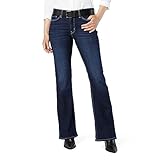
Mid-rise styles can be easier to wear with shorter tops and may feel less restrictive through the abdomen. The Levi Strauss Signature Gold True Boot Jean, for example, is described as a mid-rise stretch style and is available in standard and plus sizing. The key is to compare the actual garment measurements, since “mid-rise” is not standardized.
Read the Material Label, Not Just the Word “Stretch”
Most comfortable jeans combine cotton with a small amount of elastane, spandex, or polyester. A fabric containing about 1% elastane usually offers gentle give and stronger denim character. Around 2% to 3% often provides more noticeable flexibility for sitting and movement. Jeans with 4% or more stretch may feel legging-like, but they need a dense, resilient knit or weave to avoid bagging.
Look for denim weight when the information is provided. Lightweight denim around 8 to 10 ounces can feel cooler and drape more easily. Midweight denim around 10 to 12 ounces is a practical all-season choice. Heavier denim above 12 ounces can offer structure and durability but may require more break-in time.
Cotton-heavy fabric is often more breathable, while polyester can improve recovery and abrasion resistance. Neither automatically makes a jean better. Check whether the fabric returns to shape after you gently pull the knee or waistband. Avoid relying on a product title that says “stretchy” without a fiber-content label.
Inspect Construction Details That Affect Fit
Examine the waistband, belt loops, pocket openings, and crotch seam. A waistband with five or more belt loops generally distributes tension better than one with only three or four, especially if you wear a belt. Wide belt loops are useful for belts around 1.5 inches wide, while narrow loops may limit your options.
Check that the fly lies flat and that the button or zipper does not pull sideways. A metal zipper may feel secure, but a smooth, well-sewn zipper is more important than the material. Look for bar tacks at the tops of front pockets and at belt-loop attachment points. Double-needle stitching along the inseam and seat can add durability, although stitching alone cannot compensate for weak fabric.
For a tapered jean such as the Gloria Vanderbilt Amanda style, check the opening around the ankle as well as the hip. A leg opening of roughly 12 to 15 inches can create a noticeably tapered look, while a straight leg may measure about 14 to 18 inches depending on size and brand. Bootcut styles need enough opening to fit over your intended shoes without dragging.
Test Comfort and Performance in More Than One Position
When trying jeans on, perform a five-minute movement test. Sit in a chair, bend your knees, walk several steps, and squat partway. The waistband should stay in place without rolling, the crotch should not pull sharply, and the pockets should remain flat. Stretch denim should recover after movement rather than forming permanent bubbles at the knees or seat.
Pay attention to pressure points. A tight waistband can cause discomfort even when the hips fit, while excess fabric under the seat can create folds and sliding. If the waistband slips only when walking, the rise may be too short or the waist may be too large. If it digs in while seated, try a longer rise or a softer, contoured waistband rather than simply sizing up.
For online purchases, read reviews specifically for stretching, shrinkage, waistband behavior, and inseam accuracy. Ignore vague comments such as “great fit” unless the reviewer gives height, usual size, or measurements. Wash new jeans according to the care label and avoid high dryer heat, which can accelerate elastane damage and shrink cotton.
Compare Price Tiers Realistically
Budget plus-size jeans generally cost about $20 to $40. Examples in this range include the Gloria Vanderbilt Amanda at about $26.98, the Lee Relaxed Fit Straight Leg at about $28, the Levi Strauss Signature Gold True Boot at about $29.99, and the SQIQY High-Waisted Bootcut at about $35.97. At this level, inspect the fabric blend, return policy, and reviews carefully because consistency between colors and washes can vary.
Midrange jeans typically cost $40 to $90. The extra cost may provide more consistent sizing, heavier denim, better hardware, a broader inseam range, or more specialized curvy and plus-size cuts. Premium jeans often cost $90 to $180 or more. They may offer distinctive washes, stronger construction, selvedge or specialty denim, and better finishing, but a higher price does not guarantee a better rise or more comfortable stretch.
For most shoppers, the best value is a pair that fits correctly without tailoring. Paying $30 more for a reliable inseam or a waistband that stays flat may be worthwhile; paying more solely for a fashionable wash is less important if the fit is wrong.
Check Warranty, Returns, and Delivery Before Ordering
Jeans do not require assembly, so “assembly” information on a retail page is irrelevant. Delivery and return terms matter much more. Check the expected shipping window, return deadline, restocking fees, and whether sale items are final sale. A return period of at least 30 days gives you time to try the jeans indoors with the correct shoes.
Look for coverage against manufacturing defects such as a broken zipper, detached belt loop, or failed seam soon after purchase. Ordinary wear, washing damage, and fabric stretching are usually excluded. Keep the receipt and leave tags attached until the fit is confirmed. If ordering multiple sizes, verify whether the retailer charges return shipping; a $7 to $15 return cost can change the value of a low-priced pair.
Spec Checklist
| Spec | Budget | Mid | Premium |
|---|---|---|---|
| Typical price | $20–$40 | $40–$90 | $90–$180+ |
| Stretch target | 1%–3% elastane or spandex | 1%–3%, with better recovery | Varies; prioritize fabric density and recovery |
| Denim weight | 8–11 ounces | 10–12 ounces | 10–14 ounces or specialty denim |
| Rise guide | Mid or high, about 9–12 inches | Choose by measured garment rise | More rise and curvy-fit options may be available |
| Inseam options | Usually 28–32 inches | Often 28–34 inches | May include petite, regular, and tall lengths |
| Construction | Secure zipper and reinforced belt loops | Contoured waistband and stronger seam finishing | Specialty hardware, detailed finishing, and consistent stitching |
Red Flags
- No fiber-content label or no usable size chart.
- “High stretch” claims without information about fabric recovery.
- Reviews repeatedly mention sizing changes between washes or colors.
- Waistband photos show severe gaping, twisting, or exposed elastic.
- Thin fabric that is visibly transparent under normal lighting.
- Unusually low prices paired with final-sale terms and no defect policy.
- Only one inseam offered for a broad range of plus sizes.
FAQ
What rise is most comfortable for plus-size jeans?
There is no universal best rise. Start with your preferred waistband position and measure from the crotch seam to that point. Many shoppers find a 9- to 12-inch rise comfortable, but torso length, stomach shape, and sitting posture matter more than the label.
How much stretch should plus-size jeans have?
About 1% to 3% elastane or spandex is a useful starting range. Choose closer to 1% for a firmer denim feel and closer to 3% for more movement. Check recovery by gently pulling the fabric and seeing whether it returns to shape.
Should I size down in stretch jeans?
Usually not automatically. Buy the size that fits your largest measurement without strain. Only consider a smaller size if the brand specifically recommends it and the larger size visibly bags after movement. Jeans that are too tight can damage seams and become uncomfortable quickly.
Are inexpensive plus-size jeans worth buying?
Yes, if the measurements, fabric content, return policy, and construction are clear. Jeans around $25 to $40 can be excellent everyday options. Spend more when you need specialty inseams, a precise curvy fit, heavier denim, or a warranty—not simply because the label says premium.
Ready to decide? Our #1 pick for 2026 is the Typical price.
Live price & availability on Amazon.
Related Reviews & Guides


6 Best Plus Size Winter Dress Coats 2026
Are Plus Size Compression Tops Worth It? An Honest Answer (2026)