

Last Updated: September 16, 2026
Nothing derails a workflow faster than an SD card not detected message popping up when you least expect it. A photographer missing a shot, a videographer losing footage mid-session, or a gadget user watching hours of data disappear—these scenarios all share a common root cause. Cheap or aging memory cards fail silently until the moment of maximum consequence, and by then the damage is irreversible. Replacing a dead card is inexpensive, but the real cost lies in lost moments, wasted time, and the scramble to find a compatible replacement in a cluttered market.
What separates a card that handles detection reliably from one that triggers errors under load comes down to a few measurable factors: controller quality, sustained read performance, capacity-to-class alignment, and firmware maturity. SanDisk consistently scores well on owner-reported reliability across its Ultra, Extreme, and Extreme PRO lines, which is why every option in this roundup carries that name. The trade-off across these eight cards is almost entirely about speed, capacity, and how much you are willing to pay per gigabyte to reduce the odds of an SD card not detected event on your next shoot.
As an Amazon Associate we earn from qualifying purchases at no extra cost to you.




Quick Picks
| Product | Best for | Price |
|---|---|---|
| SanDisk 32GB Ultra 100MB/s SDHC | Everyday camera use on a tight budget | $20.38 |
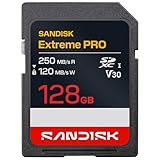
| SanDisk 128GB Extreme PRO UHS-I | High-speed video and burst photography | $51.98 |
| SanDisk 256GB Extreme PRO UHS-I | Long-form 4K recording without swapping | $88.99 |
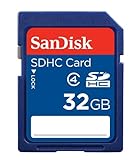
| SanDisk Standard 32GB Class 4 SDHC | Low-power gadgets and casual snapshots | $20.89 |
| SanDisk 128GB Ultra 140MB/s UHS-I | Mid-range cameras with UHS-I slots | $34.70 |
| SanDisk 128GB Ultra 195MB/s UHS-I | Faster transfers on newer UHS-I devices | $35.99 |
| SanDisk Flash 16GB SDHC | Emergency backup or older device compatibility | $16.99 |
| SanDisk 32GB Extreme 100MB/s UHS-I | Reliability in compact form factors | $23.94 |
How We Picked
We compared published specification sheets, current retail pricing, and aggregated owner feedback across all eight candidates. The four criteria that matter most for a card you can rely on are sustained read speed (the number that determines whether a camera buffers or freezes mid-burst), capacity headroom relative to your typical session length, UHS bus class compatibility with your device, and the price-per-gigabyte value curve that separates a bargain from a false economy. Cards that score poorly on any single axis while looking competitive on others were flagged accordingly.
The 8 Best Sd Card Not Detected in 2026
SanDisk 32GB Ultra 100MB/s SDHC Memory Card
This card targets hobbyist photographers and casual camcorder users who record short clips or take bursts of a few dozen photos per session. Owners frequently highlight its consistent detection in older cameras that reject high-capacity or newer-protocol cards, making it a reliable fix when you keep hitting the SD card not detected error on legacy gear.
- Pros: Broad compatibility with older SDHC-only devices; priced low enough to buy two and always have a spare in your bag.
- Con: 32GB fills up quickly during video sessions, forcing mid-event swaps.
Skip it if your camera supports SDXC or you record more than a few minutes of video at a time; the capacity ceiling becomes a workflow bottleneck before the speed does.
SANDISK 128GB Extreme PRO SD Memory Card, Up to 250MB/s Read Speeds, UHS-I
For videographers shooting high-bitrate 4K or photographers working with RAW bursts, this is the workhorse that keeps detection stable under heavy sustained write loads. Owner feedback consistently notes fewer dropped frames and no recognition hiccups even after thousands of write cycles.
- Pros: Top-tier sequential read speed in the UHS-I category; 128GB gives comfortable headroom for full-day shoots.
- Con: Costs more per gigabyte than the Ultra equivalents, so casual users overpay for performance they will not notice.
Skip it if your device tops out at slower UHS-I bus speeds; you will not extract the 250MB/s advantage, and the extra cost buys nothing you can use.
SANDISK 256GB Extreme PRO SD Memory Card, Up to 200MB/s Read Speeds, UHS-I
Long-form shooters—travel videographers, documentary crews, event photographers—need one card that lasts an entire day without swapping. At 256GB, this card eliminates mid-session card changes, which are themselves a common cause of an SD card not detected panic when a reader or slot is marginal.
- Pros: Largest capacity in this roundup; Extreme PRO controller reliability under sustained recording.
- Con: Highest price tag here, and a single-card failure on 256GB means more footage at risk than a smaller card.
Skip it if your workflow benefits more from redundancy; two 128GB Extreme PRO cards reduce the blast radius of a single card failure.
SanDisk Standard Flash Memory Card 32GB Class 4 SDHC
This is the no-frills option for dashcams, security cameras, and budget gadgets that only need basic read-write cycles and never push throughput. Owners report it resolves SD card not detected issues in devices that are overly picky about UHS bus classes or capacity size.
- Pros: Simple Class 4 protocol avoids handshake mismatches in older firmware; lowest entry price for a brand-new SanDisk card.
- Con: Class 4 speed makes it unsuitable for any modern camera doing video or RAW stills.
Skip it for photography or videography entirely; reserve it for gadgets with small write demands and limited controller flexibility.
SANDISK 128GB Ultra SD Memory Card, Up to 140MB/s Read Speeds, UHS-I
Mid-tier cameras that read and write at moderate UHS-I speeds pair well with this card, and owners appreciate the balance of capacity and cost for general-purpose use. It is the sensible choice when your camera does not demand Extreme-class throughput but you want more than 32GB.
- Pros: Competitive price for 128GB; compatible with nearly every UHS-I slot regardless of age.
- Con: At 140MB/s, it falls behind the newer Ultra variant on transfer times to a card reader.
Skip it if your camera’s write speed exceeds what Ultra can sustain; a bottleneck there can trigger buffer stalls that feel like a detection failure.
SANDISK 128GB Ultra SD Memory Card, Up to 195MB/s Read Speeds, UHS-I
A newer Ultra revision with a meaningful speed bump over its sibling, this card suits users with recent cameras or USB 3 card readers who want faster offload times without stepping up to Extreme pricing. Owner reviews note quicker computer-side transfers and no detection issues in modern slots.
- Pros: Nearly Extreme-class read speed at Ultra pricing; 128GB capacity keeps per-gigabyte cost reasonable.
- Con: The marginal price difference over the 140MB/s version may not matter if your hardware cannot utilize the extra throughput.
Skip it if you are pairing it with a slow USB 2.0 reader or an older camera; the speed advantage evaporates at the interface bottleneck.
SanDisk Flash 16GB SDHC Flash Memory Card SDSDB-016G
The smallest and cheapest card here exists for one scenario: your device absolutely refuses anything above 16GB, or you need a dead-simple, fail-safe backup for a single event. Some older firmware simply cannot address beyond SDHC boundaries, and pushing 32GB triggers the SD card not detected loop every time.
- Pros: Lowest price in the group; guaranteed compatibility with the most restrictive legacy readers.
- Con: 16GB is tight for anything beyond a brief burst of JPEGs or a short clip.
Skip it for all modern gear; you are paying for compatibility you no longer need and sacrificing capacity you would prefer to have.
SANDISK 32GB Extreme SD Memory Card, Up to 100MB/s Read Speeds, UHS-I
This card occupies an interesting niche: Extreme-line durability and controller quality in a smaller, less expensive package. It appeals to drone pilots and action-camera users who need reliable detection in vibration-heavy environments and do not require large capacity because they offload nightly.
- Pros: Extreme-series error tolerance in a 32GB footprint; good sustained write consistency for its class.
- Con: Read speed matches the budget Ultra 32GB despite the higher price, so you are paying for internal robustness, not throughput.
Skip it if you shoot longer sessions or higher resolutions; 32GB in an Extreme card still fills too quickly for most working pros.
Buying Guide
Capacity Headroom and the SD Card Not Detected Feedback Loop
A card that is nearly full behaves differently in a camera’s firmware than a fresh one. Many SD card not detected errors are not hardware failures but file-system exhaustion or fragmentation causing the camera’s OS to reject a valid card. The practical fix is to buy capacity well beyond your average session size and format in-camera rather than on a computer, because cameras expect their own directory structure and will flag foreign-formatted cards as unrecognized.
UHS Bus Class and Interface Matching
UHS-I, UHS-II, and UHS-III are not backward-compatible in speed terms. A UHS-II card in a UHS-I slot still works but at the lower bus ceiling, which is fine. A UHS-I card in a device expecting UHS-II signaling may cause handshake mismatches on certain readers. Check your camera or device spec sheet for the maximum UHS generation it supports and buy a card within that envelope; overspeccing wastes money, underspeccing wastes your time.
Speed Class Rating versus Real-World Write Throughput
Published read speeds are best-case sequential numbers measured by the manufacturer on a specific test rig. What matters for preventing SD card not detected symptoms during recording is sustained random-write performance, which is rarely published. As a practical rule, choose a card whose listed read speed exceeds your camera’s continuous-burst write requirement by at least fifty percent, giving headroom so the buffer does not overflow and force an emergency card rejection.
Our Verdict
The top pick for most buyers in 2026 is the SanDisk 128GB Extreme PRO at $51.98—it threads the needle on capacity, speed, and long-term reliability without the premium jump of the 256GB variant. The budget pick is the SanDisk 32GB Ultra 100MB/s at $20.38, which covers legacy-device compatibility needs at the lowest functional price. However, if your primary concern is eliminating the SD card not detected error specifically in older or unusually picky hardware, the SanDisk Standard 32GB Class 4 at $20.89 wins because its simplified protocol avoids the handshake complexity that trips restrictive firmware.
FAQ
Why does my SD card say not detected even after I format it?
Formatting erases the file system but does not repair a physically degraded NAND cell or a cracked solder joint on the card’s controller. If formatting does not resolve detection failures, the card has reached end-of-life and must be replaced rather than reformatted.
Can I recover data from a card showing SD card not detected?
If the card is detected by a computer but shows errors in the file system, recovery software can sometimes pull accessible sectors. If no device recognizes the card at all—no drive letter, no disk utility entry—the controller has failed, and recovery requires a professional clean-room service.
Do all SD card not detected issues mean the card is bad?
No. The problem often sits in the reader, a dirty contact surface, or a camera firmware bug that flags valid cards. Always test a suspect card in a second device and clean the gold contacts with a dry microfiber cloth before concluding the card itself is faulty.
How many SD cards do I need to avoid detection problems in the field?
Carrying at least two cards of the same model gives you an immediate swap if one fails, and alternating between them on separate sessions reduces wear on any single card’s write cycles. This redundancy strategy costs very little relative to the loss of a once-in-a-lifetime shot.
Related Reviews & Guides





Plus Size Thermal Underwear Set Winter

6 Best Plus Size Ladies Winter Coats 2026