Last Updated: September 7, 2026
- Top Pick: Plus Size Fishing Waders for Men Waterproof, Or Chest Waders for Women. XXL
- Best Value: Paramount Outdoors Fast Eddy Waist High Stockingfoot Breathable Wader Pant (X-Large)
- Premium Choice: JUSTOOP Waist Wader Pants for Men and Women, 3-Ply Breathable Waterproof Fishing Waders with Pockets and Durable Stockingfoot, Size XL Grey

TL;DR: Plus-size fishing vests and waders let larger-bodied anglers fish comfortably without squeezing into gear built for a narrower frame — the best options include extended sizing through 3X or 4X, adjustable fits, and durable waterproofing that holds up to real use in the water. Best pick: ASIN B07GPCRPXL.
Best Plus Size Fishing Vest and Wader Pants in 2026: Fish Your Way, in Your Size
Fishing is one of the most inclusive outdoor activities that exists — it requires patience, skill, and the right location far more than it requires any particular body type. And yet the gear industry has been slow to acknowledge that anglers come in every size. Standard fishing vests cut off at XL with chest pockets that gap open on a broader torso. Wader pants are sized for narrow hips and straight through the thigh, leaving plus-size anglers to either squeeze uncomfortably into gear that does not fit or give up on wading entirely.
As an Amazon Associate we earn from qualifying purchases at no extra cost to you.


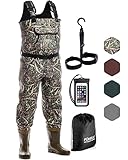


That is changing. A growing number of manufacturers now offer genuine plus-size fishing vests and waders that are sized for larger bodies — not just scaled up in one dimension but re-patterned for fuller chests, wider hips, and broader thighs. This guide covers what to look for in both categories and which options deliver genuine comfort and function for plus-size anglers in 2026.
Top Pick: Plus Size Fishing Vest and Waders

8 Fans Fishing Waders for Men and Women, Chest Waders- Waterproof Bootfoot, Neoprene Waders for Hunting & Fishing Small


As an Amazon Associate we earn from qualifying purchases. Product prices and availability are accurate as of the date/time indicated.
8 Fans Fishing Waders for Men and Women, Chest Waders- Waterproof Bootfoot, Neoprene Waders for Hunting & Fishing 2X-Large
As an Amazon Associate we earn from qualifying purchases. Product prices and availability are accurate as of the date/time indicated.
8 Fans Fishing Waders for Men and Women, Chest Waders- Waterproof Bootfoot, Neoprene Waders for Hunting & Fishing
As an Amazon Associate we earn from qualifying purchases. Product prices and availability are accurate as of the date/time indicated.
Fishing Vests for Plus-Size Bodies: What to Look For
A fishing vest’s primary function is storage — keeping flies, lures, tippet, tools, and snacks organized and accessible without a pack. For plus-size bodies, the vest fit determines whether all that storage actually works or whether the pockets gap, pull, or sit in awkward positions that require contortion to access.
Chest measurement and adjustability: The most important measurement for a fishing vest is chest circumference, not general sizing. Look for vests that specify chest measurements in the sizing charts rather than just S/M/L. Extended sizes should reach 50–60 inch chest circumferences. Side adjustment straps allow the vest to be cinched in or let out as layers underneath change — crucial for fishing in variable weather conditions where layering requirements shift throughout the day.
Pocket placement: On a fuller chest, chest pockets positioned high on the breast tend to gap open under the weight of contents. Look for vests with reinforced pocket closures (YKK zippers, magnetic closures, or strong snaps) rather than simple flap closures that rely on gravity and a flat chest to stay shut. Lower chest and hip-level pockets are often more accessible for plus-size bodies than breast pockets that require reaching across a wider torso.
Back panel construction: A mesh back panel is standard in summer fishing vests for breathability. On a plus-size body, the mesh panel must be sized with enough surface area that it does not pull or bunch across the upper back — a common problem when vest backs are scaled proportionally from smaller sizes without accounting for the difference in back width and shoulder distance in plus-size bodies.
Waders for Plus-Size Bodies: Key Specifications
| Feature | What to Look For | Why It Matters |
|---|---|---|
| Size range | Extends to 3X or 4X with separate tall/short options | Standard wader sizing ends at XL; plus-size bodies need proportionally sized chest and hip without excess length |
| Hip and thigh room | Generous thigh circumference (24+ inches at mid-thigh) | Narrow thigh cuts restrict movement and cause chafing during extended wading |
| Chest adjustment | Adjustable suspenders with front and back length adjustment | Torso length varies significantly in plus-size bodies; suspenders must accommodate both the chest circumference and the torso length independently |
| Waterproofing | Seam-taped or seam-sealed construction | Un-taped seams allow water infiltration — the most common wader failure point |
| Breathability | Breathable neoprene or Gore-Tex equivalent | Neoprene retains heat (better for cold water); breathable membranes work for warmer conditions and active wading |
| Boot foot vs. stocking foot | Stocking foot preferred for plus-size flexibility | Boot foot waders add fixed boot sizing that compounds fit challenges; stocking foot allows independent boot sizing |
| Gravel guard | Neoprene or elastic gravel guard at stocking foot | Prevents debris from entering between wader boot and wader foot — a comfort and durability factor |
Frogg Toggs Waders: The Plus-Size Angler’s Practical Choice
Frogg Toggs women’s waders (B07GPCRPXL) have earned consistent praise in the plus-size fishing community for a simple reason: they actually come in sizes that fit, at a price point that does not penalize you for needing extended sizing. The DriPore lightweight breathable material provides genuine waterproofing without the heavy, hot feel of budget waders in thicker PVC materials.
The adjustable suspender system accommodates a wide range of torso lengths, which is particularly important for plus-size bodies where chest circumference and torso length do not scale proportionally with general size. The stocking foot construction allows independent wading boot selection — which means you can find boots that fit your feet correctly without being locked into a boot foot that may not match your foot width.
Fishing and outdoor activities pair naturally with other plus-size outdoor gear. Our guide to the best plus-size gardening knee pads and kneelers covers comfort gear for other outdoor pursuits. For active days that require extended physical effort, our guide to resistance bands for plus-size home workouts covers strength training that builds the endurance that makes longer fishing trips more enjoyable.
Layering for Comfort Inside Waders
What you wear under waders significantly affects comfort, warmth, and the all-day wearability of a fishing session. Follow these layering principles:
- Base layer: moisture-wicking synthetic or merino wool. Cotton is the wrong choice inside waders — it absorbs sweat and stays damp, causing chafing and rapid heat loss if temperatures drop. A synthetic base layer moves moisture away from the skin and dries quickly.
- Mid layer: fleece or insulated leggings for cold water. For wading in cold streams or early-season conditions, a fleece mid layer adds meaningful warmth without the bulk that would restrict movement inside the wader.
- Avoid thick seams and waistbands that create pressure points. Any ridge in the underlayer transfers to a pressure point inside the wader. Seamless or flatlock-seam underlayers prevent the localized discomfort that accumulates over a full day of wading.
- Size waders to accommodate your typical layering stack. Try waders with the warmest layer combination you expect to wear — waders sized for summer wear will be uncomfortably tight over cold-weather underlayers.
Frequently Asked Questions
What size waders do I need as a plus-size woman angler?
Use your hip measurement as the primary sizing reference for waders, as hip circumference is the most common fit constraint in wader sizing for plus-size bodies. Most wader size charts list hip circumference — match your measured hip to the chart and verify the chest circumference and inseam length are also within range for your proportions. If you are between sizes, go up — waders that are too tight restrict safe wading movement and create chafing. When in doubt, many brands’ customer service teams can help match your measurements to the correct size.
Are there plus-size fishing vests with enough pocket space for fly fishing gear?
Yes — several manufacturers produce extended-size fishing vests with the full complement of fly fishing storage: large front fly boxes, tippet pockets, zinger attachment points, and tool loops. The key is verifying that the extended size also comes with proper pocket placement, not just a larger overall vest. A vest with chest pockets that sag open or sit awkwardly on a fuller chest is not functionally useful regardless of how many pockets it has. Look for reviews from plus-size anglers specifically, as fit details that matter for a fuller chest are rarely mentioned in standard reviews.
What is the difference between breathable and neoprene waders for plus-size anglers?
Neoprene waders provide insulation — they trap a thin layer of water against the body that your body heat warms, similar to a wetsuit. They are the right choice for cold water (under 50°F) and cold air temperatures. Breathable waders use a waterproof membrane that allows water vapor (sweat) to escape while keeping external water out, keeping you dry and comfortable during active wading in moderate conditions. For most warm-season fishing in streams and rivers, breathable waders are more comfortable. For early season trout fishing in snowmelt-fed streams, neoprene provides essential thermal protection.
How do I prevent chafing in waders as a plus-size angler?
Chafing in waders typically occurs at the inner thigh from fabric bunching, at the waistband area where underlayers crease, and at the stocking foot seam. Preventing it requires the right base layer (seamless or flatlock synthetic, not cotton), anti-chafe cream or stick applied to friction-prone areas before wading, and waders that fit with enough thigh room that fabric does not bunch with each step. Sizing up in the thigh region and ensuring your underlayers have no exposed seams in high-friction areas resolves most chafing issues.
Can I use plus-size fishing waders for activities other than fishing?
Waders designed for fishing work well for any activity requiring waterproof full-lower-body protection: clamming, crabbing, mudflat exploration, certain types of wildlife photography, and wetland restoration work. The stocking foot style pairs with wading boots suitable for different terrains. Breathable waders are also used by some hunters for waterfowl hunting in standing water — the crossover between fishing and waterfowl use is well established. Any activity involving extended standing in water or wet conditions where remaining dry is the priority is a legitimate use case for fishing waders.
Bottom Line
Plus-size fishing vests and waders have improved meaningfully as manufacturers have recognized that the angling community includes every body type. The key is knowing which specs to verify — chest measurement and adjustability in vests, hip circumference and thigh room in waders, and seam-sealed waterproofing in both. You belong on the water. Gear that fits your body lets you focus on the fishing rather than managing uncomfortable equipment, and that is exactly where your attention should be.
Ready to decide? Our #1 pick for 2026 is the Size range.
Live price & availability on Amazon.
Related Reviews & Guides

How Much Room Plus Size Coat Sleeves Need? Size Guide With Measurements (2026)

6 Best Maternity Dresses For Photoshoot Plus Size 2026