

Last Updated: October 8, 2026
The best premium all-in-one desktop computers for home office productivity are the Apple iMac 24-inch for a compact, sharp everyday setup, the Apple iMac 27-inch only if you find a current or refurbished model that suits your needs, and the HP Envy Move 23.8-inch when portability around the home matters more than upgrade flexibility. For demanding multitasking, compare memory and ports as carefully as screen quality: many all-in-ones are difficult to upgrade after purchase.
Quick answer: For most people in 2026, the best premium all is the Apple iMac 24-inch — our #1 rated choice. See the full ranked comparison, alternatives and buying advice below.
Premium all-in-ones at a glance
Specifications vary by configuration, and manufacturers may update models during the year. The figures below describe representative configurations, not every version. Check the exact model number before buying, especially for memory, processor, and ports.
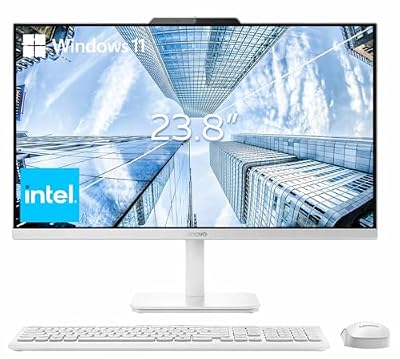
Lenovo 24" FHD All-in-One Desktop Computer for Home & Office, Intel Processor, 16GB RAM, 256GB PCIe SSD, HDMI, WiFi 6, Business AIO, Bluetooth 5.2, Vent-Hear, Wireless KB & Mouse, Windows 11 Pro
Included for 'Best Premium All-in-One Desktop Computers for Home Office' because the listing specifies Intel Processor and 16GB RAM, details this guide uses to compare options.
View on Amazon
Dell Tower Desktop PC – Intel Core i7-7700 7th Gen Processor – 16GB DDR4 RAM – 1TB SSD – Keyboard & Mouse – Built-in Wi-Fi – Office, Home, Business Desktop Computer Windows 11 Pro (Renewed)
Included for 'Best Premium All-in-One Desktop Computers for Home Office' because the listing specifies Intel Core i7-7700 7th Gen Processor and 16GB DDR4 RAM, details this guide uses to compare options.
View on Amazon
HP EliteDesk 800G4 PC | Windows 11 Pro | Intel i5-8500 | 16GB RAM 1TB SSD | New Dual 24" LCDs | RGB Speakers | Home or Office Computer | Internal WiFi 6 AX200 + BT (Renewed)
Included for 'Best Premium All-in-One Desktop Computers for Home Office' because the listing specifies Windows 11 Pro and Intel i5-8500, details this guide uses to compare options.
View on Amazon| Model | Display | Representative processor and memory | Ports and webcam | Approx. weight and desk impact |
|---|---|---|---|---|
| Apple iMac 24-inch | 23.5-inch, 4480 × 2520 | Apple M4; configurations commonly start at 16 GB unified memory | Two or four Thunderbolt 4 ports, depending on configuration; 12 MP camera | About 4.4 kg; narrow stand, but the included keyboard and mouse need space |
| HP Envy Move 23.8-inch | 23.8-inch, 2560 × 1440 | Intel Core Ultra configurations; memory and processor vary by region and model | USB-C and USB-A connectivity varies by configuration; 5 MP camera on listed models | About 4.1 kg; built-in handle and battery make it easier to relocate than a typical AIO |
| Lenovo Yoga AIO 9i 32-inch | 31.5-inch, 3840 × 2160 | Intel Core Ultra configurations; check the exact generation and memory option | USB-A, USB-C and other connections vary by model; camera specifications also vary | Roughly 10 kg or more, depending on configuration; substantial stand footprint |
Weight figures are approximate and can differ by generation. The table’s practical lesson is more important than a small spec-sheet advantage: a large screen and base can dominate a shallow desk, while a slim 24-inch system may leave room for paperwork or an external drive.
Choose by the work your desk has to support
For writing, video calls, and a small workspace: Apple iMac 24-inch
The iMac’s 4.5K display packs fine text and detailed images into a footprint that is easier to accommodate than a 27- or 32-inch system. Its 12 MP camera is a strong fit for frequent calls, and Apple’s integrated hardware and software make it a straightforward choice for people already using a MacBook or iPhone.
The trade-off is connectivity. Depending on the configuration, you may have only two Thunderbolt 4 ports, so a wired network adapter, external storage, card reader, and other accessories can quickly call for a hub. The display is also built into the computer: you cannot later keep it as a standalone monitor when the internal computer becomes outdated. For heavier professional workloads, choose more memory at purchase rather than assuming you can add it later.
For moving between rooms: HP Envy Move
The Envy Move is unusual among desktop all-in-ones because it is designed to be carried around the home. Its built-in handle and battery can suit a person who works at a desk in the morning and joins a call elsewhere later. Its 23.8-inch QHD screen is roomy enough for typical office documents, though it has fewer pixels than the iMac’s smaller 4.5K panel.
Portability does not make it a laptop replacement for every work pattern: it is still a large screen and needs a suitable surface. Battery life depends on workload and configuration, so treat it as a way to relocate the computer, not as a guarantee of a full workday away from an outlet. Verify the exact processor, memory, camera, and ports on the version sold in your region; Envy Move specifications can differ.
For spreadsheets and side-by-side windows: Lenovo Yoga AIO 9i 32-inch
A 31.5-inch 4K display gives you more physical room for wide spreadsheets, timelines, and two windows side by side. That can reduce the need to constantly switch between documents. It is the strongest fit of these examples when screen area is the priority and the desk is deep and sturdy enough to hold the computer comfortably.
The cost of that workspace is physical: the larger panel and base take up more desk area, and the system is less convenient to reposition. Confirm the precise generation before comparing processor or camera claims, since configurations change. Also check whether the ports you need are reachable without moving the stand; an all-in-one can conceal rear-facing connections behind a large display.
How much screen and memory do you actually need?
Display size and resolution solve different problems. A 32-inch 4K screen provides more viewing area than a 24-inch 4.5K screen, while the smaller iMac has a higher pixel density and a sharper-looking image at normal desk distance. For text-heavy work, look at both screen size and scaling: a very high-resolution panel may display interface elements too small unless you adjust settings.
- Documents, email, and calls: 16 GB of memory is a sensible starting point for a premium computer, particularly if you keep several browser tabs and office apps open.
- Large spreadsheets, many simultaneous apps, or creative work: Consider 24–32 GB or more where offered. Check whether memory is user-upgradable; in many AIOs, it is fixed.
- Frequent video meetings: Look for a clear webcam, useful framing, and a microphone array—not just a high megapixel count. Good room lighting and a quiet background still matter.
- Many accessories: Count the ports you will use at once. Two fast USB-C ports may be inadequate if you also connect wired Ethernet, storage, a camera, and a headset.
Budget for the complete workstation, not just the computer
Premium all-in-ones commonly fall somewhere in the low-thousands to several-thousands-of-dollars range, depending on screen size, processor, memory, and regional pricing. Treat that as a broad market range, not a quote. A hub, external backup drive, ergonomic keyboard, or webcam light can add to the total.
Before buying, sketch the usable desk area. Measure the stand’s width and depth, then leave space for the keyboard, mouse, notebook, and a comfortable viewing distance. A large screen pushed too close can feel tiring; a small display crowded with windows can be frustrating. If your desk is shallow, a compact AIO or separate monitor-and-laptop arrangement may fit better than a 32-inch system.
Ports, repairs, and long-term ownership
All-in-ones reduce cable clutter, but they concentrate the computer and display in one device. If the screen, stand, or internal components need repair, the whole unit may need service. Before committing, check the warranty terms, local repair availability, and whether the manufacturer offers replacement parts. Keep a separate backup: internal storage is not a substitute for a second copy of important work.
For easier daily use, route cables before placing the system against a wall, leave ventilation openings unobstructed, and use a USB-C or Thunderbolt hub only if it supports the display and data needs of your accessories. Dust the vents gently with the computer powered down, and clean the display with a soft microfiber cloth; avoid spraying liquid directly onto the panel. A common buying mistake is choosing the least expensive configuration and then discovering memory cannot be upgraded or the port count forces extra adapters.
Quick decision guide
| Your situation | Best fit | Check before purchase |
|---|---|---|
| Small desk, mostly documents and calls | 24-inch iMac | Memory tier and number of Thunderbolt ports |
| Work from different rooms | HP Envy Move | Battery expectations, exact configuration, and available outlets |
| Wide spreadsheets or several windows at once | 32-inch Lenovo Yoga AIO 9i | Desk depth, stand footprint, processor generation, and port placement |
| Long ownership period or changing workloads | Choose the strongest memory option you can justify—or consider a separate monitor and upgradeable desktop | Memory and storage upgradeability, service options, and warranty |
In short, choose the iMac for compact high-resolution work and a polished calling setup, the Envy Move for occasional room-to-room use, and the Yoga AIO 9i when screen area matters most. For demanding home-office productivity, the right choice is the one that fits your desk and workload while providing enough memory and ports for the years you expect to keep it.
Ready to decide? Our #1 pick for 2026 is the Apple iMac 24-inch.
Live price & availability on Amazon.

Best Headphones for Drummers: Clear Sound and Reliable Isolation
Best Smart Water Leak Detectors